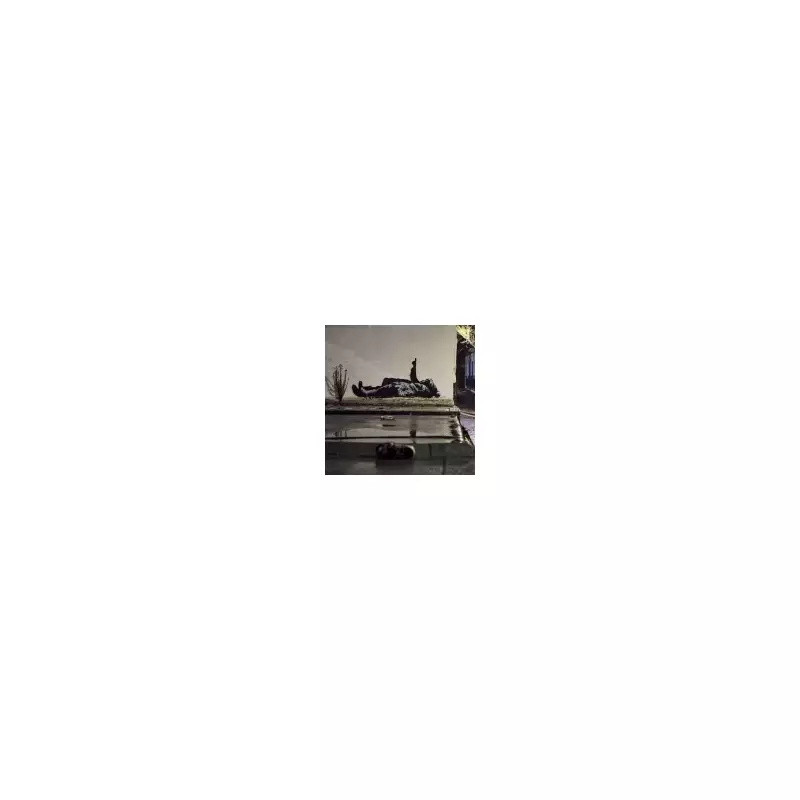
A festive mystery is gripping London's art world after two identical street artworks appeared in the capital, prompting widespread speculation that the elusive artist Banksy is behind the double installation.
The Twin Apparitions
The artworks, which emerged on December 22, 2025, depict two children lying on the ground in warm winter coats, hats, and wellington boots. One child is pointing a finger towards the sky in a classic stargazing pose. The monochrome, stencilled style is instantly recognisable to fans of the world-famous graffiti satirist.
In a curious twist, the same image has appeared in two distinct locations. The first was discovered in the bustling heart of the city, near the Centre Point building at the intersection of Tottenham Court Road and Oxford Street. This placement ensured it was quickly seen by throngs of Christmas shoppers near the popular Outernet attraction.

The second, identical piece was found tucked away in a far more obscure spot, stencilled on the side of an apparently abandoned building in Queen's Mews, Bayswater, a short walk north of Kensington Gardens. Images of this west London version surfaced overnight.
Signature Style, But No Confirmation
While both pieces share the signature monochrome style and stencil technique synonymous with Banksy, the artist has not officially claimed either work. His most recent verified post on his Instagram account remains an image of a judge attacking a protester, which appeared on the Royal Courts of Justice in September 2025.
The decision to place the same artwork on walls barely two-and-a-half miles apart in London would be an unusual move for the artist, adding another layer of intrigue to the puzzle. This duality has become the central talking point, leaving experts and enthusiasts to debate whether it holds a deeper meaning or is simply a playful, festive gift to the city.
A Capital City Puzzle
With no official authentication, the question of authorship remains open. However, the discovery has provided Banksy watchers and Londoners with a perfect topic for speculation in the final run-up to Christmas. Is it a commentary on the city's contrasting landscapes of commercial frenzy and hidden corners? Or is it merely a whimsical seasonal scene offered in duplicate?
For now, the pair of pointing children continue to gaze upwards from their two very different London perches, their creator's identity—and intent—as mysterious as ever.