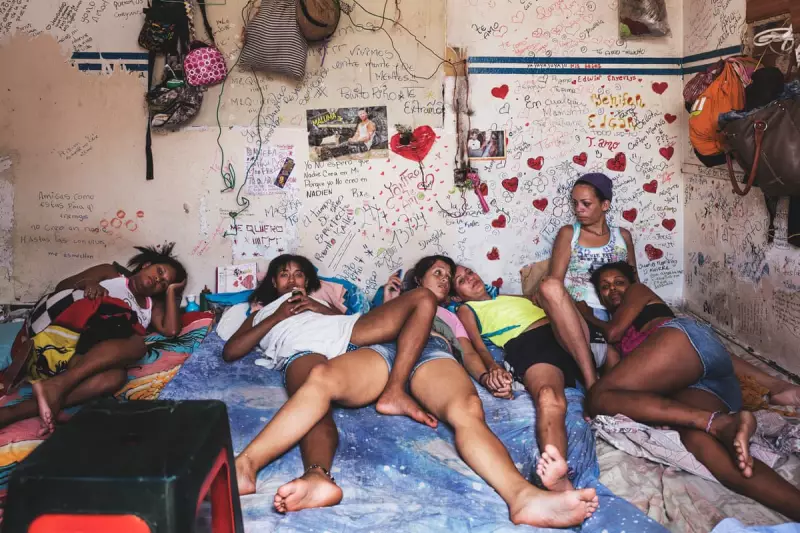
In a stark, converted office cell within Venezuela's Poli-Valencia detention centre, photographer Ana María Arévalo Gosen captured a powerful image of resilience and despair. The photograph, part of her series Días Eternos (Eternal Days), reveals the human cost of a broken system, where women endure indefinite waits in overcrowded conditions, stripped of basic rights and dignity.
A Cell Transformed by Defiance
Arévalo Gosen first entered what was once an investigation office, repurposed to hold female detainees after they were moved from a mixed-gender area. A year later, she found the sterile space utterly transformed. The women had imprinted their identities on the walls, covering them with names, heartfelt phrases, and drawings. A poster of Colombian singer Maluma was taped up, a small gesture of normalcy.
One carved phrase spoke volumes: "I don't expect anyone to believe in me because I don't believe in anyone." The scene showed women resting on thin floor mattresses, their bodies intertwined for comfort in an airless room with no ventilation or running water. Their existence was a limbo of 'deranged inactivity', waiting for news from lawyers or the rare family visit, often without regular food, water, or medical care.

Personal Stories of Injustice and Survival
Two women from the 2017 photograph left an indelible mark on the photographer. Daniela, seen in a pink T-shirt, had been sentenced long before her family even knew where she was. She had effectively disappeared into the judicial system. When Arévalo Gosen returned in 2018, Daniela revealed her daughter had been diagnosed with leukaemia during her incarceration.
The woman in yellow, Roxana, had a history of living on the streets and struggling with addiction. She was HIV positive and suffering from a liver abscess due to long-term substance abuse. Her father was her lifeline, visiting weekly with medication and food. Roxana's journey was cyclical, in and out of jail for years. A turning point came in 2020 after she survived a gunshot to the leg.
From Despair to Hope: A Path to Recovery
That violent incident became Roxana's catalyst for change. She stopped using drugs and alcohol, moved back in with her steadfast father, and began studying. Today, she is enrolled at a university and has written a book about her life, a testament to extraordinary personal resilience emerging from a system designed to erase identity.
For Ana María Arévalo Gosen, this image marks where her Días Eternos project began. It documents a space never intended for living, reclaimed by women who refused to be invisible. The Venezuelan photographer, now based in Madrid, continues to focus her visual storytelling on women's rights, using her lens to expose hidden injustices and the enduring strength of the human spirit.