Through the Lens: Capturing Ireland's Literary Soul
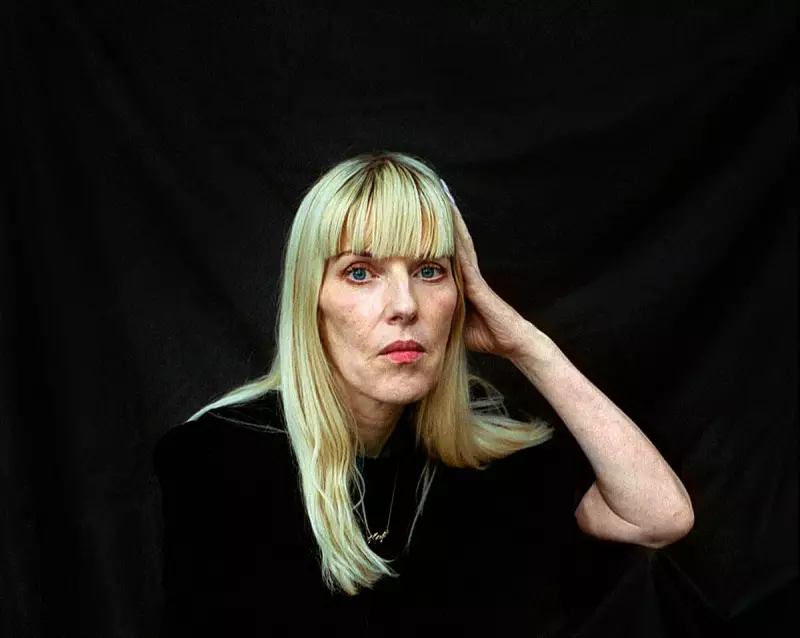
British photographer Steve Pyke has spent decades creating intimate portraits of Ireland's most celebrated writers, from Nobel laureates to emerging contemporary voices. His collection, Scribendi: Portraits of Irish Writers, offers a rare glimpse into the personal spaces and creative worlds of literary icons.
The Photographer's Connection to Irish Writing
Steve Pyke developed a profound relationship with Irish literature despite his English Midlands origins. "I come from the English midlands, but I became a photographer in Ireland," Pyke reveals. "I made my first portraits in Dublin in the early 1980s. It was immediately apparent to me then how important Irish writers are to their country."
His appreciation for these authors deepened through extensive reading of their works. "My feeling for these writers deepened as I read their work at home in New Orleans or on trains and planes and during long car journeys across Irish landscapes I'd long loved," Pyke explains. For him, books provided escape and inspiration: "Books were a way out of the tedium of my teenage years and into a more interesting world where the people were wiser, funnier and more imaginative."

Voices from the Literary Landscape
The collection spans generations of Irish literary talent. Seamus Heaney, photographed in London in 1995, reflected on his poetic awakening: "It was when I went to secondary school, I suppose, and began to get into English literature and poetry, that something came alive in me to the language." The Nobel Prize winner maintained a humble perspective, noting: "I was always shy of 'poetry'. I didn't quite know what it was. And I think it was right to be shy of it, because nobody knows quite what it is. I'm still not sure."
Edna O'Brien, captured in London in 1991, expressed the innate nature of the writing calling: "I think one is born a writer. I know that circumstances alter the subject of one's fiction but I think one is born. It's there. Somehow living is incomplete until it is fastened, through words, into a piece of fiction or into a piece of grammar."
Contemporary writers share equally compelling origin stories. Joseph O'Connor, photographed in his Dublin garden in 2024, recalls: "Like most children, I liked writing stories. As a young teenager, I noticed everyone else had stopped." Meanwhile, Wendy Erskine from Belfast maintains a refreshingly unpretentious approach: "I've envisaged no major trajectory for myself. If I enjoy producing it and people enjoy reading it, then that is more or less enough."
Defining Moments and Creative Sparks
The portraits reveal diverse paths to literary careers. Lucy Caldwell discovered her calling at thirteen through a school assignment: "We read How Many Miles to Babylon? in our English class when I was 13. Our homework was to write an extra chapter – I decided on a new ending." This led her to Yeats's poetry and the realization that writing was "all I ever wanted to do."
Glenn Patterson's journey began with childhood cinema exposure: "When I was six or seven, I saw Yankee Doodle Dandy, with James Cagney as vaudeville star, playwright and lyricist George M Cohan. I decided the next day I would be a songwriter. I was 55 before I wrote anything resembling a song: an aria for a Belfast opera."
For some writers, the motivation stems from deeper needs. Sinéad Gleeson emphasizes conviction: "Every writer has to believe in what they're writing. If they don't feel there's something propulsive and urgent they need to say, it's possible they're in the wrong profession." She identifies curiosity as a primary driver, while Felicia Olusanya describes writing as transformative: "Writing was how I learned to see myself. If I hadn't, I wouldn't be alive today. It has taught me how to live."
The late Iris Murdoch, photographed in Oxford in 1990, connected writing to emotional necessity: "I began to write when I was quite young. I began because I was unhappy, and I think many writers begin because they're unhappy. That's a very common reason for writing."

Enduring Passion and Future Directions
Established and emerging writers alike express ongoing commitment to their craft. Jan Carson from Belfast describes her simple ambition: "My only ambition is to continue writing for the rest of my life, and to become curiouser and curiouser." Colin Barrett acknowledges the importance of self-belief: "I always had private belief, based on very little. But in terms of writing I could show the world, there's The Clancy Kid, a story from my first collection. Something changed in my writing with that."
Gina Moxley recalls an early career validation through audience reaction: "When 40 [Irish Countrywomen's Association] women walked out of my first play in disgust, I thought, 'Excellent, I've got work to do.'"
The collection will be celebrated with Steve Pyke in conversation on 3 December 2024 at the Irish Cultural Centre in London, offering audiences deeper insight into his photographic journey capturing Ireland's literary greats.