When Cheryle St Onge's mother developed dementia, she left her teaching career to become a full-time carer, embarking on a journey that would transform their relationship through the unexpected power of photography.
The turning point
St Onge, an only child who had been closely bonded with her mother since her father's death when she was 14, initially found the caring role overwhelming. Her mother, once a vibrant artist and university worker, began exhibiting classic dementia behaviours - digging up garden bulbs, misplacing horses, and rearranging furniture during sleepless nights.
The emotional toll was significant. "I got depressed too and stopped making pictures," St Onge recalls. "To photograph my mother felt like sacrilege." The breakthrough came when a friend challenged her to take her mother's portrait. To her surprise, her mother cooperated enthusiastically, fluffing her hair and facing the window with the remark: "Why not – what else are we doing?"

Finding light in darkness
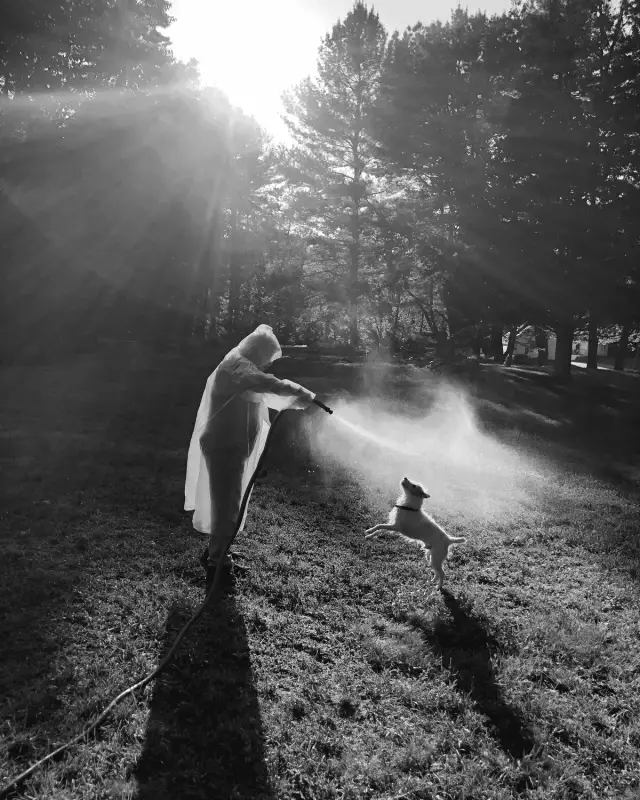
This moment sparked a new chapter in their relationship. They began making photographs together outdoors, where this particular image was captured. It shows St Onge's mother with Skipper, their jack russell terrier - an unlikely pairing since her mother hadn't particularly liked the dog.
"Skipper loved the hose," St Onge explains. "My mother came out and they were dancing together, two beings in the sunlight of the afternoon, having their own conversation. Beautiful things like that just kept unfolding. It made the sadness and depression lessen for me."
Curating joy amid struggle
St Onge acknowledges her photographic record presents a carefully curated perspective. "I couldn't make pictures of the stained bedsheets and dark closets," she admits. "This, with sunlight and happiness, is a very curated point of view – a lot has been omitted deliberately."
The title of her resulting book, Calling the Birds Home, comes from a particularly challenging night when she discovered her mother had moved the refrigerator into the middle of the room and stacked chairs on the couch while walking around nude. In that moment of overwhelm, St Onge realised she needed to acknowledge their place in the universe and ask for support.
Since her mother's passing five years ago, St Onge has reflected on their reversed roles and how her mother's generous nature persisted throughout her dementia. "She blossomed all the time for these pictures, she was up for it – that was part of her nature, and it didn't change with dementia," she remembers.
St Onge hopes her experience might help others facing similar challenges. "I wish we could look at hard topics and also think about how to get through them. I hope this work helps motivate someone to break through the sadness and go and do something with someone they love."
Calling the Birds Home is published by L'Artiere.