For over three decades, photographer Liz Johnson Artur has dedicated her craft to documenting the communities she inhabits, creating an extraordinary archive that radiates with intimacy and celebrates human resilience. Her latest publication, PDA, turns this perceptive lens towards a now-closed chapter of London's underground music history.
The Birth of an Inclusive Oasis
Running monthly from 2011 to 2021 in a Hackney basement, PDA was more than just a club night - it was a celebrated queer institution. The club's name embodied its playful, fluid nature, with founders suggesting PDA could stand for anything from Public Display of Affection to Please Don't Ask. What remained constant was its radical inclusivity and absence of a door policy, creating a sanctuary where everyone was welcome.
Now 61, Johnson Artur became a regular at PDA despite not considering herself "a clubber". She was captivated by the atmosphere, noting how different it felt from the more segregated queer club scene she'd photographed in Brixton during the 1990s. "There was a lot going on in front of and behind the DJ booth!" she recalls. "I was 30 years older than everyone there, but it was beautiful watching them take their space."

Capturing the Heat of the Moment
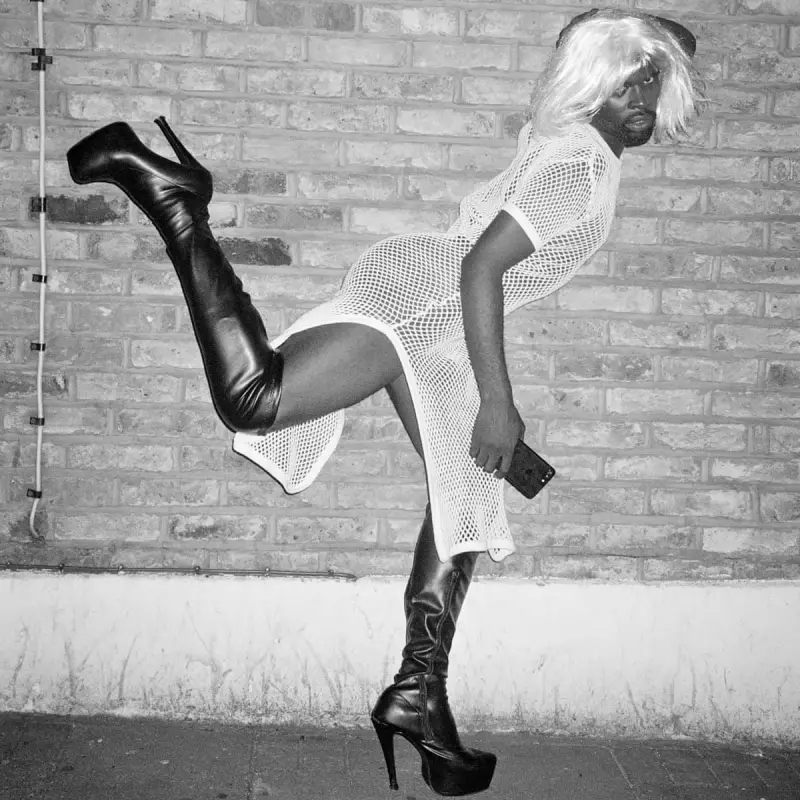
Through both black-and-white and colour images taken across several years, Johnson Artur's photographs transport viewers directly into the pounding heat of the sweaty basement. The collection bursts with energy - revellers dance until 6am in lavish outfits, their bodies glossy with sweat under the club lights, flexing thigh-high boots while clutching cigarettes and Schweppes drinks.
"They do something to people," Johnson Artur explains about why she loves photographing music events. "They can let go. It's the most generous art form we have because it needs us. It lives from how we react to it - and you can feel it's yours and no one can take that away from you."
The images masterfully blend striking, posed portraits where subjects confidently meet the camera's gaze - often wearing little more than sequins, heels and sunglasses - with moments of unchoreographed candour. The photographer finds herself swallowed by the action, standing beside the DJ booth as someone grabs the microphone or capturing spontaneous laughter and kisses between dancers.
Beyond the Dancefloor
The book extends beyond the club's walls to reveal the close-knit community that sustained PDA. Intimate daytime shots feature co-founder and nightlife icon Carrie Stacks preparing at home, applying makeup before the night begins. These quieter moments illustrate how the club provided more than just nightlife - it offered a genuine safe space where people could be themselves.
"I don't look at it as a club book," Johnson Artur clarifies. "It is always about looking at people. It's about how they create spaces to be safe with each other." This perspective reveals the deeper significance of venues like PDA, particularly for those facing hostility both on the streets and within their own families and communities.
A Photographer's Unique Journey
Johnson Artur's approach to photography reflects her extraordinary personal history. Born in Bulgaria to a Ghanaian father and Russian mother, she spent childhood years taking four-day train journeys between Germany and the Soviet Union. These experiences of sharing confined spaces with strangers fundamentally shaped her photographic philosophy.
"I photograph people because each person has a story," she says. "I can't tell it verbally, but I can make a point about human existence - we're told we're all different, but the stories, when you hear them, are often quite familiar."
Her technical discipline stems from necessity - after receiving her first camera in the mid-1980s, film was prohibitively expensive. "If I had five rolls, I had to stretch them to get the pictures I wanted. I couldn't afford to mess up. Every picture in the archive counts," she explains, attributing this rigour to her German upbringing.
The End of an Era
The book represents a departure for Johnson Artur as she embraced close collaboration with PDA's organisers, relinquishing some control over which images were included. "You can't collaborate and only get what you want. You have to open up," she acknowledges.

Her relationship with the community evolved over time, developing what she describes as "aunty feelings". She began bringing her daughter to the events, and the connection extended beyond nightlife with club-goers often returning to her home for food afterwards.
The final image in PDA shows a reveller walking home in the early morning light, a poignant reminder of impermanence. "That's how we exist as humans," Johnson Artur reflects. "We have a wonderful time, then suddenly it's over. We're only here for a minute. Let's enjoy it."
Through its vibrant pages, PDA by Liz Johnson Artur serves as both a specific tribute to a particular time and place in London's queer history and a universal celebration of desire, freedom and the beautiful, fleeting moments of human connection.