The photographic world has lost one of its most compassionate voices with the passing of Bob Kauders at 74. The celebrated photographer dedicated his career to amplifying the stories of marginalised communities through his evocative imagery.
A Life Through the Lens
Born in Hadleigh, Essex, Kauders was the son of Hermann, an engineer, and Annette, a secretary. His educational journey took him through King John school in Benfleet, Sweyne Technical grammar school in Rayleigh, and Southend College of Art and Design before he earned his photographic arts degree from the Polytechnic of Central London in 1973.
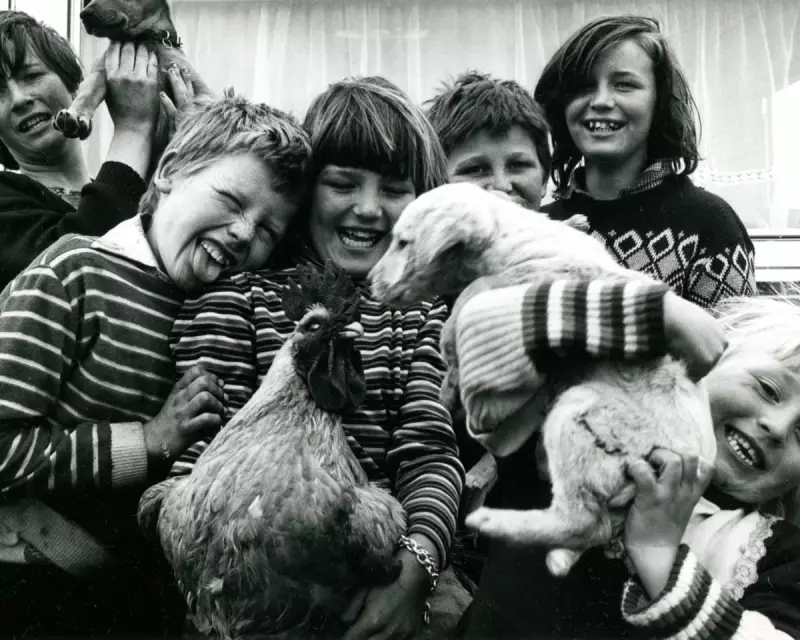
His career immediately showed promise when he received an Arts Council award and a scholarship from PCL to study landscape photography. From 1976 to 1978, he served as a photography fellow with Lincolnshire and Humberside Arts, where he began his seminal work documenting industrial decline and Traveller communities.

Documenting the Unseen
Kauders possessed a unique talent for capturing what he described as "the inevitability of time and change." His portfolio includes several remarkable projects that brought overlooked communities into the public consciousness.
In 1985-86, armed with a Churchill Fellowship, he travelled to Tristan da Cunha, creating a sensitive photographic record of the remote volcanic island community in the South Atlantic. His work captured the resilience and close-knit nature of the islanders with remarkable empathy.
Between 1986 and 1991, he worked with the Weld community project in Birmingham's Handsworth area, promoting photography as a means of positive expression. His commitment to community photography continued with a significant 1991 project documenting Birmingham's Bull Ring shopping centre and markets before their demolition, funded by West Midlands Arts and the London & Edinburgh Trust.
Legacy and Later Years
Kauders's photographs were exhibited at prestigious venues including London's Photographers Gallery and Bristol's Arnolfini. He was also in high demand as a lecturer and speaker, appearing at institutions such as the National Museum of Photography and the Royal Photographic Society.
His compassionate approach extended to running workshops for people with head injuries and adults with special needs, demonstrating how photography could enrich their lives.
After moving back to Essex in 1992, he worked as a freelance photographer for local authorities including Southwark council, along with various health, housing and care charities.
Parkinson's disease, diagnosed in 2006, eventually forced his retirement in 2013. He is survived by his wife Margaret, whom he married in 1995 after meeting in 1993, and his sisters Daphne and Julie.