Inside the Private World of Enzo Ferrari
A stunning new publication from Taschen offers an unprecedented glimpse into the life of Enzo Ferrari, the legendary founder of the iconic sports car manufacturer. Filled with previously unseen photographs, sketches, and documents, the book reveals both the public figure and the private man behind the global brand.
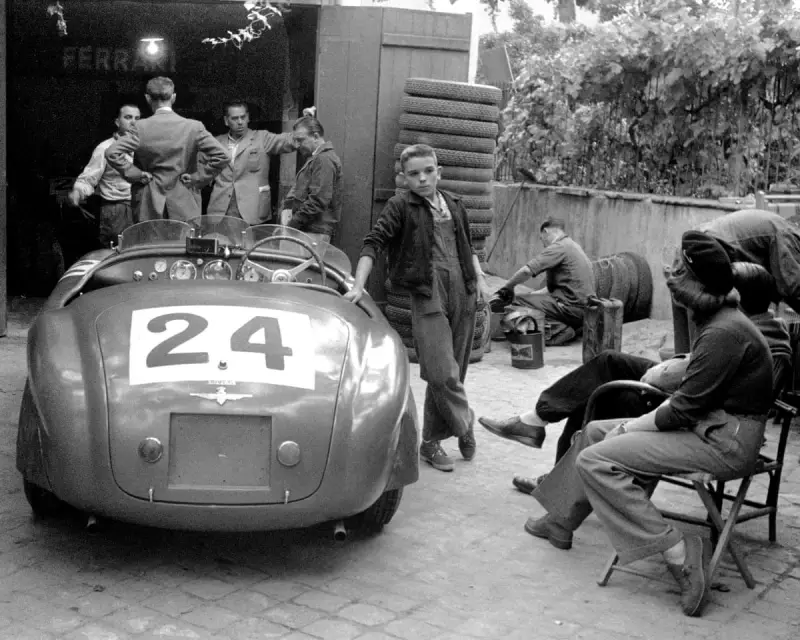
Piero Ferrari, Enzo's son, provides intimate insights throughout the volume. "I always find it difficult to talk about my father," Piero admits. "He is a very well-known figure. However, I was fortunate enough to know the private side of the man too." This private side included a caring, ever-present father so protective that he forbade Ferrari employees from letting his twenty-year-old son, an enthusiastic motorsport fan, drive a race car.
The Racing Legend Through Rare Images
The visual journey begins with a fierce young Enzo Ferrari at the helm of a CMN 15-20 HP with mechanic Nino Berretta at Targa Florio in 1919, where he finished ninth. Remarkably, Ferrari never raced a car bearing his own name.

The collection spans decades of racing history, featuring powerful images like Mexican driver Ricardo Rodríguez concentrating intensely in the rear-engine Ferrari 246 Sport in 1961, and Pietro Lo Piccolo driving the Scuderia Pegaso Ferrari Dino 206 S Spyder during the 1970 World Sportscar Championship Targa Florio race in Sicily.
Other highlights include the torrential rain at the start of the 1968 Le Mans 24 Hours, showing the Ferrari 275 LM sprinting ahead, and a 1955 Monte Carlo scene featuring a Lancia that would later carry Ferrari colours.
The Man Behind the Myth
Piero Ferrari challenges the common perception of his father as merely a strong, restless character. "Very few are aware that he was also a hugely generous man," he reveals, "always ready to help others without expecting anything in return."
Enzo Ferrari's own words provide further insight into his philosophy: "I don't know what matters more, success or persistence. I have never been a designer, nor a calculating individual, but an agitator of men." He acknowledged that sometimes he went too far, but believed that without this drive, Ferrari would not be what it became.
Piero recalls his father's deep connection to the company and its people, describing Ferrari as "like home to him" where he felt behind friendly walls. The book also captures Enzo's 90th birthday celebration held inside the factory, surrounded by the people who helped transform a small provincial company into a global phenomenon.
Pino Allievi, editor of the new Ferrari book, describes Enzo as someone who "never settled for less," giving rise to Formula 1 cars, triumphant prototype sports cars, and road-going models that became objects of desire worldwide. Despite his success, Ferrari was never satisfied with any project, always insisting: "This is a starting point – we must go further."
Born in Modena on 18 February 1898 and dying on 14 August 1988, Enzo Ferrari's legacy continues to captivate automotive enthusiasts and racing fans across the globe through this comprehensive visual history.