A groundbreaking Netflix documentary is challenging one of photojournalism's most sacred narratives, questioning the official authorship of the iconic 'Napalm Girl' photograph that shocked the world during the Vietnam War.
The Photograph That Changed History
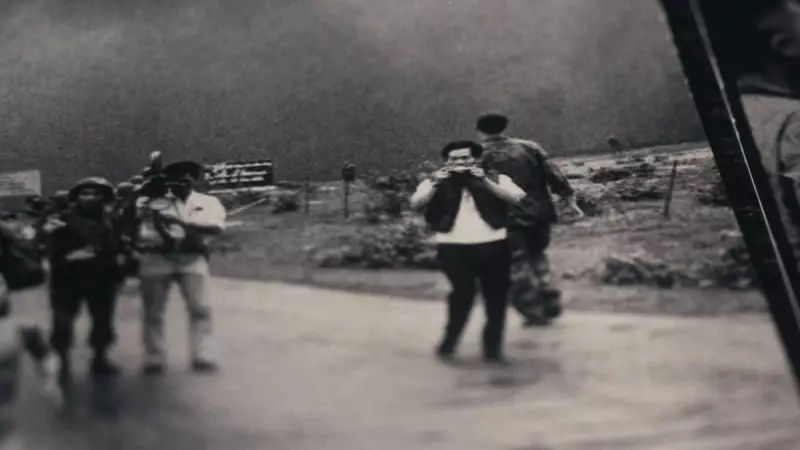
Known officially as The Terror of War, the harrowing image captures nine-year-old Kim Phúc running naked down a road after a napalm attack on her village of Trảng Bàng in June 1972. The photograph became an instant global sensation, credited with turning public opinion against the US involvement in Vietnam and described by intellectual Susan Sontag as doing "more to increase public revulsion against the war than a hundred hours of televised barbarities."
For 53 years, the photograph has been officially credited to Huynh Cong "Nick" Út, a 21-year-old South Vietnamese photojournalist working for Associated Press in Saigon. The image earned Út a Pulitzer Prize and cemented his place in photographic history.

The Investigation Unfolds
The Stringer, directed by Bao Nguyen and narrated by British photojournalist Gary Knight, presents compelling evidence that the famous photograph was actually taken by Nguyễn Thành Nghệ, a driver for NBC who occasionally sold photographs to international news outlets as a freelancer.
The investigation began when former AP photo editor Carl Robinson, now in his 80s, contacted Knight in 2022 with claims that Horst Faas, the bureau's powerful photo chief, had ordered him to change the credit from the original stringer to Út. Robinson sought to find the unknown photographer and offer an apology if he was still alive.
Knight told The Guardian: "What must it feel like to be the man who took this photograph, if indeed Nick Út didn't take it?" He noted that stringers then, as now, operated on the margins of journalism without proper support, insurance or recognition.
Conflicting Investigations and Reactions
The documentary's claims have sparked intense controversy within photojournalism circles. Before the film's premiere at Sundance in January, where an emotional Nghệ appeared as a surprise guest and affirmed through a translator that "I took the photo," the AP published a lengthy report disputing the film's account.
The news organization described Robinson as a "disgruntled" former employee and stood by Út, who retired from the AP in 2017 after a distinguished career. The AP's internal study concluded that while it was "possible" Út took the photo, there wasn't "definitive evidence" to change the credit.
However, World Press Photo, which awarded the image its 1973 Photo of the Year award, conducted its own investigation and reached a different conclusion. The organization rescinded Út's credit, determining that two people – Nghệ and photographer Huỳnh Công Phúc – were better positioned to take the photograph.
An independent forensic analysis by French NGO Index, updated for the final version of the documentary, found that Út would have needed to sprint approximately 560 feet forward, take the famous photo, then run back 250 feet to appear in subsequent footage – "an extremely implausible scenario." Their analysis concluded Nghệ was in the correct position for the shot.
Broader Implications for Journalism
Both Knight and Nguyen emphasize that their investigation represents more than just determining photographic authorship. Knight noted that when he asked journalists in London to name any Vietnamese war journalists besides Nick Út, none could answer.
"Vietnamese journalists have really been erased from the narration of their own war," Knight stated. "I hope that this story won't only start to rebalance that a little bit, but will also demand of the audience that we examine who is telling today's stories, and where the power structures in journalism lie."
Nguyen, whose parents emigrated during the war, initially hesitated to take on the project, concerned about disrupting a narrative important to the Vietnamese-American community. However, he came to see Nghệ as representative of a "generation of Vietnamese who left their lives behind, and carried their stories quietly" without space to share their experiences.

The film-makers maintain that regardless of where viewers ultimately land on the question of authorship, the conversation itself is valuable for journalism's ongoing process of self-examination and accountability.
The Stringer: The Man Who Took the Photo is now streaming on Netflix, inviting audiences to reconsider not just one photograph's history, but how we record and credit historical narratives.