Don McCullin's 'Broken Beauty' Exhibition Confronts War's Legacy Through Ancient Ruins
The celebrated British photojournalist Don McCullin, now aged 90, has witnessed some of the most devastating conflicts and humanitarian crises of the twentieth century. His latest exhibition, titled Broken Beauty, is currently on display at the Holburne Museum in Bath, offering a profound exploration of how these experiences have shaped his artistic vision over more than six decades.
Ancient Sculptures as Metaphors for Human Suffering
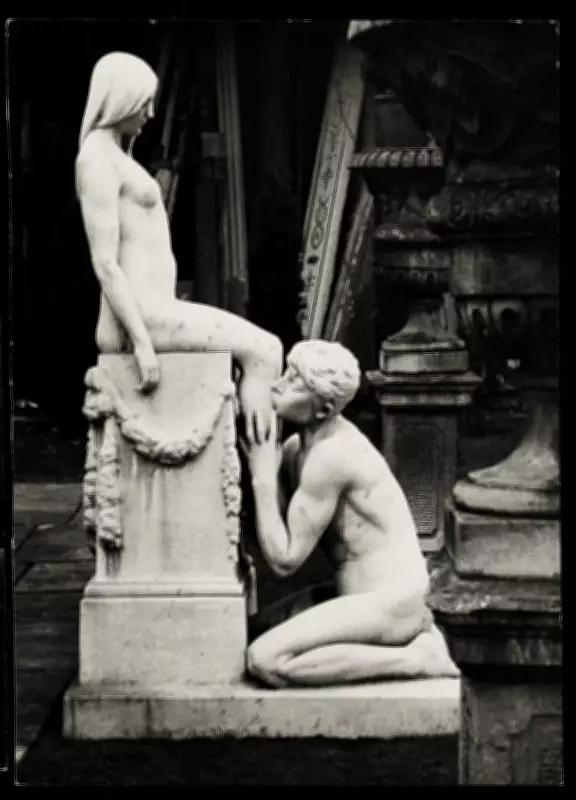
The exhibition opens with four striking photographs of ruined Roman sculptures, each meticulously captured against dark backgrounds to create an ethereal, floating effect. These images serve as powerful metaphors for the fragility of human ideals and the inevitable decay wrought by time. A crouching Venus appears with missing arms and a partially shattered head, while a hermaphrodite struggles against a lascivious satyr. Nearby, a headless Amazon engages in combat with the notoriously cruel Emperor Commodus on horseback.
McCullin seems to find a haunting continuity in these ancient artefacts, suggesting that humanity's capacity for violence and domination has persisted throughout history. The pockmarked surfaces and broken limbs of the sculptures echo the physical and psychological wounds documented in his later work, blurring the lines between past and present atrocities.
From War Zones to Somerset Landscapes
After ceasing his frontline war reporting in the mid-1980s, McCullin turned his lens towards the Somerset countryside, seeking solace and healing in the natural world. However, his landscape photographs are far from tranquil or anodyne. A serene pond is transformed into what resembles a pool of blood, while spindly trees claw at the sky like torn limbs. These brooding, oppressive scenes are imbued with a spectral presence, as if haunted by the ghosts of his previous subjects.
McCullin has spoken openly about seeing the "twisted smiles of corpses" everywhere he looks, and this pervasive sense of trauma permeates even his most pastoral compositions. The landscapes, which he describes as the "blunt side of the knife", lack the immediate, piercing impact of his conflict photography but nonetheless convey a deep, lingering unease.
Iconic Images of Conflict and Human Resilience
Broken Beauty spans McCullin's entire career, from his first published photograph of a notorious London gang in 1958 to iconic images from the Biafran war and the AIDS crisis. The exhibition's presentation is deliberately straightforward, allowing the raw power of the photographs to speak for themselves.
Among the most harrowing works are those focusing on young men caught in the maelstrom of violence. A group of Christian Phalangists mock the lifeless body of a teenage Palestinian girl, their sickly smiles and stolen mandolin creating a scene of profound inhumanity. A fifteen-year-old boy stares directly at the viewer, his face slick with tears at his father's funeral. Young landmine victims await medical aid, while topless Palestinian soldiers clutch their weapons with grim determination.
These images capture not only the abhorrent brutality of conflict but also the remarkable resilience and grief of those who endure it. A shell-shocked US marine's vacant stare reflects the shared horror experienced by both subject and photographer, a silent testament to the psychological scars of war.
Documenting Britain's Social Realities
The exhibition also features several photographs from McCullin's extensive body of work within the United Kingdom, highlighting industrial landscapes, marginalised workers, and urban poverty. A homeless man in Shoreditch is captured sleeping upright, a poignant symbol of life in liminal spaces between existence and oblivion.
McCullin's ability to find beauty and meaning in the most bleak and desperate circumstances is a defining characteristic of his photojournalism. Whether documenting the ruins of ancient empires or the wreckage of contemporary conflicts, his work remains a powerful indictment of human suffering and a testament to the enduring need for witness and remembrance.
Broken Beauty by Don McCullin is on display at the Holburne Museum in Bath from 30 January to 4 May, offering visitors a brief but intense introduction to one of photojournalism's most important and influential figures.