A major exhibition in Paris is revealing how the pioneering American photographer Edward Weston transformed humble, everyday subjects – from vegetables and egg slicers to nudes and toilets – into profound sculptural forms, charting the very birth of modernist photography.
From Pictorialism to Pure Form
The exhibition, 'Edward Weston: Becoming Modern', is currently on show at the MEP in Paris until 25 January 2025. Drawn entirely from the prestigious Wilson Centre for Photography collection, it traces the decisive turn in the medium's history through Weston's radical evolution. During the 1920s, he moved decisively from the soft-focus, painterly style of pictorialism to the sharp-focus, abstract clarity of modernism.
This journey is starkly illustrated by two early nudes. His 1921 work, 'M' on the Black Horsehair Sofa', shows a clear debt to classical painting, with its artfully draped figure and balanced floral arrangement. Just a year later, 'Tina Modotti (Nude in Studio)' strips all that artifice away, presenting a model smoking a cigarette against a plain, shadowed backdrop, freed from salon conventions.

The Sculptural Vision: Peppers, Shells and Egg Slicers
Weston applied this rigorous new vision to everything he photographed. He approached still lifes and natural fragments – rocks, shells, peppers – with intense formal rigour, creating a tension between artifice and pure abstraction through close focus and framing. In August 1930 alone, he made at least 30 different negatives of peppers over four days, propping one up with a tin funnel to achieve a sculptural effect. This particular pepper study became his most popular, with at least 25 prints made.
He brought the same transformative gaze to mundane objects, famously complaining that his 1930 photograph of an 'Eggs and Slicer' became such a popular emblem of modernism that it overshadowed the more subtle complexity he achieved in his vegetable studies. Even a toilet ('Excusado', 1926) was elevated into a study of form and light, contributing to a modern perspective from the periphery of the art world.
Refinement in Dunes and Landscapes
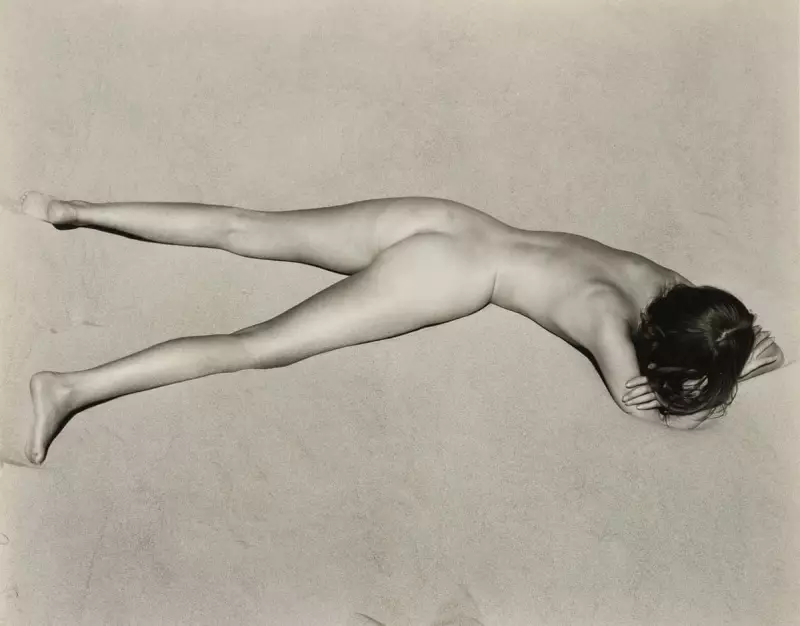
By the mid-1930s, Weston had refined his style further, simplifying framing and eliminating artifice to focus on essential lines, shapes, and light. This is exquisitely seen in works like 'Nude on Sand, Oceano' (1936), where the human form becomes an abstract curve against the textured beach.
In his later years, his passion turned increasingly towards landscapes. While continuing significant nude studies, he found profound unity in the sun-drenched dunes of Oceano and the rugged terrains of Big Sur, Death Valley, and Point Lobos. As Weston himself paraphrased, in these works 'the heavens and earth became one.' Living and working primarily in California and Mexico, he sought not provocation but a silent, accurate revelation of form.
The exhibition offers a unique chance to see many of these iconic images in their original form, hand-printed by the artist himself. It is a comprehensive insight into how Edward Weston's photography became a new language – a sculptural gaze that forever changed how we see the world.