In the early 1980s, photographer Wendy Ewald embarked on an extraordinary project in the remote Colombian village of Ráquira, nestled in the cool desert valley of the Andes. Her resulting work, the true-life novel Magic Eyes: Scenes from an Andean Girlhood, weaves together narrative and visual artistry to document a world where childhood unfolds against a backdrop of tradition, poverty, and resilience.
A Collaborative Vision of Rural Life
The book is structured as a vivid memoir, told through the voices of Alicia Vásquez and her family, exploring themes of love, revenge, survival, and responsibility. Interspersed throughout are remarkable photographs—some taken by Ewald herself with a two-and-a-quarter format camera between 1982 and 1988, and others created by her fifth-grade students using #126 Kodak Instamatic cameras. This collaborative approach offers a dual perspective: the professional eye of an outsider and the raw, unfiltered gaze of local children.
Teaching the Art of Seeing
Ewald taught in a tiny village classroom, where most students lived in mountain huts without windows and had limited exposure to modern media. As she notes, "They had rarely seen television, so the idea of 'framing' was utterly foreign to them: they had never seen their surroundings through anything." Initially, the children struggled with technical aspects, often photographing knees or feet instead of faces. To overcome this, Ewald devised a simple yet effective exercise: she asked them to carry a piece of paper with a hole and look through it at their environment. Within weeks, they mastered the viewfinder, transforming their approach to composition.

The students learned to shoot, develop, and print their own photographs in a darkroom Ewald built in a colonial house. Assignments focused on capturing their daily lives—families, animals, fantasies, and communal activities like pottery, which they had practiced since age five. Ewald reflects, "During all these months they had never damaged a roll of film; few experienced photographers could say the same. Being careful came naturally to the children."
Capturing Childhood and Community
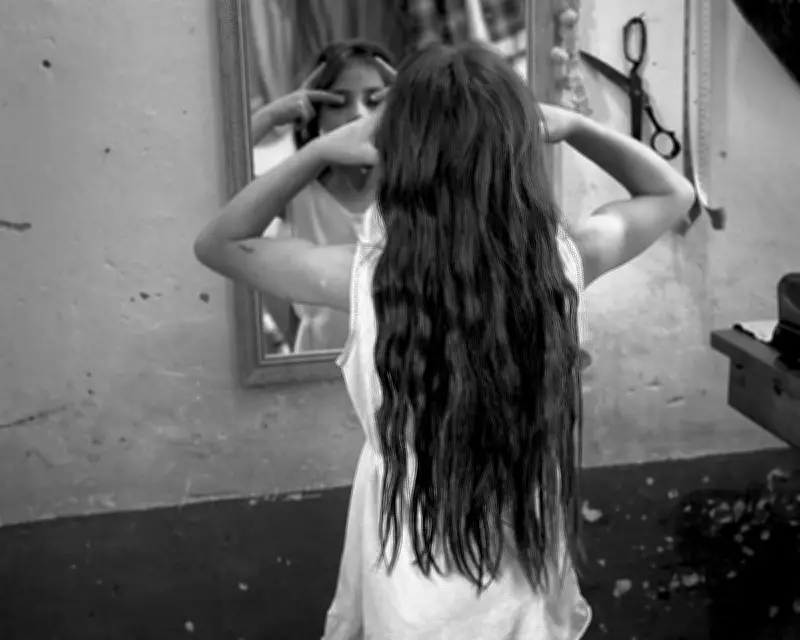
The images in Magic Eyes are poignant and evocative, ranging from intimate domestic scenes to broader social commentaries. Examples include:
- El Lavadero Comunal (The Communal Wash Area): A glimpse into shared village life.
- Primera Comunión (First Communion): Documenting a ceremony in Iglesia Catedral, a Gothic-style church built in 1600.
- Mi Vestido de Primera Comunión Colgado de la Pared (My First Communion Dress Hanging on the Wall): Taken by student Dalida Reyes, with the dress corners stuck to the wall using chewing gum.
- Una Madre y Su Hijo en Su Casa de Tela Asfáltica (A Mother and Her Son in Their Tar Paper House): Highlighting the harsh living conditions in rural Colombia.
These photographs serve as a personal and social history, infused with what Ewald describes as a "reverence for the truth and power of storytelling." They witness the passage of childhood as both unique to this Andean setting and universal in its emotions.
Legacy and Reunions
The project has enduring connections. Ewald revisited Colombia in late 2025, reuniting with former students like Luz Marina Bautista, who appears in the book as a child confronting poverty and societal barriers. Now in her fifties, Luz Marina lives in Bogotá with her family and has become a champion runner—a testament to the resilience captured in these images. Another reunion involved Miriam, whose story is featured in the related film La Mirada de Miriam, a mix of dramatised and documentary sequences.
Magic Eyes is more than a photography book; it is a testament to the transformative power of art in isolated communities. By giving children the tools to frame their own narratives, Ewald not only preserved a slice of Colombian history but also empowered a generation to see their world with new eyes. Published by Mack Books, this work continues to resonate, offering a richly evocative exploration of magic, violence, and the enduring spirit of rural Colombia.