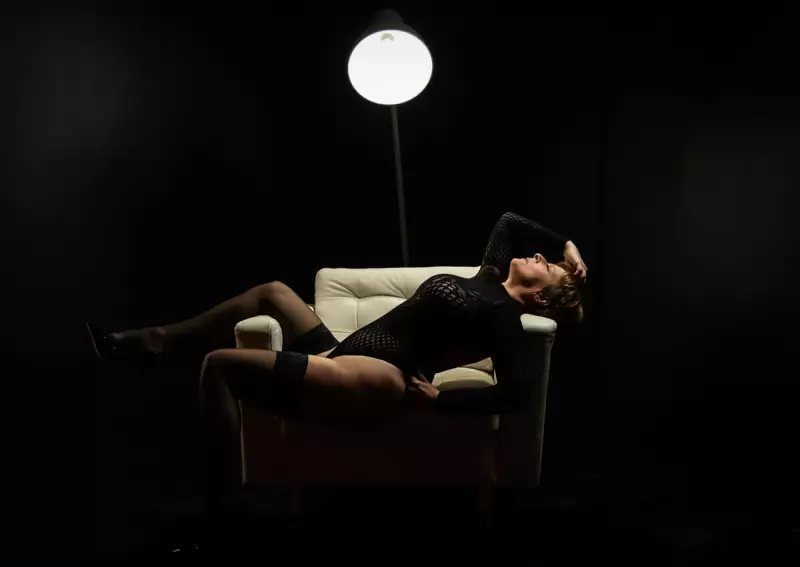
Once considered a niche wedding add-on or risqué gift for a partner, boudoir photography has exploded into a hugely popular genre where women invest thousands for professionally taken intimate portraits. But what drives this growing trend, and what profound impact does it truly have? We explore the stories of four women whose lives were fundamentally changed by the experience.
Stripping Back Layers: Vulnerability and Strength
For Brittany Witt, a 33-year-old former competitive weightlifter used to a "masculine aura" and a type-A personality in the oil and gas industry, the boudoir shoot became a pivotal moment of confrontation. A few hours into her session at a Texas studio with photographer JoAnna Moore, a suggestion for nude photos pushed her into uncharted territory.
"I felt those protections stripped away. There was nothing to hide behind, literally, figuratively," Witt recalls of the moment she was asked to crawl across the floor, completely exposed. The resulting photograph, however, became her favourite—a powerful capture of both her inherent strength and a newfound vulnerability she had never before acknowledged.

This journey into vulnerability is a common thread. Shawn Black, who runs the Association of International Boudoir Photographers, emphasises that the practice is not about sex or scandal. "It has to do with strength, it has to do with confidence, with pulling that thing out of you that makes you shine," he says, noting he has photographed clients from ages 21 to 73, including politicians, attorneys, and judges.
More Than a Photograph: A Catalyst for Life Change
For many, the impact of the shoot reverberates far beyond the studio walls. Susan Lausier, 61, was "super shy" and had never felt comfortable in her skin. She initially booked her session as an anniversary gift for her husband. However, within minutes of seeing a preview on the camera, her perspective shifted entirely.
"It was no longer a gift for my husband. It was all for me," Lausier states. The transformation was immediate and profound. She walked out feeling capable of anything, a confidence that directly led her to apply for and secure a job as a general manager at a boxing gym after being laid off from a 38-year career in a hospital.
Similarly, Makeda Blake-Robinson, a 38-year-old district nurse from south London, sought the shoot to embrace her post-motherhood body. Amid the fears of the Covid pandemic and a recent divorce, the experience with photographer Elizabeth Okoh became an act of reclaiming herself. "It's enough to know I can look like that," she says of the confident woman she saw in her portraits. Empowered, she began travelling solo, something she would never have considered before.
The Empowering Process Behind the Lens
So, why is disrobing central to this empowering experience? Photographer JoAnna Moore explains that societal pressures on women's bodies are stripped away with the clothes. "Boudoir strips all that away. When you take away your clothes, you're left to deal with what you actually look like, what you are at your core," she says.
Moore has a "stern conversation" with clients, advising she will not edit out permanent features like cellulite or scars. This philosophy is crucial. "This is where the mental change happens," she notes, as women learn to appreciate what they once feared.
Kay Davies, 42, celebrated her body's survival after a severe Covid battle that left her in a coma for 33 days. Her favourite portrait proudly displays her tracheostomy scar. "I had a bra and a thong on, and I was more confident in that than I am sometimes in clothes," she shares, describing a feeling of immense strength she wishes she could bottle.
While some may question if the images risk objectification, the women and photographers see it differently. For Witt, the intent defines the experience. Moore reframes it as a necessary form of self-appreciation. The boudoir session, it seems, performs a subtle magic: it uses the aesthetic of being seen to ultimately teach women how to see themselves anew—not as objects, but as the stars of their own lives.