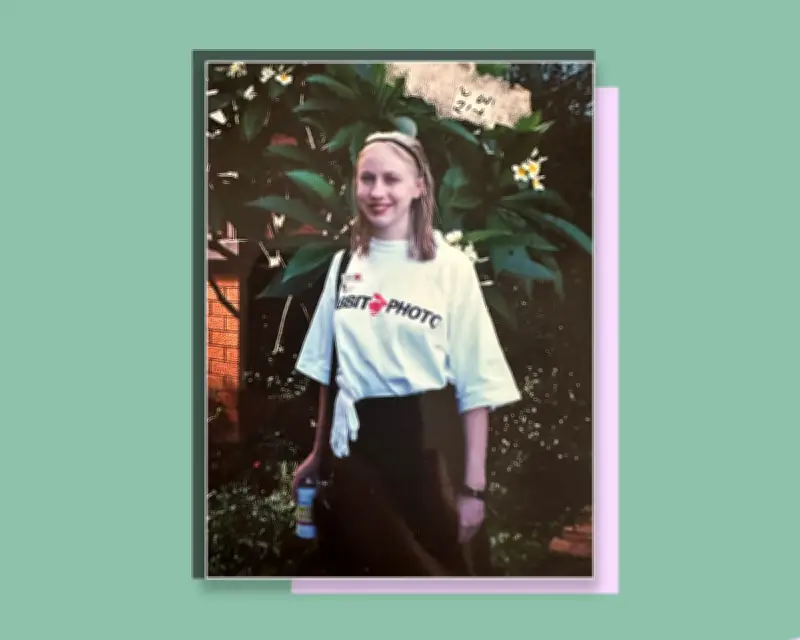
In 1993, Rebecca Lowrey-Boyd worked at Rabbit Photo, a one-hour photo lab in Westfield Figtree shopping centre, to fund her university lifestyle. For $7 an hour, she processed 35mm film canisters, witnessing the lives of her community unfold through photographs.
The era of expensive film
Film was costly, so people reserved it for major events, not everyday moments. Customers aimed, pressed the shutter, and hoped for the best. They dropped off 24 or 36 exposures in small canisters, ticking boxes on envelopes for matt or glossy finishes. There were no previews, filters, or deletions.
Technically, many photos were poor: blurry toddlers, bleached faces, demonic red eyes. Yet Lowrey-Boyd saw life in her midsized town: wedding receptions with tulle-wrapped pergolas, first-day-of-school shots, back yard barbecues, and lounge rooms with velvet sofas. It was the pre-Instagram highlight reel.

Unexpected content
Years before cameraphones and dating apps, people were determined to immortalise their genitals on 35mm film. The preferred genre was the 'from above' shot, a sternum-to-zipper composition. Lowrey-Boyd got a crash course in the diversity of the human penis. Women also appeared in lacy underwear or nude, leaning against doorframes.
Rabbit Photo had an official protocol for explicit photos: NFR, meaning 'not for Rabbit'. Staff would write NFR in thick black Texta on the packet to avoid opening it at the counter and flashing the top print at the customer. This spared everyone the awkward moment of making eye contact with the customer's naked girlfriend in a Santa hat.
The mechanics behind the counter
The lab had no darkroom, only a black nylon sack with armholes. To change film, Lowrey-Boyd would kneel on cold tiles, shove her arms inside, and by touch alone, crack open the canister, unspool the film, and thread it onto a reel. She worried about fumbling, letting light in, and erasing someone's only photos of nan's 80th birthday.
When negatives were developed, they had to be cut using a guillotine-like negative cutter. Pressing the handle at exactly the right speed and angle was crucial: too fast would slice through a honeymoon kiss; too slow would chew the film into a jagged ruin.
A lesson in seeing people
One day, a former high school teacher approached the counter holding a single photograph. She was with her partner, Lowrey-Boyd's old English teacher, who had died of breast cancer. The woman asked for a frame for the photo. A colleague glanced at it, scanned the wall of frames, realised the right size wasn't available, shrugged, and walked away. The teacher stood for a moment, slid the photo back into her handbag, and left. Lowrey-Boyd watched but didn't call her back or offer help. That small silence has stayed with her far longer than any mangled negative.
Rabbit Photo didn't provide a lightning-bolt epiphany or a glamorous career pivot. It gave Lowrey-Boyd calloused feet, a working knowledge of photo chemistry, an unexpectedly comprehensive understanding of local penises, and a lasting sense that the most ordinary jobs can teach you how to really look at people. For $7 an hour, that turned out to be a pretty decent deal.