Puccini's grand and final opera, Turandot, has made a triumphant return to the Royal Opera House in London, proving that a production now in its fifth decade can still feel vibrantly fresh. This marks the 19th revival of director Andrei Șerban's iconic staging, which first premiered at Covent Garden in 1984.
A Timeless Spectacle of Love and Fear
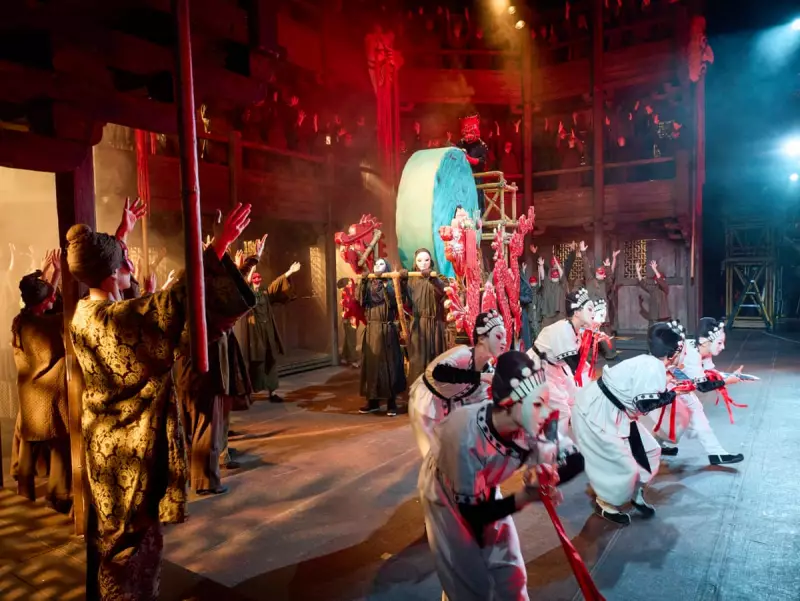
Set in a fantastical, fairy-tale version of imperial China, the opera grapples with immense themes: love, fear, power, and death. Andrei Șerban's production, with its dazzling designs by Sally Jacobs, is the Royal Opera's longest-running show. The performance on 18 December will be its 295th at the venue. While some critics note the production favours spectacle over psychological depth, its visual impact is undeniable. A three-storey pagoda, an army of extras, and masked dancers create what has been described as the company's nearest equivalent to a West End spectacular.
Oliver Mears, the Royal Opera's head of opera, highlights the work's enduring appeal. He calls it a "colourful, opulent spectacle that's stood the test of time" and an outstanding showcase for great singers, making it a perfect introduction to the art form. The current revival features a stellar cast, with the title role of the icy Princess Turandot shared between Anna Netrebko, Maida Hundeling, and Anna Pirozzi.
Behind the Scenes: The Executioner and the Unfinished Masterpiece
Exclusive access to rehearsals revealed the intricate work behind the spectacle. Actor and stuntman James Unsworth was seen being painted entirely green for his silent, terrifying role as the executioner—the figure who dispatches the suitors who fail to solve Turandot's riddles. The production also features the Royal Opera's Youth Opera Company, a free initiative offering children from diverse backgrounds the chance to perform and receive training.
Puccini died in 1924 before completing Turandot. He had written up to the death of the slave girl Liù, but left only sketches for the finale. The ending used in almost every production since the 1926 premiere at La Scala was completed by his student, Franco Alfano, reprising the now-legendary aria Nessun Dorma.
The Legacy of Nessun Dorma and a Banned Opera
That aria, sung by the prince Calaf (played in this run by Yusif Eyvazov, Arsen Soghomonyan, and Roberto Alagna), is a fiendishly difficult piece that became a global pop culture phenomenon after Luciano Pavarotti's 1972 recording soundtracked the 1990 FIFA World Cup. The Three Tenors album remains the best-selling classical album of all time, with around 12 million copies sold.
Despite its fairy-tale setting, the opera's portrayal of China was once deemed so unfavourable that the People's Republic of China banned performances until 1998. Puccini, who never visited China, was inspired by the wave of 'Orientalism' that swept the West in the late 19th century.
Jack Furness, who has directed the last four revivals of this production, describes Puccini's unfinished work as an enigma. He notes that this staging reflects every musical gesture with overt theatricality and imagination, drawing on world-theatre traditions and commedia dell'arte. Turandot continues at the Royal Opera House until 4 February.