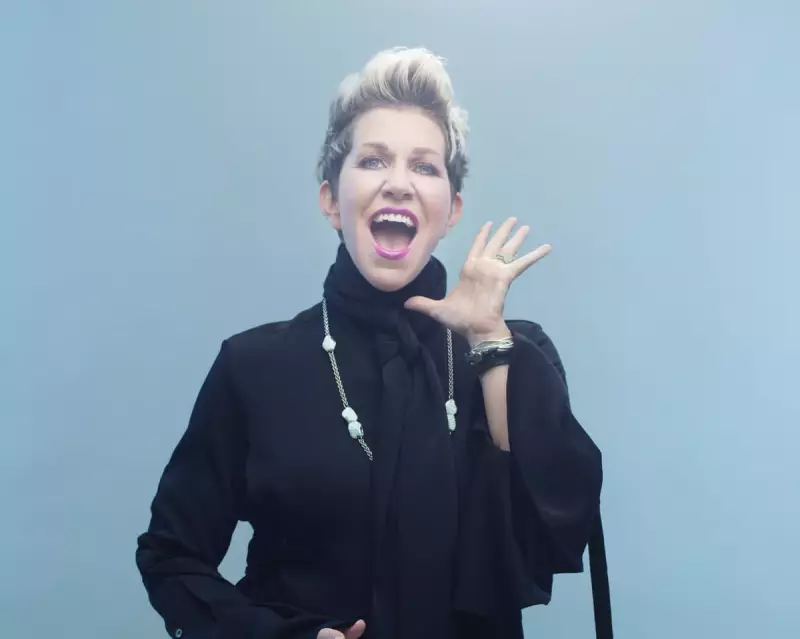
Celebrated American mezzo-soprano Joyce DiDonato is on a tireless mission to democratise opera, bringing its profound emotional resonance from the world's most prestigious stages to maximum security prisons and new audiences globally.
From the Met to Maximum Security
Despite a punishing international touring schedule that sees her grace venues like New York's Metropolitan Opera, Milan's La Scala, and London's Royal Opera House, DiDonato possesses an egalitarian passion for sharing music. This has led her to Sing Sing maximum security prison in New York state for over a decade, where she performs and runs workshops.
She has witnessed firsthand the transformative power of centuries-old music on inmates, moved by works like Handel's Giulio Cesare. For DiDonato, opera's power lies in its ability to "put into the physical realm, through vibration, what many of us have no access to verbalise and express."
A New Challenge in Tasmania
Speaking via Zoom from Tasmania, where she was preparing for her debut Australian concerts, DiDonato expressed equal excitement for performing for first-time opera-goers. She finds audiences in cities without a strong operatic tradition, like Hobart, often approach the art form without the cultural baggage carried by those in Vienna or London.
"I love the challenge of singing for people where it's new, or uncharted territory," she says. "I like to think that, at least energetically, I'm taking them by the hand and saying: 'Come, it's beautiful. You're gonna be OK.'"
In Australia and New Zealand, her programme features Les Nuits d'été (Summer Nights) by Hector Berlioz, a song cycle she describes as "immediately emotional, beautiful and identifiable," capturing both light and dark, humour and pathos.
The Mezzo's Advantage and Opera's Lost Way
DiDonato's voice, renowned for its exquisite coloratura, control, and warmth, allows her to inhabit a stunning array of characters. She champions the versatility of the mezzo-soprano, who gets to "play different genders, the princesses and the witches" across four centuries of music, unlike the more pigeonholed soprano roles.
However, she believes contemporary opera has, at times, lost its way in a panic to be relevant. "Ticket sales went down, and I feel like there was this panic [in the industry]... and it's almost as if we jumped ship from who we are," DiDonato argues. She aligns with composers who are "emotional storytellers" and are "not afraid to write a melody," a stance that feels almost counter-revolutionary today.
For DiDonato, the function of opera is vital in a frozen, blocked society. "We must, as individuals and a society, figure out who we are today in this world," she states, and opera provides a rare outlet for this exploration through expression. "It's the exact same experience" whether it happens in Tasmania, at the Metropolitan Opera, or in Sing Sing prison.
Joyce DiDonato performs with the Tasmanian Symphony Orchestra on 15 November at Federation Concert Hall, Hobart; the Melbourne Symphony Orchestra on 20 and 22 November at Hamer Hall; and the New Zealand Symphony Orchestra on 28 and 29 November in Wellington and Auckland.