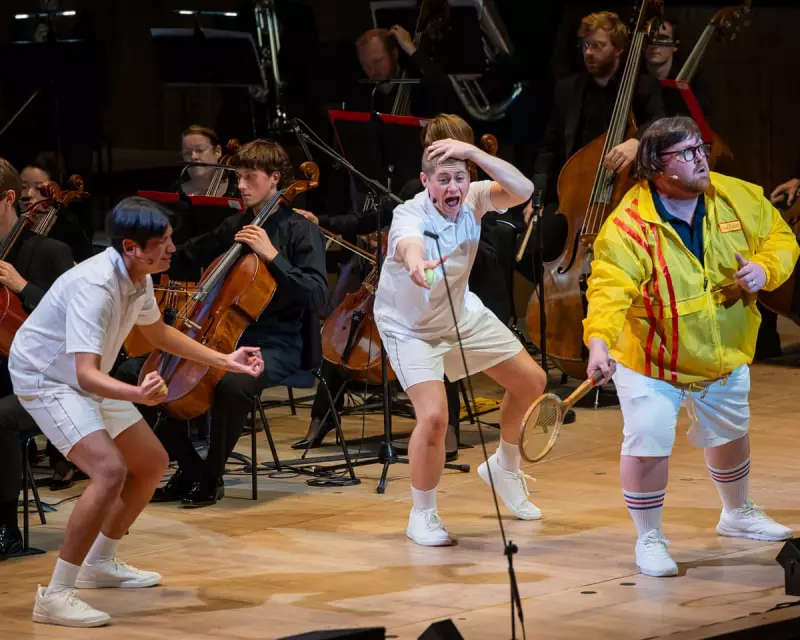
The world of opera and the world of professional tennis collided spectacularly at London's Royal Festival Hall with the world premiere of the orchestral version of Balls. This new work, composed by Laura Karpman, turns one of sport's most famous events—the 1973 'Battle of the Sexes' tennis match—into a pacey, all-singing, and all-dancing theatrical spectacle.
A Match Made for Opera
On 20 September 1973, an estimated 90 million people globally watched the televised showdown between the reigning women's No. 1, Billie Jean King, and the self-proclaimed male chauvinist and former men's champion, Bobby Riggs. The event was pure theatre from the start. King made her entrance on a litter carried by topless men, while Riggs arrived on a rickshaw pulled by female models. The symbolic gift exchange saw Riggs present a giant lollipop, with King countering by handing him a piglet.
Composer Laura Karpman stated in the programme that 'The Battle of the Sexes was always an opera,' and her work leans into this concept with gusto. At its most effective, the opera highlights the jarring nature of the period's sexism, incorporating vintage video clips of advertisements and near-verbatim TV commentary.
Kitschy, Pacey, and Unapologetic
As the triple-meaning title Balls suggests, subtlety is often cast aside in favour of bold, entertaining strokes. The score, under the baton of Marin Alsop, shifts effortlessly between different styles. Moments of hope echo the sounds of Copland, while archive footage of suffragettes is paired with a splash of Philip Glass-like minimalism. The climaxes are designed for a Hollywood audience, with short, punchy numbers and amplified voices.
An Emmy award-winning composer for film and TV, Laura Karpman demonstrated her skill in managing pace and keeping the audience thoroughly engaged. A video cameo from Billie Jean King herself at the start promised the audience they were 'in for a treat,' a promise the production worked hard to fulfil.
Standout Performances and Musical Virtuosity
The cast was led by tenor Nicky Spence as a comic ringleader Bobby Riggs, prancing and squealing through falsetto passages with infectious energy. As Billie Jean King, Nikola Printz was a powerful and intense presence, both vocally and dramatically, their generous mezzo-soprano voice carefully controlled throughout. Lotte Betts-Dean provided a smoky-voiced, soulful performance as King's secretary and lover.
The Philharmonia Orchestra, conducted by Alsop, moved with ease from filmic lushness to gamely clapping along to spoken declamation. The orchestra's own virtuosity was further showcased in a cleverly programmed performance of William Walton's Façade before the interval. This piece, demanding spectacular rhythmic delivery of Edith Sitwell's text, was delivered with aplomb by Printz, Spence, and particularly Betts-Dean, highlighting the world-class talent on stage.
While occasionally the amplification led to muddiness in big choral moments, Balls succeeded as a fun-forward piece of music theatre. It transformed a historic sporting moment into a kitschy, thought-provoking, and highly entertaining opera that held the Royal Festival Hall audience captive.