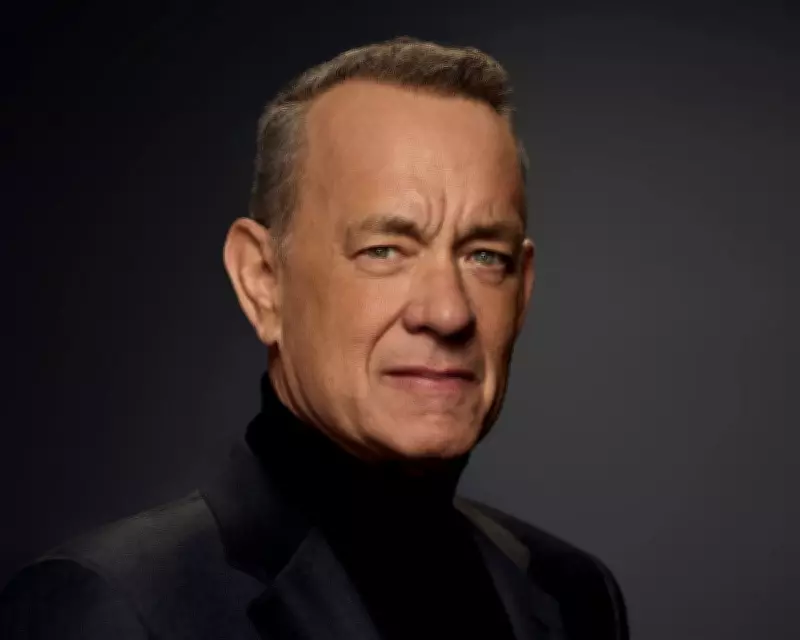
World War II with Tom Hanks opens with a sales pitch for World War II by Tom Hanks himself. 'The second world war,' he says, looking into the camera with calm paternal authority, 'is the largest event in human history. No part of the globe is unaffected. The second world war changed everything. For all of us.'
Hanks serves as narrator and on-screen master of ceremonies for each of the 20 episodes, a series that ranks among the largest documentaries ever produced. Its 20-episode run invites comparisons to ITV's monumental 1973 classic The World at War, which spanned 26 episodes. This new series repeatedly emphasizes that it is tackling the biggest subject of all. After Hanks' introductory remarks, a recurring montage features contributors underscoring the war's massive impact.
Yet the series fails to feel epic. It struggles to elevate and move viewers with the sweeping arc of history. Part of the problem is that Hanks and his team are correct about the subject's sheer scale, to the point that 20 episodes are insufficient. The opening triple bill covers Hitler's rise to power, the German invasion of France through the Ardennes in 1940, and the Dunkirk evacuation, all too quickly. Each of these events has inspired entire books; the television version must condense drastically.

Another issue is that World War II with Tom Hanks was made in the 2020s, not the 1970s. The World at War featured stunning interviews with first-hand witnesses, many speaking for the first time, sharing details unknown to viewers. Those people are no longer alive. To replace primary sources, this new documentary relies heavily on talking heads, a common flaw in 21st-century factual programming.
Between archive clips and Hanks' sober narration, academics and popular historians appear to offer insights that rarely go beyond the obvious. Often, they simply repeat or color what has just been said. The start is particularly weak: after Hanks describes the German invasion of Poland with precise statistics and vivid footage, history podcaster Dan Carlin appears and shouts, 'September 1st, 1939! A storm breaks over Poland!'
Not all contributors are so unnecessary, but these segments create a monotonous rhythm: clip, narration, talking head. The plain filming and lighting resemble a low-budget BBC Four or PBS documentary.
However, the series compensates with tremendous archive film, some newly discovered. Since the invention of motion picture cameras, armies have allowed cameramen to record even under fire. Viewers see the British, Russians, and Germans up close. Better access to German and Russian news broadcasts also allows the show to cycle through propaganda responses from all sides, giving a rounded view of who was winning.
The series does not overturn mainstream opinions about the war. It fails the dinner party test: viewers cannot use it to overwhelm a history enthusiast with obscure facts. Deeper analysis is absent.
Still, Hanks' efforts are not wasted. The World at War is over 50 years old, and newer generations may not seek it out. This modern equivalent repackages the story in today's format. For those with sketchy knowledge, 20 hours will provide the basics. But it feels basic: the war is too large for this series to capture fully.
World War II with Tom Hanks aired on Sky History and is available on Now in the UK, with an Australian airdate yet to be announced.