Willie Colón: The Explosive Force Who Redefined Salsa Music
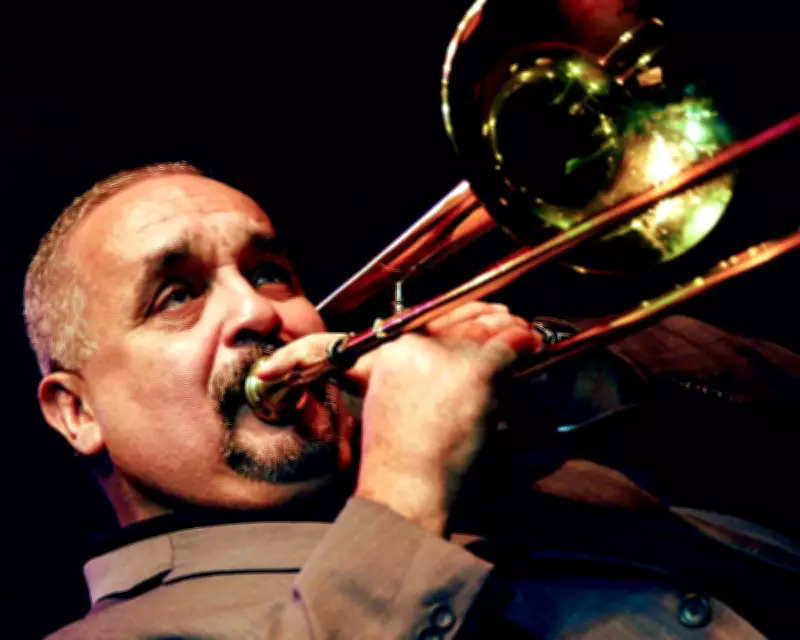
Willie Colón, the legendary Nuyorican salsa musician who passed away in New York at the age of 75, was an explosive energy source who propelled salsa music into the stratosphere. With his distinctive gangster image, Colón ruffled the feathers of the musical establishment while thrilling millions of fans worldwide with his raw, rhythmic innovations.
A Multifaceted Legacy: From Music to Politics
Colón was many things throughout his remarkable career: a master blaster of Nuyorican salsa, a Puerto Rican superstar, an actor in Mexican soap operas, and both an activist and later a reactionary figure in New York politics. These diverse accomplishments reflect a musician who was constantly in motion, always eager to create new music and engage in spirited debates with fellow musicians or political opponents.
To Nuyoricans—Puerto Ricans living in New York—Colón was nothing short of a legend. However, to many Anglo New Yorkers, he remained largely under the radar, perhaps known only to those who noted his collaborations with David Byrne during the singer's explorations of Latin American music. Despite being nominated for ten Grammy Awards and never breaking into the US Top 40, Colón was arguably the most celebrated brass player across much of Latin America over the past six decades, earning the Latin Grammys' musical excellence award in 2004.

The Salsa Revolutionary
Colón was to salsa what Elvis Presley was to rock 'n' roll—a fearless teenager whose loose, fast, and rough interpretation of street music helped create an entirely new genre that would grow to dominate Latin dance music. Born in the South Bronx and raised primarily by his Puerto Rican grandmother, Colón initially learned trumpet before switching to trombone, using that instrument to shape the distinctive sound of salsa, much as JJ Johnson had done for jazz and Don Drummond for ska.
While Latin boogaloo dominated the Bronx during Colón's youth, by age sixteen, he and his friends were already playing faster, more rhythmically complex Latin music. They drew inspiration from Cuban son and Puerto Rican crooners while remaining alert to jazz, funk, and rock influences—a fusion Colón himself described as "a swinging musical Jabberwocky."
The Fania Records Era and Musical Breakthrough
Signed to Fania Records, then a fledgling independent Latin label, Colón was joined by vocalist Héctor Lavoe, another teenager of Puerto Rican heritage. Together, they forged a revolutionary sound that would change Latin music forever. Colón's 1967 debut album, El Malo (The Bad Guy), captured a raw, dynamic energy that resonated with a Latino generation beginning to identify as "Nuyoricans."
The album sold an impressive 300,000 copies—extraordinary for niche music sung in Spanish—and found audiences not only in New York and Miami but also in Colombia and Venezuela. With the Cuban revolution ending Havana's dominance as the capital of Latin dance music, New York emerged as the center of a new, fluid Latin sound, and Colón, a star at just seventeen, became one of salsa's foremost figures.
Collaborations and Global Impact
In 1968, Colón became a founding member of the Fania All-Stars, a salsa supergroup capable of packing stadiums. They shared stages with artists like Billy Cobham and Manu Dibango and performed alongside leading African American musicians at the 1974 concert in Zaire celebrating the Muhammad Ali versus George Foreman heavyweight title fight.
The year 1974 also marked Colón's collaboration with Panamanian singer-songwriter Rubén Blades, forming an explosive partnership that took salsa to unprecedented heights. Blades' socially conscious lyrics, addressing issues like US imperialism in Latin America, combined with Colón's musical innovation to create groundbreaking work. Their 1978 album, Siembra, received widespread critical acclaim and sold over three million copies, making it the bestselling salsa album of all time.

Political Divisions and Enduring Musical Legacy
The relationship between Colón and Blades was complex, marked by periods of collaboration and conflict. Both ventured into politics—Blades unsuccessfully ran for president in Panama, while Colón made unsuccessful bids for public office in New York. Their partnership ultimately dissolved into a five-year legal battle that Colón lost in 2007.
Their political paths diverged significantly, with Colón, who had performed at Bill Clinton's inauguration ceremonies, becoming a vocal supporter of Donald Trump. Despite these divisions, Colón's best recordings remain among salsa's finest achievements. He dedicated his life to the genre, famously writing: "Salsa is not a rhythm. It is a concept. An open, ever-evolving musical, cultural, sociopolitical concept."
Willie Colón's legacy as a transformative force in Latin music endures, his innovative spirit and raw energy continuing to influence generations of musicians and fans alike.