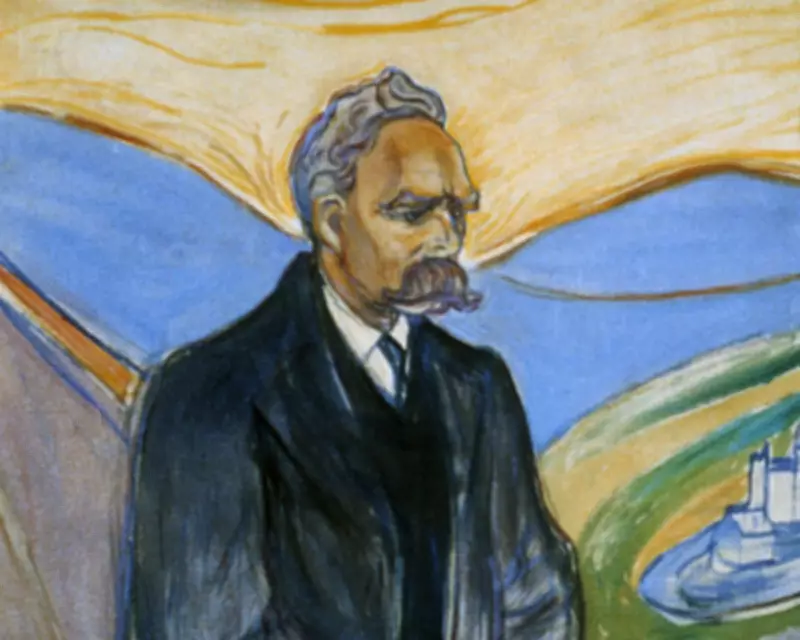
Beyond Stoicism: How Nietzsche's Nihilism Helps Us Discover What Truly Matters
In contemporary culture, stoicism often receives praise as the philosophical approach for navigating life's challenges with resilience and composure. However, an alternative perspective emerges from the works of Friedrich Nietzsche, whose engagement with nihilism presents a radically different path toward understanding existence. Nietzsche's philosophy does not provide comforting answers but instead offers a method for questioning fundamental assumptions about value and purpose.
The Unlikely Guide for Modern Life
During the late stages of her first pregnancy, author Gemma Parker developed an unconventional strategy to deflect unsolicited advice about impending motherhood. She referred to her daughter's birth as "the apocalypse," creating a conceptual barrier against conventional wisdom about child-rearing. This approach stemmed partly from contradictory advice she received but also from her deep engagement with Nietzsche's writings throughout her twenties.
Nietzsche might seem an improbable philosophical companion for a young mother, yet his work fuels essential questions about values and purpose that become particularly relevant in caregiving contexts. Years later, with both children in primary school, Parker returned to Nietzsche's ideas to navigate the tension between profound responsibilities to loved ones and the persistent desire for freedom and new experiences.

Nihilism as Diagnosis and Prompt
Nihilism, commonly misunderstood as the belief that "nothing matters," often conjures associations with anarchy, hedonism, or apathetic characters from popular culture. Through Nietzsche's lens, however, nihilism functions not as an excuse to abandon responsibility but as a three-stage process: first as diagnosis of our value systems, then as reckoning with their foundations, and finally as prompt for creating new meaning.
Nietzsche provides a framework for asking what exactly matters in life and considering the possibility that what truly matters might differ dramatically from what we've been conditioned to believe. This philosophical approach challenges us to step outside social conditioning and examine whether we can establish authentic values, purpose, and meaning independent of external influences.
The Brutal Honesty of Nietzsche's Philosophy
Nietzsche maintains fierce opposition to anyone offering easy answers, solace, or escape from life's fundamental questions. He delivers scathing critiques of organized religion and fellow philosophers who claim to have solved existence's riddles. His philosophy rejects belief systems, simplistic solutions, and intellectual laziness, ensuring that readers who approach Nietzsche with questions inevitably depart with more profound inquiries.
This philosophical journey may lead to the unsettling realization that objective truth, purpose, or meaningful existence cannot be definitively proven. The subsequent challenge becomes how to withstand this discomfort without surrendering to despair or resignation. Can we maintain skepticism, pessimism, and even nihilistic perspectives while still engaging meaningfully with daily life—preparing school lunches, appreciating children's stories, caring for aging parents, and maintaining human connections?
Artistic Responses to Nihilistic Thinking
In exploring art as response to nihilistic thought, Parker examined works by Samuel Beckett and Albert Camus, who grappled extensively with existential questions in their literature. Yet an unexpected parallel emerged with country music icon Dolly Parton, whose creative process embodies a practical response to existential discomfort.
Parton once described writing two hit songs in a single night while confined to a hotel room during a liquid diet, unable to join her band enjoying fried clams downstairs. Rather than succumbing to self-pity in what she called a "lonely-ass room," she channeled her energy into creation. While Parton isn't a nihilist, her approach demonstrates how one might confront life's limitations without surrendering to despair—simply by making something new.

Living with Nihilistic Awareness
Engaging with nihilistic thought experiments need not involve melancholic contemplation or tortured artistic expression. For Parker, it represents a daily commitment to courageously question proclaimed meanings, confront the discomfort of potentially meaningless existence, and persist in showing up and creating despite uncertainty and despair.
Nihilism becomes intellectually stagnant when thinking stops at accepting life's inherent meaninglessness. The more compelling inquiry concerns what follows this realization: how we respond to despair, what we create despite knowing our creations might not matter, and how we act even when our actions might lack cosmic significance. This represents Nietzsche's enduring contribution—not answers, but a method for asking better questions about what gives our lives substance and direction.