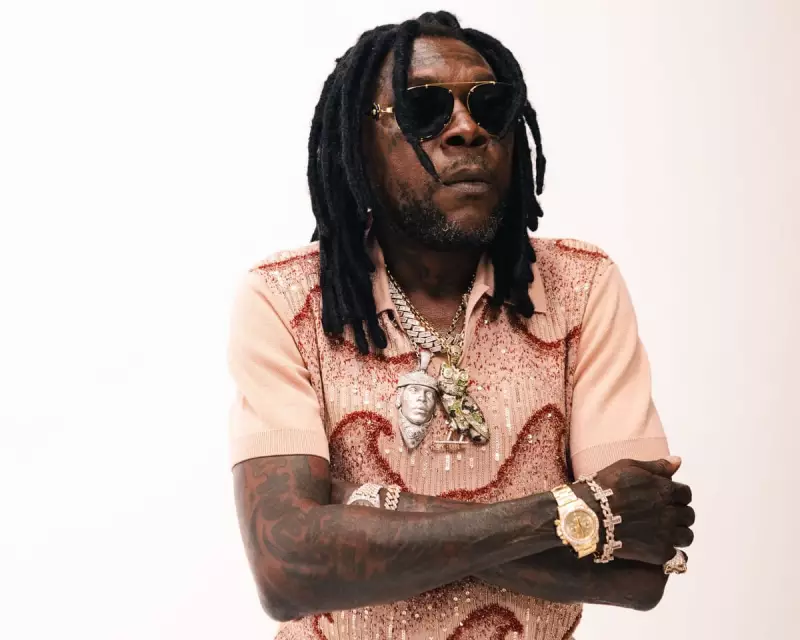
When the UK government's emergency alert test sounded during our interview at London's Four Seasons hotel, Vybz Kartel jumped up in panic. "Me ready fi run you know!" he exclaimed, before both of us burst into laughter. The moment was both humorous and revealing, coming as he discussed the enduring psychological impact of his years behind bars.
From Prison Cell to Comeback Stage
Adidja Palmer, better known as Vybz Kartel, spent more than a decade incarcerated in Jamaican prisons following his 2014 conviction for the murder of associate Clive "Lizard" Williams. The 49-year-old dancehall icon was finally released in July 2023 when the UK Privy Council - Jamaica's final court of appeal as a former British colony - overturned his murder conviction.
At the time of his 2011 arrest, Kartel stood at the pinnacle of Jamaican music. Having emerged in 2003 with his groundbreaking album Up 2 Di Time, he revolutionised dancehall with his gritty, rapid-fire toasting style that marked a departure from the smoother reggae sounds of legends like Bob Marley. His succession of hits including Romping Shop with Spice, Clarks and Summer Time cemented his status as the undisputed King of Dancehall.

The Lasting Trauma of Incarceration
Despite his public triumphalism - evident in his recent London O2 performance where he emerged from a prop cell in sparkling Givenchy - Kartel reveals the profound psychological scars that remain. "My sleeping habits have changed ... if I hear a key shake, it traumatise me," he confesses, explaining that wardens would jingle keys before prisoner head counts.
His physical health suffered equally. In 2014, he was diagnosed with Graves' disease, an autoimmune condition worsened by prison conditions at Jamaica's Tower Street Adult Correctional Centre. In his release affidavit, Kartel stated he feared dying in prison as his heart function had dropped to just 37% capacity. "I was in urgent need of medical help that the state could not provide," he says.
His health was so compromised that during his welcome-home concert in Kingston on New Year's Eve, he struggled to breathe and walk on stage. Only through a rigorous diet of whole foods and green juices has he managed to regain his health and deliver the energetic O2 performance that pleased him so much.
Creating Music Behind Bars and Watching Dancehall Go Global
While imprisoned, Kartel had to watch as dancehall exploded into the global mainstream, with artists like Drake incorporating the sound into his 2016 album Views and signing Kartel's protégé Popcaan. "It didn't feel good, but I'm a type of person that is gonna find a way," he states defiantly.
Find a way he did - releasing music prolifically from prison, including 50 new songs in 2016 alone. His track Fever, certified gold in the US and silver in the UK, proved he could still tap into dancehall's momentum with lyrics recorded in Tower Street prison using an iPhone 5S.
Kartel maintains his innocence regarding Lizard's murder, insisting "Of course I was set up, because I'm innocent." He suggests Jamaican authorities colluded to remove him from public life, noting that his "gunman" tunes, vulgar "slackness" lyrics, and involvement in the Gully-Gaza rivalry with fellow artist Mavado had made him a controversial figure. By 2010, he'd been banned from several Caribbean nations including Barbados and St Lucia.
Reflection, Regret and Reformation
Today, Kartel expresses regret about several aspects of his past, including his homophobic lyrics. "I do regret it, because culture is powerful," he says, acknowledging that he was "mimicking what was said before by entertainers" and influenced by Jamaica's church-driven homophobia. He now advocates that "people should live, regardless of who you are or who you're sleeping with."
He also regrets bleaching his skin, which he'd previously justified as making his tattoos more visible. "In hindsight, I think it was just that colonial mindset that makes Black people think white is right," he reflects, adding firmly that he'll never bleach again: "That's bullshit, man."

Despite this anti-colonial awareness, Kartel's experience with Jamaica's justice system has made him an unlikely advocate for British institutions. His Instagram bio features "Long live the king" alongside a Union Flag, and he rejects calls for a Caribbean Court of Justice, believing Jamaica remains "too corrupt."
Now focused on expanding dancehall's global reach through Afrobeats collaborations and maintaining artistic integrity, Kartel embraces his freedom with gratitude. "I tell you, nothing can ruin my day or my energy," he says. "I've got a new lease on life." His album Heart & Soul is out now, marking the next chapter for one of dancehall's most controversial and compelling figures.