UnEarth Oratorio Confronts Climate Crisis in UK Premiere at Barbican
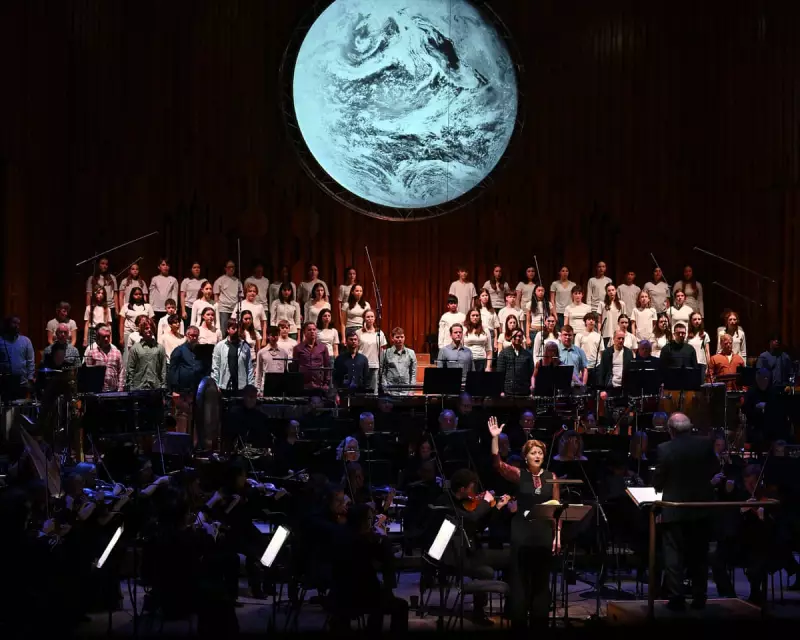
The Barbican in London recently hosted the highly anticipated UK premiere of Julia Wolfe's powerful oratorio UnEarth, a work that directly addresses the urgent issue of climate breakdown through classical music. Performed by the BBC Symphony Orchestra under conductor Martyn Brabbins, alongside the BBC Singers and Finchley Children's Music Group, this production created a striking visual and auditory spectacle that divided critics with its bold approach.
A Visual and Musical Spectacle
The performance transformed the Barbican stage into an immersive environment, with Lucy Mackinnon's projections playing a central role. A circular screen hung moonlike above the musicians, displaying evocative imagery that ranged from celestial night skies to teeming waves of water. During the powerful second movement, projections of lush plants and fungi complemented the music as male singers chanted "tree" in dozens of languages, creating cross-rhythms that had wind players almost dancing in their seats.
Soprano Else Torp delivered a lean, high vocal line that dovetailed beautifully with the orchestral textures, while all performers sang from memory with amplification enhancing their collective impact. The visual elements worked in fascinating counterpoint with Wolfe's score, particularly when violent rain imagery coincided with violinists ricocheting their bows across strings during passages about biblical floods.

Controversial Final Movement
Where the production proved most divisive was in its concluding section. The final movement featured teenagers staring from the screen while children on stage intoned lines including "I take the bus," accompanied by male voices delivering climate-science buzzwords in thudding, repetitive syllables. This direct approach raised questions about whether the work risked becoming preachy or placing undue responsibility on younger generations to solve environmental crises created by their elders.
Some critics found this heavy-handed, especially following the first half's performance of Copland's Appalachian Spring with its celebration of nature's resilience through beguiling woodwind solos and punchy rhythms. The contrast between Copland's subtlety and Wolfe's directness highlighted the artistic challenge of addressing climate breakdown without slipping into didacticism.
Production Background and Reception
Originally created by Wolfe's collective Bang on a Can and first performed in New York during 2023, UnEarth represents a significant addition to contemporary classical repertoire addressing environmental themes. The work was developed with input from youth choirs, though the UK premiere featured the established Finchley Children's Music Group alongside National Youth Voices.
While the production made striking impressions through its innovative combination of projection technology and live performance, critical reception remained mixed regarding its ultimate effectiveness. The central dilemma of how art can address climate urgency without becoming hectoring remained unresolved, though the attempt itself marked an important cultural moment.
The performance was broadcast on BBC Radio 3 and remains available on BBC Sounds for thirty days, ensuring wider public engagement with this ambitious artistic response to one of our era's defining challenges.