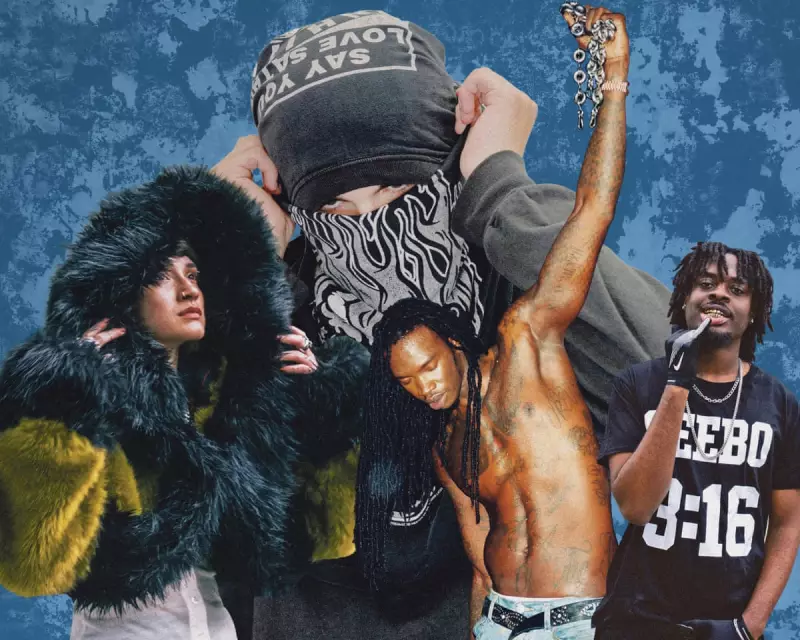
The UK music scene is witnessing a seismic shift, as a new generation of underground rap artists explodes onto the global stage. Spearheaded by the meteoric rise of masked Liverpool rapper EsDeeKid, this movement is defined by its experimental, high-energy sound and a defiant embrace of British culture, signalling a potential new British Invasion.
The Sound of a Generation: Dopamine Overload and British Identity
The scene, often simply dubbed "underground" rap by its fervent young fanbase, is notoriously difficult to pin down. Upcoming artist Ceebo describes it as capturing a zeitgeist of "constant stimulation – dopamine overload." Tracks are typically short, fizzing with lo-fi energy, and pushed into the red. Crucially, Britishness is foregrounded: regional accents are celebrated, lyrics reflect life in market towns and council estates, and producers heavily sample classic UK garage, rave, and grime records.
This aesthetic was on full display at a sold-out EsDeeKid show at London's Electric Ballroom in early November. The crowd, clad in skatewear adorned with union jacks, roared as the anonymous Scouse rapper took the stage amidst apocalyptic bass and horror-film synths. The visual aesthetic leaned into a ragged, photocopied style more akin to 80s post-punk than conventional rap glamour. Two weeks later, his track 'Phantom' crashed into the UK Top 20, a testament to the movement's surging momentum.

From the Margins to the Mainstream: A Scene Built on Live Energy
While artists like Dave and Stormzy dominate arenas, this new wave is rivalling them in streaming numbers while retaining a raw, punk edge. The scene has spread virally through TikTok and Discord, but its lifeblood is live performance. Promoters like Aux have become key players, packing out showcases where young fans, "numbed by the overwhelming flood of social media," seek the chaotic joy of mosh pits.
Kenny Allstar, the BBC's chief rap DJ, is a vocal advocate. "The next generation are here," he states, highlighting the trailblazing role of Lancey Foux. Foux, who turned 30 recently, has been instrumental since 2015 with his outlandish, melodic style that defied existing UK rap genres. His recent collaborations with new talent like YT and Fimiguerrero have helped catalyse the scene's current explosion.
Foux, however, challenges the 'underground' label. "EsDeeKid is one of the biggest UK artists, so why would you call him underground? This shit is big!" he argues from Los Angeles. "This is our opportunity to name our sound, and I'm calling it the overground." His focus remains on the live experience: "The real crown on the head is knowing you've dropped a song that is going to go crazy live."
Reclaiming Britishness: Flags, Nostalgia and Complex Identity
A defining characteristic of the movement is its conscious, complex engagement with British identity. In a spirit of defiance, artists have been plastering union jacks across artwork and clothing, attempting to reclaim the symbol from far-right appropriation. Director Lauzza, who makes videos for scene leaders, explains: "Creating our own Britain and our own culture that we can be proud of, that feels right."
This often manifests as a rush of millennial and Gen-Z nostalgia. Jim Legxacy's track '06 Wayne Rooney, with its FIFA video-game aesthetic, taps into a collective memory of simpler times. Yet, the exploration is often critical. Ceebo, whose mixtape 'Blair Babies' examines Britain's recent past, points out the nuanced position of many artists: "We're not considered British, but we're not exactly natives of our parents' countries."
He expresses ambivalence about the flag's prevalence, noting, "It's essentially a symbol of violence." Ceebo is acutely aware of the scene's influence: "Whether or not people from the underground realise it, we are shaping the youth of this country's thoughts and feelings towards Black Britishness."
The scene's geography is also distinctly national. Ledbyher, a rising voice from Norfolk, notes that unlike drill's London-centric focus, "the underground is commenting on a life that more of us find ourselves in." Artists are emerging from Scotland, Ireland, Canterbury, and even the University of Oxford.

With US rap in a commercial lull, global attention is turning to the UK's maxed-out sound. Fakemink was recently pictured with US icons Clipse and Andre 3000 in LA. As Lancey Foux prepares to shake things up again by moving towards dance music, the ethos remains. "It's not as narrow as a style of rap," he says, "it's down to the alternative-ness of what you're delivering." This punk spirit, combined with global streaming numbers and sold-out tours, suggests the underground's moment on the world stage is just beginning.