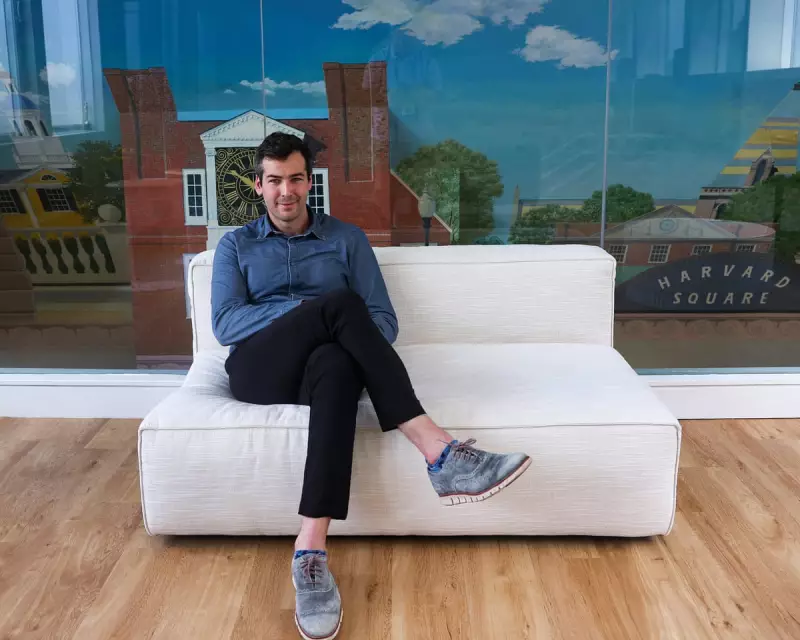
Mikey Shulman, the co-founder and CEO of generative AI music company Suno, finds himself in a paradoxical position. To some, he is the visionary architect of music's interactive future. To others, he is its potential executioner. His company, valued at a staggering $2.45 billion (£1.83bn), allows users to create full songs from simple text prompts, triggering an existential crisis within the music industry.
The Legal Battles and Billion-Dollar Valuation
Suno's rapid ascent has not been without significant controversy. The company, founded just over two years ago, is currently embroiled in major legal challenges. In June 2024, the Recording Industry Association of America (RIAA) filed a lawsuit against Suno on behalf of major US record labels. This was followed in January 2025 by a separate lawsuit from German collection society GEMA, representing songwriters.
Both suits allege Suno trained its AI systems on copyrighted music without authorisation or licences. Shulman initially argued this constituted "fair use," a position the RIAA strongly rejected, stating it does not apply when the output seeks to substitute for the original work.

Despite the legal headwinds, investor confidence appears sky-high. In November 2024, Suno raised $250 million (£187m) in funding, catapulting its valuation. This reflects a broader gen AI investment boom, with a Stanford University report noting $34 billion (£25bn) in private investment flowed into the sector in 2024 alone.
Democratisation or Dystopia? The Industry Divide
The emergence of services like Suno has split opinion in the music world. The utopian view champions the democratisation of creativity, allowing anyone to make music. The dystopian perspective fears a flood of AI-generated "slop" that could devalue human artistry and make musicians surplus to requirements.
Shulman, a former musician himself, frames Suno's mission as creating "the next format for recorded music." He envisions a future where music is interactive and social, something you "play with, not just play." He counters the "slop" argument by stating its subjectivity, citing a song he made with his four-year-old child as personally meaningful, if not commercially viable.
However, the scale of AI music is already immense. Streaming service Deezer reports that over a third of music uploaded to it daily is AI-generated, equating to roughly 50,000 tracks. It also estimates 70% of streams of AI music on its platform are fraudulent, driven by bot farms seeking royalty payouts.
Deals, Chart Scandals, and an Uncertain Future
The music industry's historical response to disruptive technology—from apoplexy to litigation to licensing—is playing out in real-time. Among the big three AI music firms, Suno's licensing journey is partial. While it has secured a partnership with Warner Music Group (WMG), deals with Universal Music Group (UMG) and Sony Music Entertainment remain elusive, with litigation ongoing.
AI music is already impacting charts and platforms. The track "Into the Blue" by Sienna Rose, widely suspected to be AI-generated, recently hit the Top 10 on Spotify's Viral 50 Global chart. In Sweden, a major hit was removed from official charts for being "mainly AI-generated." Bandcamp has announced it will not platform music "generated wholly or in substantial part by AI."
More alarmingly, Suno was used last year to create tracks containing racist slurs and glorifying Adolf Hitler. Shulman called it a "very small thing" involving three songs with a combined ten plays, but confirmed the company has since developed more rigorous safeguards.
As for whether AI shortcuts the famed "10,000-hour rule" for mastery, Shulman believes the hard work remains. "I think people will [still] have to spend 10,000 hours," he says, suggesting they will simply practise new skills. He has even embraced a provocative comparison, noting some describe Suno as "the Ozempic of the music industry—everybody is on it and nobody wants to talk about it." The fear, of course, is that putting music on such a regimen could see it waste away to nothing.