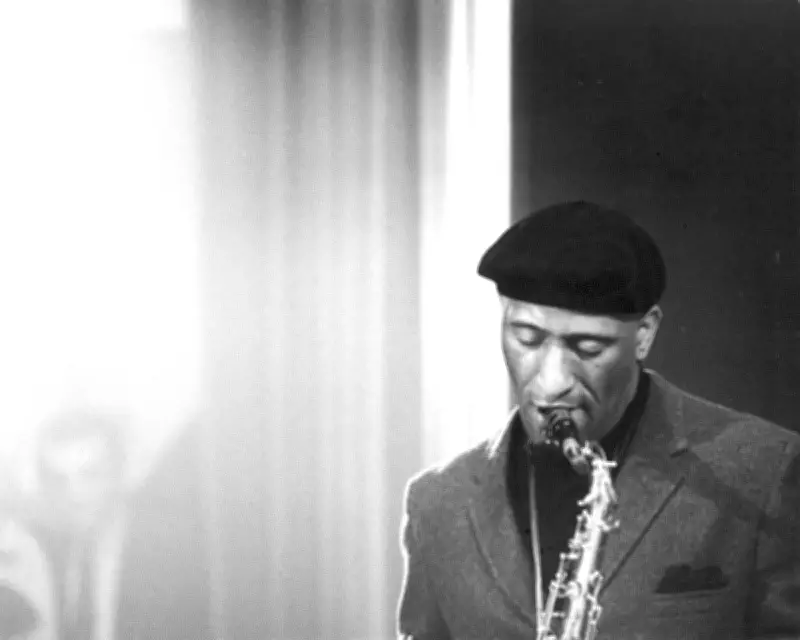
Sonny Rollins, the colossus of jazz saxophone, has died at the age of 95. His remarkable catalogue of work stretches from vivacious mid-50s sets to his evocative performance after 9/11. Here are ten of his greatest recordings that capture his magic, mastery, and magisterial power.
Tenor Madness (1956)
At 30, Sonny Rollins had already made his unique mark with Miles Davis and Thelonious Monk. This 1956 session, cut a year after Charlie Parker's death, features a chance encounter with John Coltrane on the two-tenor blues chase of the album's title. With the Miles Davis rhythm section of Red Garland, Paul Chambers, and Philly Joe Jones, Rollins' unquenchable inventiveness flows on tracks like Paul's Pal and The Most Beautiful Girl in the World.
Saxophone Colossus (1957)
This classic set, with pianist Tommy Flanagan, bassist Doug Watkins, and drummer Max Roach, showcases Rollins' guffawing, haranguing improvisational style. The calypso St Thomas became a staple, while Blue Seven redefined how in-the-moment variations on simple themes could shape generations of jazz.

Way Out West (1957)
Rollins' demanding setup of sax with just bass and drums shines here, with bassist Ray Brown and drummer Shelly Manne. He turns cheesy showtunes inside out, notably I'm an Old Cowhand, and produces an improv classic on Come, Gone, rivaling Blue Seven for invention.
A Night at the Village Vanguard (1957)
This live recording from New York's Village Vanguard features Rollins with bassist Wilbur Ware and drummer Elvin Jones. Freed from piano chords, he storms through Old Devil Moon, two versions of Softly, as in a Morning Sunrise, and his blues original Sonnymoon for Two.
Freedom Suite (1958)
Rollins' response to US race relations and civil rights, this album features bassist Oscar Pettiford and drummer Max Roach. The 19-minute title track is magisterially powerful, revealing his sense of structured improvisation from minimal materials.
The Bridge (1962)
After a creative break, Rollins returned with this album, named after his practice spot on the Williamsburg Bridge. With guitarist Jim Hall, he explores a wider jazz soundscape, offering a haunting account of God Bless the Child.
Live at Ronnie Scott's (1965)
Recorded in London, this set captures Rollins with pianist Stan Tracey, bassist Rick Laird, and drummer Ronnie Stephenson. It's an intimate example of his gigs far from concert halls, featuring whimsical and unexpected chords.
Sunny Days, Starry Nights (1984)
From the 1980s onward, Rollins settled into a concert groove. This album showcases him with trombonist Clifton Anderson and pianist Mark Soskin, with standout tracks I'll See You Again, Kilauea, and the calypso Mava Mava.
This Is What I Do (2000)
The best manifestation of Rollins' genius in his 70s, featuring drummer Jack DeJohnette. The album mixes calypso, blues, almost-gospel, and a devoted bow to Billie Holiday on A Nightingale Sang in Berkeley Square.
Without a Song: The 9/11 Concert (2001)
Four days after witnessing the World Trade Center collapse, Rollins performed this evocative session at Berklee School of Music. The performance, including a beautiful Why Was I Born?, won a 2006 Grammy for jazz instrumental solo.