Songwriter Reopens 30-Year Feud Over Robbie Williams' Breakout Hit
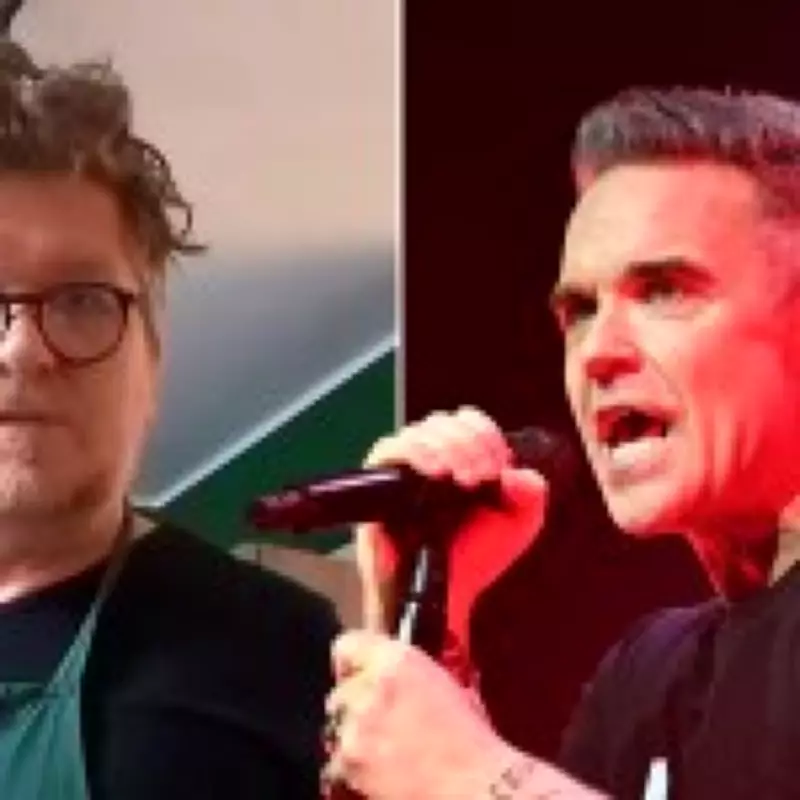
A songwriter who has long claimed authorship of Robbie Williams' signature song Angels has reignited a bitter dispute spanning nearly three decades. Irish singer-songwriter Ray Heffernan has publicly challenged Williams' narrative of the song's creation, asserting his own role in crafting the iconic track that launched Williams' solo career.
The Origins of a Musical Controversy
Robbie Williams first achieved fame as a member of the popular boy band Take That during the early 1990s. After departing the group in 1995, he embarked on a solo journey that culminated in his 1997 debut album Life thru a Lens. The album's standout single, Angels, peaked at number four on the UK Singles Chart and has since sold over 1.16 million copies in the United Kingdom alone. The song's enduring popularity was further cemented when it received the prestigious honor of being voted the best song of the past 25 years at the 2005 Brit Awards.
However, Ray Heffernan has consistently maintained that he played a crucial role in the song's creation. According to Heffernan, he initially composed an early version of Angels following a personal tragedy when his girlfriend suffered a miscarriage. The original lyrics reportedly included the poignant line: 'I won't have a baby to love so I'll love an angel instead.'

A Fateful Meeting in Dublin
Heffernan recounts meeting Williams in a Dublin pub in 1996, where he played an incomplete version of the song for the aspiring solo artist. The pair subsequently recorded a studio demo that same week, with Heffernan describing the session as a collaborative effort. 'I was on the guitar, he was shouting ideas at me, and I was kind of shaping it into a song so that would have been a 50/50 songwriting session,' Heffernan explained during a 2024 interview with BBC's Good Morning Ulster.
After Williams returned to England, the two lost contact. Heffernan later received a financial offer for his contributions to the song's creation. Initially presented with £2,500 for his rights, the amount increased to £7,500 when Heffernan requested proper songwriting credit. 'I was 22 at the time and taking advice from the adults around me,' Heffernan recalled. 'I accepted the deal and then the song kind of took on a life of its own.'
Conflicting Accounts and Public Disputes
While Williams has acknowledged meeting Heffernan and participating in an initial songwriting session, he maintains that the final version of Angels was substantially rewritten with producer Guy Chambers. Williams has characterized Heffernan as a 'fantasist' and defended the financial settlement made decades earlier. 'We could have gone to court, and it all would have been down to whether what way the judge wakes up that day out of bed...so I gave him some money, and he went away,' Williams stated in 2017.
Heffernan has responded forcefully to these characterizations. 'How can Robbie Williams call me a fantasist?' he questioned. 'I have always maintained that as a young man, I wrote a song with Robbie, that went on to become his hit song Angels and my story of how that came about has never changed.' He further asserts possessing legal documentation to substantiate his claims.
Renewed Claims and Legal Action
The controversy has resurfaced following Williams' recent interview on BBC Radio 2, where he discussed his debut album and the pivotal role of Angels in his career. 'I was about to be dropped and then fortunately I dropped The Angels, didn't I? And it gave me the career that I've got today. I'm incredibly grateful for that song,' Williams reflected.
In response, Heffernan has taken to social media platforms including TikTok, sharing videos discussing what he describes as 'signing his rights away' to the song. He has also posted archival footage from 1997 showing Williams discussing how he 'wrote Angels in a couple of hours,' captioning it pointedly: 'Body language never lies.'

Heffernan, who has worked as a language teacher in rural Italy in recent years, has expressed that his primary desire is recognition rather than financial gain. 'That's what the young kid in me really wants – acknowledgement. It's not about the millions,' he has stated. However, in August of last year, Heffernan announced plans to pursue legal action under a new provision of EU copyright law that permits creators to seek retrospective compensation for successful works. He is now seeking approximately one-third of future royalties generated by the song.
Enduring Impact and Personal Reactions
The emotional toll of this decades-long dispute is evident in Heffernan's personal relationship with the song. He has admitted that for years, he 'always turned it off when it came on the radio.' Despite the acrimony, Heffernan maintains his position with conviction. 'You could certainly call me a dreamer in life but not a fantasist. I have never lied about this story, and every part of it is true,' he told The Irish Sun.
As this musical controversy enters its fourth decade, it raises fundamental questions about artistic collaboration, intellectual property rights, and the complex nature of creative attribution in the music industry. With Heffernan pursuing legal avenues and Williams standing by his version of events, the dispute over one of Britain's most beloved pop songs shows no signs of resolution.