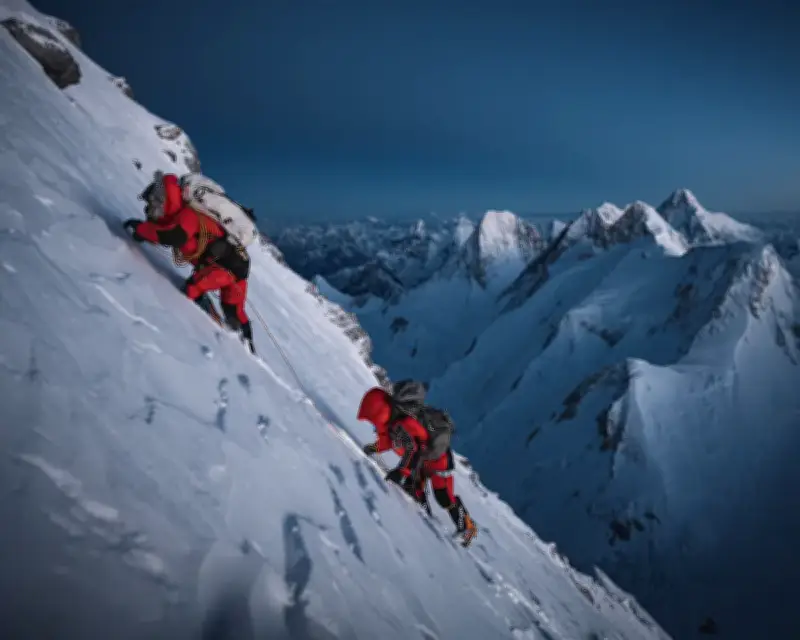
Kristin Harila, a former cross-country skier, shattered the speed record for climbing the world's 14 highest peaks in 2023, completing the feat in just 92 days—a stark contrast to the previous fastest time of just over six months. Yet, as the new documentary Savage Mountain reveals, her triumph was marred by tragedy and controversy, leaving her in $700,000 (£520,000) of debt and facing online abuse after a porter died during her final ascent.
A Record-Breaking Feat and Its Immediate Aftermath
Harila, who worked for a furniture company before taking up mountaineering, sold her flat to fund the expedition after a previous attempt was scuppered by permit issues, costing her half a million dollars. She struggled to secure corporate sponsorship, and when her funds ran out, the expedition company Seven Summit Treks covered the costs. The documentary, aired on Sky Documentaries and available on Now, follows Harila and her team as they navigate logistical nightmares, seasonal constraints, and bureaucratic red tape.
The physical toll is vividly depicted: Harila is shown scaling a mountain while suffering from food poisoning, stopping repeatedly to vomit orange into the snow. Despite the extreme difficulty, she finds the climb paradoxically simple, reducing life to the act of putting one foot in front of the other. Off the mountain, however, complications arise, including her insistence that the same Sherpa, Tenjen “Lama” Sherpa, accompany her on all ascents to share the record, a move she says will rectify history's disregard for Nepali guides.

The Tragic Incident on K2 and Its Fallout
During the final climb up K2, Harila and her team encountered Mohammad Hassan, a porter employed by another expedition company, hanging upside down from a rope. Despite attempts to save him, Hassan died. Harila initially did not mention the incident to the media, and when it was reported weeks later, public reaction was horrified. She was inundated with horrendous abuse online, and sponsors deserted her, leaving her deeply in debt.
The documentary implies Harila could not have done anything differently, except perhaps telling the story herself from the outset to control the narrative. However, worse was to come. In October 2023, Lama, now a treasured friend, was killed by an avalanche while assisting a mountaineer racing to become the first American woman to summit the same 14 peaks as Harila. The news floored Harila, who set up a foundation in his memory.
A Hagiographic Portrait That Avoids Hard Questions
Savage Mountain lightly psychoanalyses Harila, tracing her steeliness and self-sufficiency back to her childhood, but it maintains an almost hagiographic cosiness with its subject, never asking the difficult questions needed for proper insight. The documentary leaves viewers with the sense that competitive mountain climbing can be a toxic pursuit, especially when climbers try to attract sponsors by performing “extraordinary” feats, as Harila puts it.
Despite her disillusionment, Harila returned to record-breaking after filming, becoming the first woman to complete the Everest “triple crown” this year. The records may seem hollow in light of the human cost, but for those who pursue them, the risk is clearly deemed worth it. Harila is no villain, but the documentary may leave you unconvinced that her expensive and extremely dangerous hobby makes her much of a hero either.