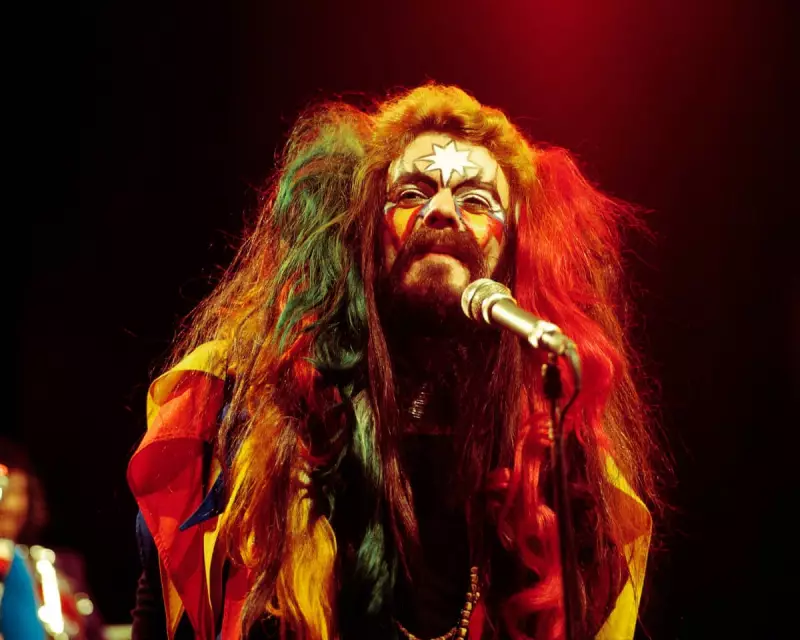
While he will forever be synonymous with one of the most enduring Christmas anthems, Roy Wood's influence on British music stretches far beyond the tinsel. As a founding member of The Move, Electric Light Orchestra (ELO), and the flamboyant Wizzard, Wood was a central architect of the 1970s glam rock scene. His prolific songwriting and inventive arrangements produced a catalogue of stomping hits and hidden gems that deserve celebration year-round.
The Prolific Journey of a Glam Rock Pioneer
Roy Wood's career is a story of constant musical evolution. He first found success with The Move in the late 1960s, crafting psychedelic and power-pop classics. His vision then helped shape the early sound of ELO alongside Jeff Lynne, before he fully embraced the glam era with the formation of Wizzard. Throughout, he maintained a parallel solo career, producing work where he often played every instrument. This ranking delves into 20 tracks that capture the breadth of his extraordinary output.
From Psychedelic Roots to Glam Anthems
The list begins with deeper cuts that highlight Wood's versatility. At number 20 is 'Farewell' (1973), a single made with his then-girlfriend, TV presenter Ayshea Brough. It showcases his kitchen-sink approach to arrangement, featuring kettle drums and oboe. Further down, the unreleased 1989 track 'Me and You', a collaboration with Jeff Lynne, offers a tantalising glimpse of what a later-day ELO with Wood might have sounded like.

Wood's work with The Move remains foundational. The proto-metal 'Brontosaurus' (1970) signalled his shift towards glam, while 'I Can Hear the Grass Grow' (1967) stands as one of the great British psychedelic singles. The commercial failure of The Move's album Shazam belied its quality, as heard on the heavy, proggy 'Hello Susie' (1970).
The Wizzard Era and Solo Masterpieces
With Wizzard, Wood created some of glam's most joyous and chaotic moments. Their first single, 'Ball Park Incident' (1972), was a thunderous wall of sound that made a head-turning statement. While 'I Wish It Could Be Christmas Everyday' (1973) is his perennial hit, other Wizzard tracks like 'See My Baby Jive' and 'Angel Fingers' were equally ambitious chart-toppers, packed with brass, key changes, and sheer euphoria.
His solo work allowed for more refined experimentation. His debut album, Boulders, recorded between 1969 and 1970, was a masterpiece of baroque pop that seemed perfectly timed for 1973. Tracks like 'Dear Elaine' and the Beach Boys-inspired 'Forever' demonstrated a timeless melodic gift. The lush 'Why Does Such a Pretty Girl Sing Those Sad Songs' (1975) from his second album Mustard is another highlight of his solo endeavours.
A Legacy of Chaotic, Joyous Maximalism
Choosing a definitive number one is a challenge given Wood's eclectic range, but Wizzard's 'See My Baby Jive' (1973) often claims the spot. It encapsulates his philosophy: a five-minute epic of chaotic, teeming sonic maximalism. As pop historian Bob Stanley noted, "Roy Wood was a super-fan. He wanted to be all of pop, all at the same time."
This list, spanning from 1967 to 1989, proves that ambition. It reveals an artist who could pivot from the intricate beauty of ELO's 'Look at Me Now' to the teenybopper-baffling, 13-minute free jazz improv of Wizzard's 'Meet Me at the Jailhouse'. Roy Wood's legacy is not just a festive fixture, but a rich tapestry of British pop, rock, and glam innovation that continues to inspire.