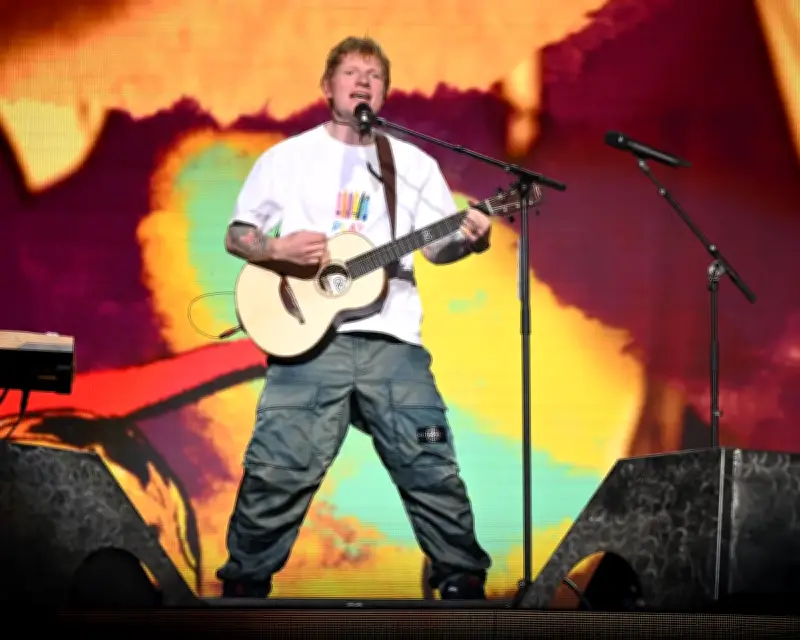
Nesrine Malik argues that the recent backlash against celebrity political statements, such as Ed Sheeran's tour turmoil, reflects a failure of political leadership rather than a breach of artistic purity. The problem, she writes, is not that famous people speak out, but that they feel compelled to fill a vacuum left by ineffective leaders.
The Outrage Over Celebrity Politics Is Nothing New
Malik notes that every time an entertainer makes a "controversial" political statement, critics react as if it is unprecedented. They insist that art should remain separate from politics, telling figures like Macklemore or Gary Lineker to stick to their professions. This response, she says, persists despite historical precedents and current crises, such as the war in Gaza, which has deeply affected the art world, Hollywood, and literary institutions.
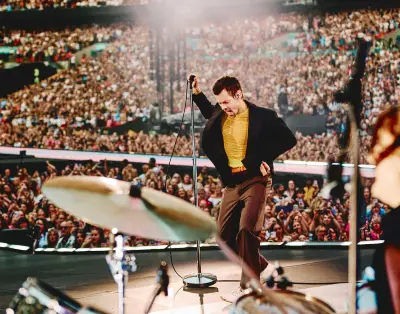
When Ed Sheeran performed at the O2 Arena in London on 6 December 2025, he stood alone after all his support acts withdrew in solidarity with Macklemore, who had been removed from the tour following a pro-Palestinian speech. Sheeran told his audience he wants his music to be "about unity, not division," but Malik argues that the rapid unraveling of his tour shows how unnatural it is to separate music from politics in today's climate.

A Long Legacy of Artistic Activism
Malik emphasizes that the intersection of entertainment and politics is deeply rooted in history, citing examples like Vietnam, South Africa, and Darfur, where celebrities were involved in objection, lobbying, and awareness-raising. She lists figures such as Nina Simone, Donald Sutherland, Kurt Vonnegut, Marlon Brando, Mia Farrow, George Michael, and George Clooney as part of this legacy, alongside contemporary voices like Macklemore, Gary Lineker, Mark Ruffalo, and Ms Rachel.
While one may disagree with their stances, Malik contends that dismissing their qualifications to speak is "ignorant at best, disingenuous at worst." Public figures, she argues, have the same passions as anyone else and use the tools available to them—whether protests, donations, or leveraging their public platforms. They have the right, though not the responsibility, to advance their politics.
Why Celebrity Activism Sparks Outrage
The belittlement and outrage directed at these figures may stem from the understanding that once politics enters entertainment, it becomes difficult to control. Malik explains that artists provide escapism but also channel a collectivizing force that stirs feeling, making the relationship between artist and audience direct and ungovernable. The main criterion for whether such activism is praised or condemned, she says, is how much it aligns with political and economic establishments.
Sheeran himself has headlined a concert for Ukraine, and figures like Don Cheadle and George Clooney received accolades for their Sudan activism. However, when politics clashes with powerful sponsors—as when Gillette Stadium owner Robert Kraft removed Macklemore from the Sheeran lineup—it becomes complicated and dismissed as beyond the purview of "dilettantes."
Political Failure Drives Cultural Spillover
Malik attributes these collisions to failing political systems. The outrage over Palestine is roiling culture because the pain and fury have not been appropriately channelled by representative leadership, but instead policed and criminalised. She argues that spillover into every part of life is inevitable, and a healthy political culture should view it as "democracy by other means," since electoral democracy has not met the challenge.
Until then, demands to keep politics out of art are summoning a world that "does not exist, cannot exist and has never existed." Malik concludes that the problem is not outspoken artists but what they are speaking about. If you want to leave politics out of it, she says, demand that politics do the work. Until then, it will remain in music, literature, and film, fighting coercion and bullying that hides behind concern for artistic purity.