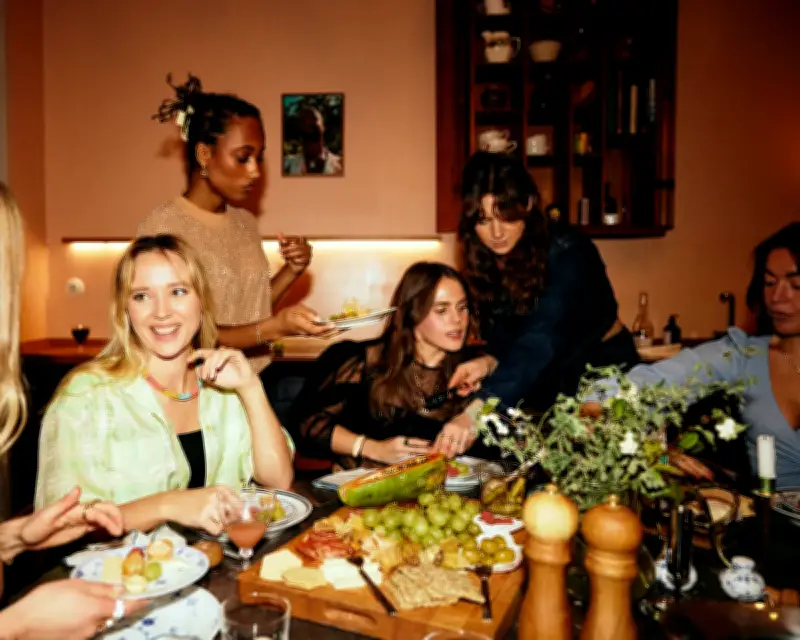
At a friend's dinner party, between the starter and the main course, a profound realization struck: the world is divided into two types of people—hosts and guests. This epiphany, shared by freelance writer Polly Hudson, came as she watched her friend effortlessly manage the evening—clearing plates, serving delicious food, and maintaining a calm, inviting atmosphere. Hudson, who admits to being a terrible host herself, describes her hosting persona as "an edgier version of Manuel from Fawlty Towers," while as a guest, she claims to be "a freaking delight."
The Epiphany That Started It All
Hudson's moment of clarity occurred at a friend's dinner party, where she observed a "magic show" of seamless hosting. The first course plates were cleared without notice, food appeared without fuss, and the ambiance—flickering candles, unobtrusive music, flowing conversation—seemed effortless. She even considered the possibility of a hidden staff, but it was all the host's doing. This led to Hudson's conclusion that "the world is divided into people who are hosts, and people who are guests," with no one being both—except perhaps the Duchess of Sussex.
To determine which category you fall into, Hudson suggests asking a close friend if you're a good host. "If they pause for longer than 0.2 seconds before answering, you're a guest," she advises.

The Struggles of a Self-Confessed Bad Host
Hudson openly admits to being a terrible host. She describes her behavior as uptight, edgy, and visibly on edge when welcoming guests. "I run from room to room. I yelp," she writes. Her focus on ensuring guests have a nice time ironically guarantees they do not. She loiters, lurks, and fails to engage in conversation because her mind is preoccupied with oven temperatures and forgotten timers. Her energy, she says, is like "a surgeon dashing to the operating room, who has just noticed that they've forgotten everything they learned at medical school."
The Joys of Being a Perfect Guest
In contrast, Hudson shines as a guest. She arrives seven minutes late—enough to allow for last-minute host emergencies but not so late as to cause worry. She brings thoughtful gifts but avoids flowers, which would create an extra task for the host. She takes responsibility for keeping conversation flowing and ensuring everyone feels included. She appreciates whatever is served, noting that non-cooks are the best people to feed because they're impressed by anything beyond toast and cereal. She helps clear the table unobtrusively and leaves at the right time. "When it comes to guesting, I am the dream," she declares.
The Dilemma of Reciprocity
This realization has left Hudson wondering about the ethics of social reciprocity. She now wants to be only a guest, never a host again. But is it acceptable for everyone to "stay in their lanes" and play to their strengths? While this would be more enjoyable for all parties, Hudson questions whether an imbalance—where one person always hosts and another always accepts—might breed resentment. She poses the question: "Which is worse? Feeling like you're being taken advantage of? Or having to come to my house for dinner?"