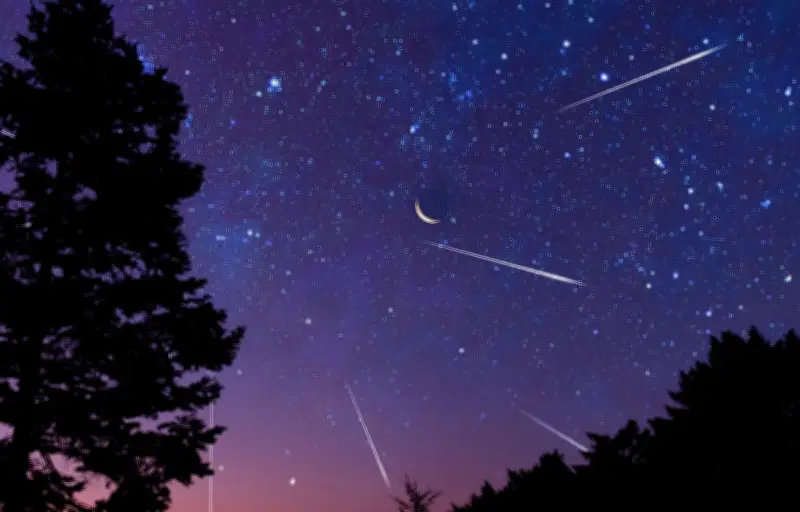
The Perseids meteor shower, renowned as the biggest and brightest of the year, will reach its peak visibility overnight from Wednesday, August 12, into Thursday, August 13, 2026. With up to 125 vivid meteors per hour, Londoners have a prime opportunity to witness this celestial display, provided weather conditions remain favorable.
What Makes the Perseids Special?
Meteor showers occur when debris from comets enters Earth's atmosphere at high speeds, vaporizing and creating bright streaks of light. The Perseids originate from comet 109P/Swift-Tuttle, a celestial body that has been dazzling observers since at least 69 BC. Royal Museums Greenwich describes the Perseids as 'one of the best meteor showers of the year' due to their intensity and frequency.
The meteors travel at speeds up to 45 miles per second, leaving brilliant trails across the night sky. This year, the shower has been active for several weeks, but the peak—when the highest number of shooting stars are visible—occurs in mid-August. Additionally, a deep solar eclipse will occur on August 12, the same date as the Perseids peak, offering a rare double celestial event.

When and Where to Watch in London
According to Royal Museums Greenwich, the ideal viewing time is between midnight and 5 am, when the moon is below the horizon, ensuring darker skies. Londoners should seek locations with minimal light pollution and an unobstructed view of the sky. However, note that most London parks close after sunset, so plan accordingly.
Primrose Hill and Parliament Hill are notable exceptions, as both remain open 24 hours, making them excellent spots for overnight stargazing. For other parks, check opening hours in advance. Binoculars and telescopes are not recommended, as they limit the visible sky area; instead, allow 15 minutes for eyes to adjust to darkness and simply look up.
Weather Forecast and Viewing Tips
The weather overnight on Wednesday to Thursday is expected to be ideal for stargazing: cloud-free and rain-free, with temperatures staying above 20°C all night. This warm, clear conditions enhance visibility, making it a perfect night for meteor spotting.
For those who miss the Perseids, the next meteor shower, the Draconids, will peak on October 9, though it is significantly smaller. London's vibrant scene extends beyond celestial events; recent highlights include four London restaurants added to the prestigious Michelin Guide in July 2026, and one of the UK's greatest hikes is located in the city.
Stay updated with the latest London news and events via the Time Out London WhatsApp channel or sign up for the free newsletter for the best of the city delivered to your inbox.