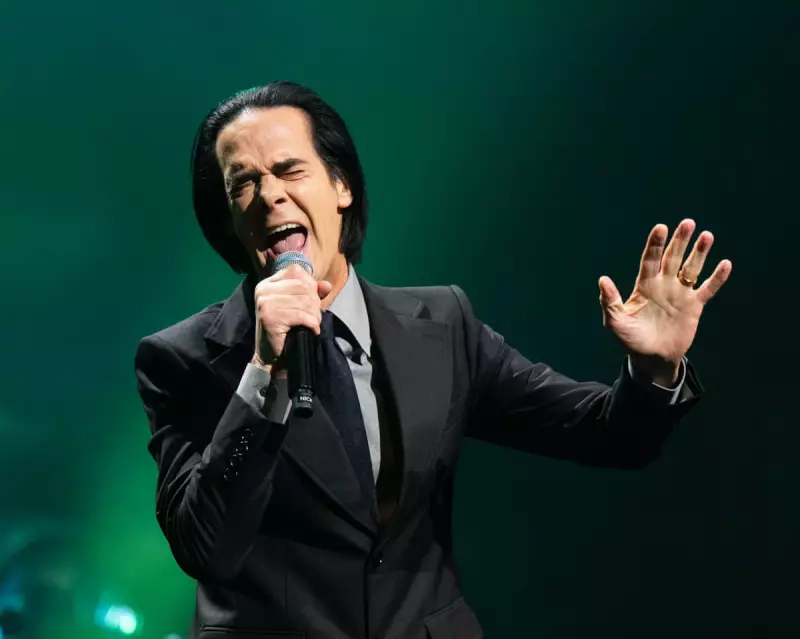
A compelling new documentary offers a thoughtful exploration of the complex world of musician and artist Nick Cave, probing the spiritual and artistic forces that drive one of rock music's most enigmatic figures.
A Star-Studded and Unconventional Retrospective
The documentary, titled 'Nick Cave's Veiled World', airs on Sky Arts on Saturday 6 December at 9pm. Timed to coincide with the television adaptation of Cave's novel 'The Death of Bunny Munro', the film serves as a potent reminder of his intense back catalogue. It revisits his early masterpieces, from electric chair confessionals to profane love songs and murderous duets with pop icons, tracks that linger in the memory long after hearing them.
Unlike typical retrospectives filled with comfortably middle-aged talking heads, Cave's circle remains defiantly unique. The documentary features an eclectic array of contributors including filmmaker Wim Wenders, fashion designer Bella Freud, and Cave's long-time collaborator Warren Ellis. Perhaps the most striking interviewee is the former Archbishop of Canterbury, Rowan Williams, who provides piercing theological insight into concepts like joy versus happiness.

From 'Evil Jesus' to Spiritual Guide
The programme charts Cave's dramatic evolution from the drug-addicted, confrontational performer once nicknamed 'Evil Jesus of Melbourne' to the figure he is today. It confronts the most divisive move of his perverse career: his open assertion of Christian faith. The film argues that while audiences relish biblical imagery in rock music, they often balk when the singer genuinely believes.
A seismic shift in Cave's life and work was triggered by the tragic death of his teenage son, Arthur. The documentary tracks the aftermath of this loss, exploring how it infused his music, most notably on the spectral album 'Ghosteen', and transformed his live performances into acts of communal sorrow. It highlights his emergence as a self-elected spiritual teacher, a role most evident in his profoundly moving 'Red Hand Files' advice newsletter.
The Challenge of Capturing the Ineffable
'Veiled World' is structured into archetypal sections such as 'The Outlaw', 'The Divine Child', and 'The Prophet', mirroring Cave's own symbolic language. While it employs evocative archival collages, the documentary consciously avoids a standard biographical approach. Cave himself is present only through vocal clips, and the film is more invested in his current philosophical state than his chaotic past.
This high-minded approach grapples with a core contradiction: the attempt to use reportage to pin down fundamentally ineffable subjects like grief and God. While the film might leave viewers craving more of the firebrand Cave of old, it successfully argues that his recent work dispels the old myth that the devil has all the best tunes. The real perversity, it suggests, may lie in those who still miss the scent of sulphur.
The television adaptation of 'The Death of Bunny Munro', starring Matt Smith as the eponymous salesman, provides a concurrent, darker counterpart to this spiritual journey, showcasing another facet of Cave's sprawling creative portfolio.