Tansy Davies' The Passion of Mary Magdalene Premieres at London's Barbican Hall
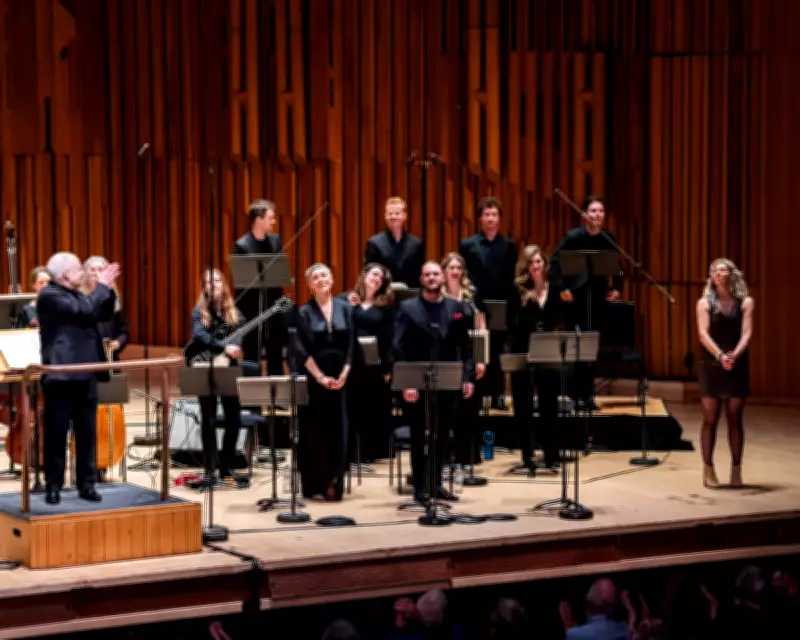
While most period-instrument ensembles fill their Lenten schedules with Bach Passions, the acclaimed Dunedin Consort under conductor John Butt has broken tradition with a groundbreaking world premiere. The ensemble presented composer Tansy Davies' The Passion of Mary Magdalene at London's Barbican Hall, adding another significant contemporary work to their already impressive catalogue of premieres.
A Co-Commissioned Work with Edinburgh Festival
This innovative Passion represents a co-commission between the Barbican and the Edinburgh International Festival, where audiences will experience the work again on August 8th. The composition emerges from Davies' longstanding fascination with the enigmatic figure of Mary Magdalene, whose story has captivated artists and theologians for centuries.
The text draws from multiple sources, including the second- or third-century non-canonical Gospel of Mary, skillfully interwoven with evocative poetry by Ruth Fainlight. The work unfolds across seven episodes during a continuous 90-minute span, narrated by eight vocalists - four women and four men creating a rich tapestry of sound.

Radical Reinterpretation of Traditional Passion
Anna Dennis delivers a radiant performance as Mary Magdalene, portraying her as a visionary with extended passages of nearly mystical text, her melody leaping dramatically between notes. The remaining three female vocalists sing in haunting chords, collectively giving voice to an Oracle figure. While Davies describes the work as more meditation than traditional Passion setting, there's nothing loose or new-age about her approach - the score remains tautly constructed throughout.
The narrative unfolds unconventionally, with Jesus' first words - delivered by baritone Marcus Farnsworth to Tim Lilburn's countertenor demon - being an abrupt "Shut up!" Some of Fainlight's poetry proves startlingly sensual, adding unexpected dimensions to this ancient story.
Musical Innovation and Ritualistic Structure
Perhaps nodding to Bach's tradition, the work begins with a low harpsichord note pulsing at walking pace, a motif that recurs throughout, enhancing the ritualistic quality and creating a sense of connection to human movement. Davies has suggested the work could be staged, potentially lending itself beautifully to dance - bringing to mind Stravinsky's choral ballet Les Noces in its potential for physical interpretation.
The instrumental writing demonstrates intricate skill, supporting the vocalists while creating what Davies describes as "a halo around them." Instruments layer and cycle through phrases that gradually fall out of phase with each other, creating a world that feels both cyclical and grounded yet constantly evolving.
Electric Guitar in Baroque Ensemble
Perhaps most strikingly, Davies incorporates an electric guitar almost hidden within the baroque ensemble. This unconventional addition provides pinpoint detail in early sections and offers fleeting suggestions of rock riffs during the crucifixion scene itself. The overall effect feels cerebral yet deeply rewarding, with Davies' intriguing score offering its own unique musical satisfaction.
This premiere represents another bold step for the Dunedin Consort, demonstrating their commitment to expanding the boundaries of period-instrument performance while maintaining their renowned musical excellence.