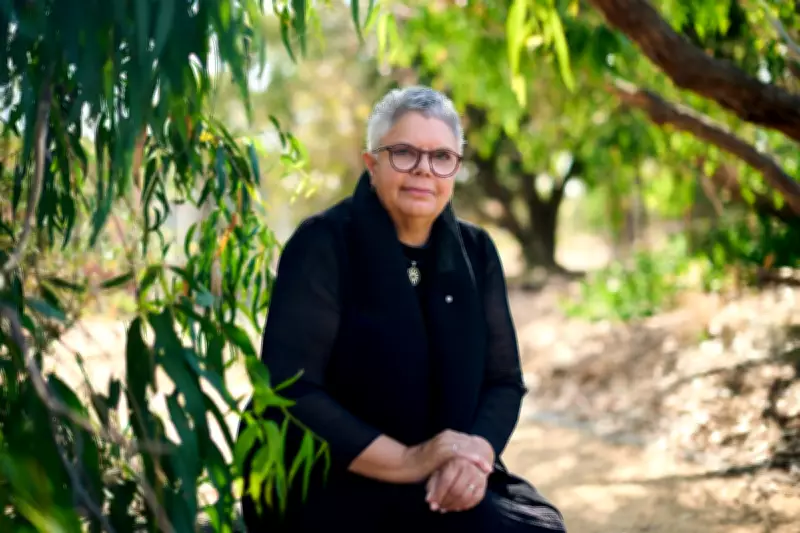
Deborah Cheetham Fraillon: How Music Guided a Stolen Generations Trailblazer Home
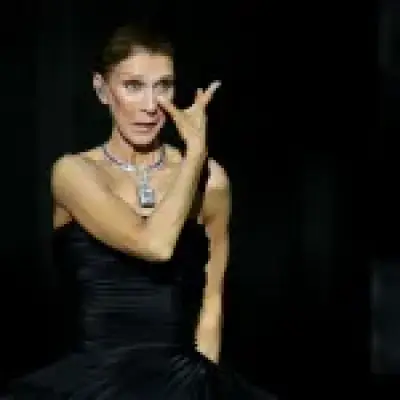
On a sunny Friday morning in Melbourne's Albert Park, Deborah Cheetham Fraillon reflects on what defines her remarkable life. "Yorta Yorta by birth, Stolen Generation by government policy, composer by necessity, soprano by diligence and lesbian by practice," she declares with characteristic wit and disarming honesty. This distillation captures the essence of a woman who has become one of Australia's most determined champions of Indigenous opera.
A Legacy of Resistance and Resilience
As we walk through Gasworks Arts Park, where her Indigenous opera company Short Black Opera established its Melbourne offices in 2010, Cheetham Fraillon connects her personal tenacity to her family history. She speaks of the 1939 Cummeragunja Walk Off, when Yorta Yorta people crossed the Dhungala (Murray River) in protest against mistreatment. "The strength and determination of my grandparents in basically saying we're drawing the line here... I'm glad to have inherited in any measure," she reflects.
Removed from her birth family as part of the Stolen Generations, Cheetham Fraillon was raised by a loving white Baptist family in Sydney. It was there her musical obsession took root. "I can't remember a time when I wasn't singing," she says. "My wife would attest to the fact that I sing about everything. If I'm having a thought which needs to find an external expression, I'll sing it."

The Transformative Power of Opera
A school excursion to see Dame Joan Sutherland perform at the Sydney Opera House in 1979 proved life-changing. "I would defy anyone – being enveloped by that voice – not to be moved," she recalls. "But for me, the sung narrative is woven into my DNA." This statement carries both cultural and literal meaning, as she discovered when reconnecting with her Aboriginal family as an adult.
Her Aboriginal mother Monica was a singer, as was her grandmother Francis, renowned in the Cummeragunja community before the walk-off. Her uncle was the legendary Jimmy Little, inducted into the ARIA Hall of Fame in 1999. This musical lineage helped explain her lifelong connection to performance.
From Baptist Traditions to Indigenous Opera
Cheetham Fraillon's Baptist upbringing instilled a philosophy of community service, though it came with limitations. "When it was discovered I had a girlfriend, I had to resign all my positions of authority," she explains without bitterness. Her transition from singer to composer gained momentum over the last two decades, culminating in the establishment of Short Black Opera.
Her first major work, Pecan Summer, drew heavily on her autobiography, tracing stories from the Stolen Generations back to the Cummeragunja walk-off. This was followed by the extraordinary symphonic work Eumeralla, a war requiem for peace based on Dhauwurd Wurrung languages of the Gunditjmara people.
"When you're writing in those ancient languages, you get a unique rhythmic and textural composition that is linked to this country in a way that nothing else can be," she explains. "Because that language is coming out of the geography of country."
Creating Pathways and Confronting Challenges
Cheetham Fraillon has built her career in an industry not known for diversity, requiring considerable grit. She cites frustrating statistics about gender representation in classical music programming, noting little has changed despite increased awareness. "There are plenty of opportunities to summon that determination, and that seems to be unrelenting," she observes.
Short Black Opera was established partly to provide opportunities for First Nations singers who had been "either passively or aggressively kept out" of classical music pathways. She expresses frustration with Australian opera companies' continued reliance on European repertoire and musicals rather than developing local works.

Music as Homecoming and Healing
For Cheetham Fraillon, music provided the compass that led her back to family and cultural identity. "Many Stolen Generation children never find their way home. I did find my way home. Music led me home," she says, acknowledging the ongoing process of working through that "primal wrenching."
She believes passionately that opera and classical music should be accessible to everyone, not perceived as elitist or difficult. In increasingly fractious times, she sees the arts as essential for developing critical thought and emotional maturity. "We do have agency, and art can help us understand and come to terms with the really big questions of life," she reflects.
Despite the serious challenges facing both the arts and Indigenous communities, Cheetham Fraillon maintains her characteristic blend of determination and joy. "It's important to be serious about what you're doing," she says. "That doesn't exclude all the fun and laughter. Watch a dog in a dog park and you'll feel that joy. But these are serious times."
Through Short Black Opera and her groundbreaking compositions, Deborah Cheetham Fraillon continues to create spaces where Indigenous voices can thrive in classical music, proving that sometimes the most powerful homecomings happen through song.