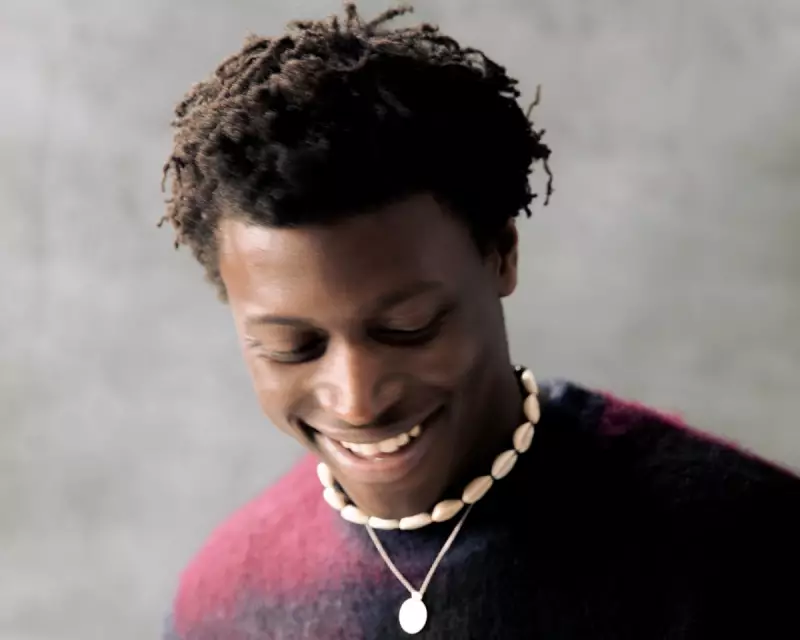
Mon Rovîa: A Journey from War-Torn Liberia to Musical Acclaim
In a quiet coffee shop in Chattanooga, Tennessee, Mon Rovîa, born Janjay Lowe, reflects on a life marked by profound contrasts. His debut album, Bloodline, has just been released, weaving together themes of fractured identity, survivor's guilt, and the lingering shadows of colonialism. "I don't really like to be noticed," he admits, dressed casually in a dark plaid flannel shirt, yet his music has garnered millions of listeners and sellout shows, positioning him as a standout in a new generation of singer-songwriters.
Escape from Liberia and a Fractured Past
Mon Rovîa's story begins in Liberia during a brutal civil war, where many children were forced into combat as soldiers. After his mother's death, his grandmother, struggling to care for him and his siblings, placed him with a white missionary family from Florida. He was the only member of his family to escape the conflict, a fact that has haunted him for years. "Why was it me? Why couldn't my siblings come, or why wasn't it one of them?" he questions, describing the heavy weight of survivor's guilt that shaped his upbringing. It would be years before he learned the fate of his family back in Liberia.
Crafting an Identity Through Music
His stage name, Mon Rovîa, is a stylised version of Monrovia, the Liberian capital, symbolising his connection to his roots. His songwriting delves into his complex identity and the spectre of colonialism, both in Liberia and the United States. He describes his approach as starting with vulnerability, building trust with listeners before addressing broader global issues. "It starts with people trusting that you're not afraid to be vulnerable in your own way. Then you start talking about the bigger picture," he explains.

From American Middle-Class to Afro-Appalachian Folk
Growing up in a white, middle-class American environment, Lowe felt a deep sense of dislocation. He adopted the evangelical Christian faith of his adoptive family, with life revolving around church and private Christian schools that shielded him from mainstream culture. During high school, a move to the Bahamas for mission work introduced him to foster brothers who shared music by Fleet Foxes and Bon Iver. He became engrossed in Mumford & Sons, drawn to their themes of religious struggle. "I spent a lot of time with their songs because there was a religious aspect of struggle, and I was intrigued," he recalls.
Initially, he experimented with melodic rap and bedroom pop, feeling constrained by race-based genre expectations. But a shift came when he posted an acoustic clip online, receiving enthusiastic feedback that led to a viral TikTok moment. His manager, Eric Cromartie, advised him to focus on his ukulele and raw sound, which quickly propelled him to fame. In 2024, he signed with Nettwerk Music Group, allowing him to dedicate himself fully to music. "I didn't think I would ever be able to put my full mind into music, and now I get to," he says.
Bloodline: An Album of Healing and History
Bloodline contrasts the serene beauty of his music with the harrowing realities of his past. Listeners have compared him to cult heroes like Nick Drake and Labi Siffre, noting his elegant folk sensitivity. He terms his style Afro-Appalachian folk, highlighting the west African origins of banjo-like instruments and the role of enslaved musicians in shaping Appalachian music. "You just see that these things have been whitewashed over time," he observes, addressing cultural erasure in his work.
The album features tracks like Heavy Foot, inspired by civil rights thinkers such as James Baldwin, and Somewhere Down in Georgia, which critiques the South's romanticised view of history. Pray the Devil Back to Hell pays homage to Liberian women who ended the war, while Black Cauldron explores his evolving relationship with his mother. Notably, the album includes WhatsApp audio clips from his Liberian sister, with whom he recently reconnected, providing glimpses into his personal history. In one clip, she reveals in Kolokwa that his father was Senegalese, adding layers to his identity.

Looking Ahead: Tours and Homecoming
Following the album's release, Mon Rovîa is set to embark on a European tour and expresses a deep desire to return to Liberia. He has been embraced by the Liberian music community, with bloggers featuring his work and local musicians covering his songs. The Liberia music awards have named him outstanding artist of the year for 2025, a recognition that brings him immense joy. "It's been the biggest joy of my life," he says, "to be welcomed back to a place I didn't think I would ever be welcomed to."
Through his music, Mon Rovîa continues to navigate themes of loss, identity, and healing, offering a poignant voice in the folk-pop landscape. His journey from war-torn Liberia to stardom underscores the power of art in transforming personal trauma into universal resonance.