Legendary Musician Joins Growing Protest Against AI Copyright Theft
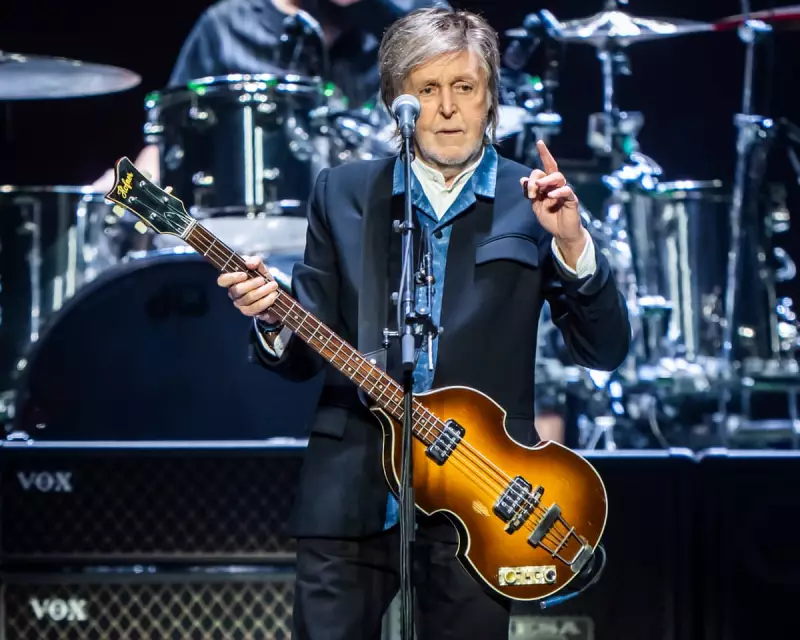
In a powerful statement against the growing threat of artificial intelligence to creative industries, Sir Paul McCartney has released his first new recording in five years - a track consisting almost entirely of silence. The former Beatle, widely regarded as Britain's greatest living songwriter, has contributed to a protest album titled Is This What We Want? that features silent recordings from numerous prominent artists.
The Sound of Silence: McCartney's Unconventional Protest
McCartney's contribution, simply titled (bonus track), runs for two minutes and forty-five seconds - approximately the same length as his classic Beatles song With a Little Help From My Friends. However, instead of memorable melodies and evocative lyrics, listeners hear only the quiet hiss of an empty recording studio with occasional, indistinct clattering. The track follows a distinct structure: it begins with 55 seconds of tape hiss, followed by 15 seconds of what might be someone entering the room, before settling into another 80 seconds of rustle-punctuated silence and concluding with a slow fadeout.
This artistic statement serves as a stark warning about what the music industry could become if AI companies continue to exploit musicians' intellectual property without permission or compensation. The message is clear: if artificial intelligence companies unfairly use artists' work to train their generative AI models, the creative ecosystem faces destruction and original music could be effectively silenced.

United Front: Music Industry Takes Stand Against AI Threat
McCartney joins an impressive roster of British musical talent supporting this campaign, including Sam Fender, Kate Bush, Hans Zimmer, and the Pet Shop Boys. The protest album's track listing itself spells out the campaign's central demand: "the British government must not legalise music theft to benefit AI companies."
The movement has emerged in response to UK government consultations on creating an exception to copyright law for "text and data mining," which could potentially require copyright holders to actively opt out of having their work used to train AI models. This places ministers in a difficult position, balancing the interests of creative industries that contribute £125 billion annually to the UK economy against pressure from US tech companies who have recently promised over £30 billion in investments, primarily in data centres.
Ed Newton-Rex, the composer and copyright fairness campaigner behind the protest album, expressed serious concerns: "I am very concerned the government is paying more attention to US tech companies' interests rather than British creatives' interests."
Political Pressure and International Ramifications
The campaign comes amid significant international pressure, particularly from Donald Trump's White House, which has warned against regulations that might "make it impossible" for AI companies to do business. Trump has argued that AI should be allowed to use copyrighted knowledge "without going through the complexity of contract negotiations."
Meanwhile, the UK government has already signed deals with AI companies including OpenAI, Google, and Anthropic to boost AI adoption across government and the wider economy. A new legal framework for AI and copyright isn't expected to be debated in Parliament before 2026, creating uncertainty for creators in the interim.
Cross-bench peer and film director Beeban Kidron, who campaigns for copyright protection, offered a blunt assessment: "The government is trying to play both sides and convincing neither. They have proven themselves unfit to govern in the economic interests of the creators."
In response to McCartney's involvement, a government spokesperson stated they put the interests of UK citizens and businesses first, adding: "We've always been clear on the need to work with both the creative industries and AI sector to drive AI innovation and ensure robust protections for creators."

The spokesperson confirmed that Science, Innovation and Technology Secretary Liz Kendall is committed to finding a solution that recognizes both AI firms and creative industries as "British success stories" and is engaging with both sides.