Earlier today, a series of five optical illusions crafted by French-American inventor Olivier Redon captivated audiences. Now, a magician steps forward to reveal the visual tricks behind these mind-bending creations, offering demonstrations that unravel how Redon achieved his stunning effects.
The Necker Cube Foundation
Three of the illusions draw inspiration from the classic Necker cube, a two-dimensional drawing of a cube that can be interpreted in two distinct ways: either with the bottom left face appearing at the front or the top right face taking that position. Once the eyes lock onto one interpretation, switching to the other becomes a formidable challenge, showcasing the brain's perceptual flexibility.
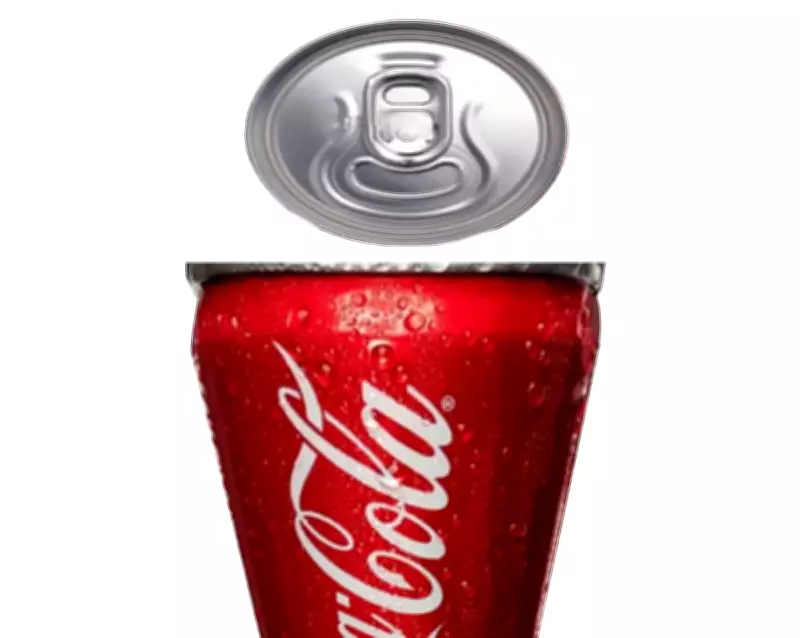
Ceci n'est pas une canette
This illusion presents an image of a can, but viewers are not seeing what they think. The trick convinces the eye that it is observing the outside of a complete can, when in reality, it is looking at an inverted internal segment with the top attached upside down. The visual perception interprets the shape as curved outwards, while it is actually curved inwards, a clever manipulation of depth and form.

The Oh La La Box
At first glance, this appears to be a red box, but Redon is holding something entirely different. Amazingly, the cube is constructed from just two pieces of cardboard arranged in an X shape. Similar to the Necker cube, once the faces are perceived as protruding outward or inward, reversing that perception becomes nearly impossible. Still images fail to capture the full impact; the accompanying video is truly remarkable, challenging viewers to believe their own eyes.
Twin dinos
This iPhone image features two dinosaurs that are identical in size, yet their presentation suggests otherwise. The illusion plays with lines of perspective, requiring only that pictures be taken from both horizontal and vertical angles to create the deceptive effect, highlighting how camera angles can distort reality.
Fragile
A portrait of Redon and his daughter, this illusion leaves viewers pondering its creation. The reveal is simple yet effective, demonstrating how everyday scenes can be transformed into puzzles through clever composition.
The transparent cube
This illusion depicts what seems to be a cube with transparent sides, but it is another iteration of the Necker cube. The three squares with writing are not the outward faces as they appear; instead, they are the inward faces, a subtle twist that confounds initial assumptions.
All photographs are copyrighted by Olivier Redon, whose work continues to intrigue and inspire. For more insights, explore his online presence and contributions to visual artistry.
These puzzles are part of a long-standing tradition, with new challenges emerging regularly to engage and entertain audiences worldwide.