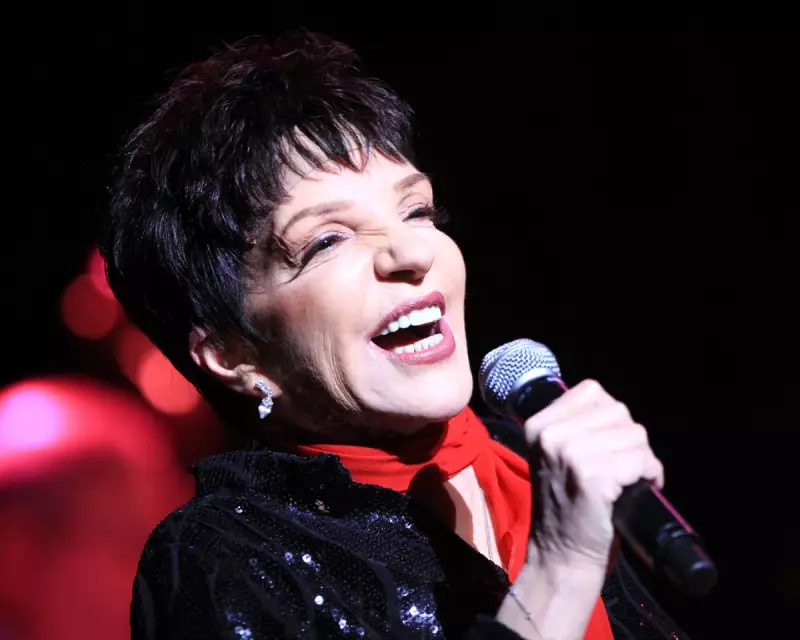
Liza Minnelli Embraces AI for First New Music Release in Over a Decade
Legendary entertainer Liza Minnelli has made a surprising return to the music scene after a thirteen-year hiatus, collaborating on an innovative artificial intelligence-generated dance track. The celebrated singer and actress, now seventy-nine years old, has contributed spoken vocals to a deep house composition titled Kids, Wait Til You Hear This, which also serves as the name of her forthcoming memoir.
A Cautious Embrace of New Technology
Minnelli's last musical release dates back to 2013 when she recorded a song for the American television musical drama Smash. In her recent statements, she has expressed considerable enthusiasm for the creative possibilities offered by artificial intelligence while establishing clear boundaries regarding its application to her own artistic identity.
On her official Facebook page, Minnelli praised the technology company ElevenLabs, describing them as "a six billion dollar techno behemoth [doing] amazing things". She was careful to clarify the nature of her involvement, stating emphatically: "What I will not allow this great company to do? Create, clone or copy my voice! ... We used AI arrangements. Not AI vocals ... The shout outs are all mine!"

In an accompanying press release, the iconic performer elaborated on her philosophical approach to this technological collaboration: "I've always believed that music is about connection and emotional truth. What interested me here was the idea of using my voice and new tools in service of expression, not instead of it. This project respects the artist's voice, the artist's choices, and the artist's ownership."
Minnelli drew a poignant connection to her family history, noting: "I grew up watching my parents create wonderful dreams that were owned by other people. ElevenLabs makes it possible for anyone to be a creator and owner. That matters."
Art Garfunkel Joins the AI Music Movement
Minnelli's track appears on a compilation album featuring various artists who have incorporated artificial intelligence into their creative processes. Among them is fellow music legend Art Garfunkel, who has contributed a piece titled Authorship that combines a spoken excerpt from his memoir What Is It All But Luminous with an AI-generated piano accompaniment.
Garfunkel offered his perspective on the intersection of music and technology: "Music has always evolved alongside technology, from microphones to multitrack recording. What impressed me about this experience was the respect for musicianship. The human remains at the centre. My voice plus the technology simply opens another door."
Industry Divisions Over Artificial Intelligence
The enthusiastic adoption of AI technology by established artists like Minnelli and Garfunkel stands in stark contrast to the concerns expressed by other prominent figures within the music industry. Many fear that AI-generated music could potentially displace human musicians and facilitate the unauthorized imitation of artists' work without proper compensation.
British singer-songwriter Ed Sheeran has voiced significant reservations about the technology's impact: "If you're taking a job away from a human being, I think that's probably a bad thing. The whole point of society is we all do jobs. If everything is done by robots, everybody's gonna be out of work. I just find AI a bit weird."
Rapper Lil Wayne has expressed similar skepticism about AI's ability to replicate his distinctive vocal style: "I am naturally, organically amazing. I'm one of a kind. So actually, I would love to see that thing try to duplicate this motherfucker."
The Rapid Expansion of Generative AI Companies
Despite these concerns, a new wave of generative artificial intelligence companies continues to advance rapidly within the music sector. Firms such as Udio, Suno, and Klay are actively forging partnerships with record labels, enabling users to manipulate existing artists' work using AI tools or create entirely new compositions through text prompts.

These systems operate by analysing vast quantities of existing musical material, using this information to generate novel compositions. Individual artists maintain the choice of whether to participate in these services, creating a complex landscape of permissions and collaborations.
Record labels initially responded to these developments with considerable hostility, even threatening legal action against AI companies. However, the industry has gradually shifted toward negotiation and partnership. Following settlements with major labels Universal and Warner, Udio recently announced a significant collaboration with Merlin, an organisation representing numerous independent labels including Beggars Group, Epitaph, Domino, Sub Pop, and Warp.
This partnership means that artists ranging from Arctic Monkeys to Aphex Twin could potentially make their music available for use within Udio's AI tools, representing a substantial expansion of the technology's reach within the industry.
The Quiet Revolution in Music Production
Mikey Shulman, founder of the AI music company Suno, recently revealed to the Guardian that artificial intelligence has already become deeply embedded within music production processes. He offered a striking analogy: "It was described to me that we're the Ozempic of the music industry – everybody is on it and nobody wants to talk about it."
This comparison highlights the paradoxical nature of AI's current role in music: while widely utilised behind the scenes, it remains a subject of considerable controversy and reluctance in public discourse. As established artists like Liza Minnelli cautiously explore these new creative tools, the music industry continues to grapple with fundamental questions about artistic integrity, technological innovation, and the future of human creativity in an increasingly automated world.