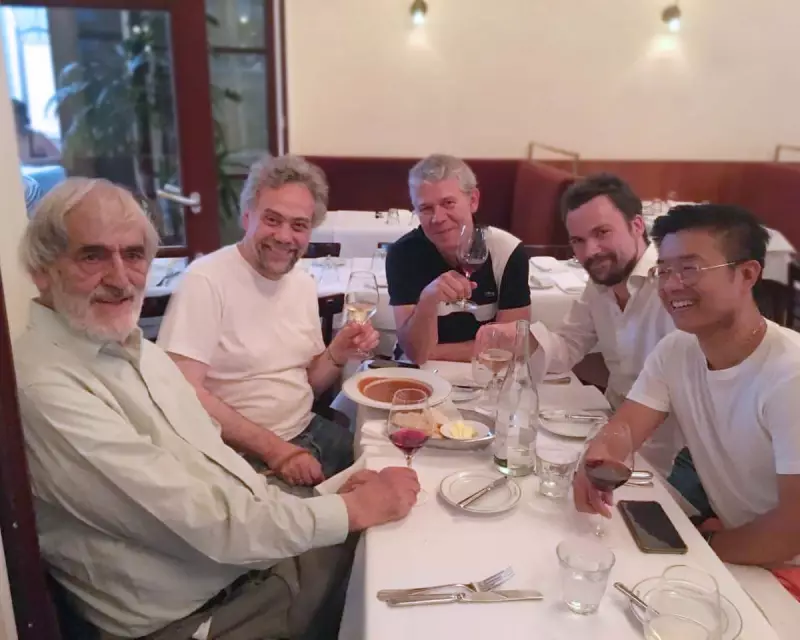
While Britain remains largely unaware of his significance, German composer Helmut Lachenmann celebrates his 90th birthday this week, recognised across Europe as one of contemporary music's most influential figures. His revolutionary approach to sound has opened entirely new musical territories, yet UK audiences have rarely experienced his groundbreaking compositions.
The Sound World of Helmut Lachenmann
At the core of Lachenmann's innovative work lie his three string quartets, which form the subject of a new definitive recording by Quatuor Diotima. Gran Torso, originally composed between 1971-72 and later revised in 1988, represents his early exploration into extended instrumental techniques. This was followed by Reigen Seliger Geister (Round of Blessed Spirits) in 1989 and Grido (Cry) in 2002.
These works systematically investigate every possible sound a string instrument can produce, moving beyond conventional playing techniques to incorporate sounds from scrolls to tailpieces. The result is music that mutters, shrieks, slides and scrapes, deliberately dissolving traditional boundaries between what we consider noise and what we recognise as music.

Quatuor Diotima's Quarter-Century Partnership
What makes this new Pentatone release particularly significant is the ensemble's deep connection to the composer. Quatuor Diotima have collaborated directly with Lachenmann for 25 years, developing an intimate understanding of his musical language and intentions.
This long-term partnership results in performances of tremendous authority and confidence. The musicians don't merely play the notes - they inhabit Lachenmann's sound world completely, drawing listeners into what might initially seem strange but reveals itself as compelling and fascinating.
Between Noise and Musical Structure
Despite the unconventional sounds Lachenmann employs, his works follow rigorous formal schemes that remain fundamentally musical. The scraping and shrieking aren't random effects but carefully organised elements within sophisticated compositional structures.
This recording demonstrates how Lachenmann's music challenges listeners to expand their definition of what constitutes music while maintaining traditional musical values of structure, development and emotional expression. The quartets represent a bridge between experimental sound exploration and the string quartet tradition that stretches back to Haydn and Beethoven.
For those unfamiliar with Lachenmann's work, this album serves as the perfect introduction - performances shaped by decades of collaboration that reveal the logic and beauty within what might initially appear chaotic. It's a timely release that deserves to bring this important composer the wider British recognition he has long deserved.