Philharmonia Celebrates Kurtág's Centenary with Pianissimo Brilliance
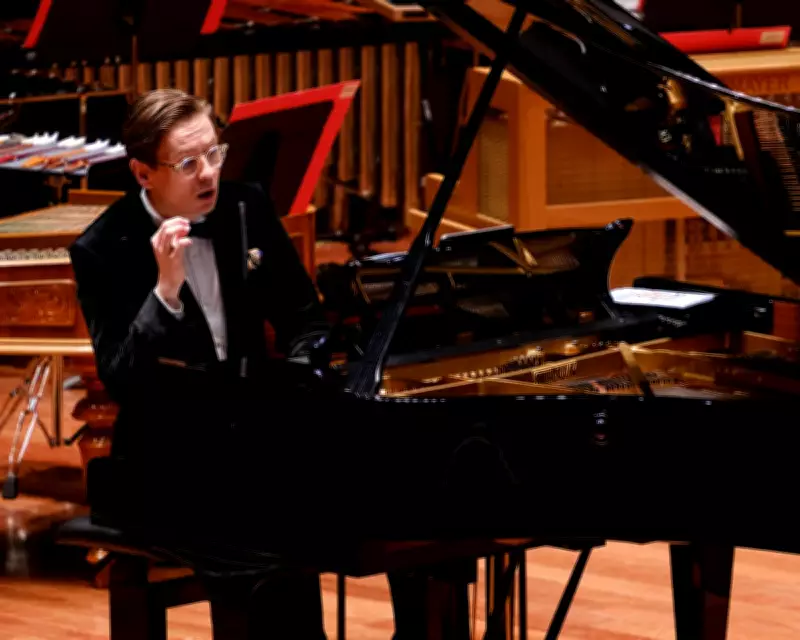
The Queen Elizabeth Hall in London was the setting for a remarkable musical tribute, as the Philharmonia Orchestra, under the baton of conductor Elena Schwarz and featuring the exceptional pianist Víkingur Ólafsson, marked the 100th birthday of composer György Kurtág. The program, described by presenter Tom Service as embodying "intense quiet," was a masterclass in hushed intensity, punctuated by moments of breathtaking ferocity that captivated a capacity audience.
A Symphony of Silence and Sudden Force
Throughout the evening, the concert reveled in Kurtág's many shades of pianissimo, with nine of his works—none exceeding ten minutes in length—interspersed with crystalline pieces by other composers including Schumann, Simpson, Webern, and Bach. Ólafsson, often bent deeply over the keyboard, treated each barely audible note as if it were priceless, showcasing his meticulous artistry.
The occasional louder moments provided stunning contrasts. In Ólafsson's piano arrangement of Bach's Air on the G String, a phrase briefly revealed its muscularity, described as tenderly firm as a parent lifting a baby. Kurtág's Hommage à R Sch featured jagged edges as viola and clarinet snarled against Ólafsson's silken piano, while Mark Simpson's Hommage à Kurtág opened with fierce passion. The monumental Old Testament brass in Kurtág's … quasi una fantasia … Op 27 No 1 boomed fleetingly before giving way to a delicate skein of string harmonics.

Intimate Collaborations and Ethereal Arrangements
In a particularly intimate segment, Ólafsson performed at a muted upright piano alongside his wife, Halla Oddný Magnúsdóttir. The trills of Kurtág's Twittering from Játékok became liquid oscillations, their quiet resonance lingering into the start of Kurtág's arrangement of a Bach chorale. Ólafsson's bass was gauzy, with keys barely struck, while Magnúsdóttir's descant rang bell-like.
Moving to a Steinway grand piano, Ólafsson spun an unbroken thread through a sequence culminating in Kurtág's ethereally sparse arrangement of the slow movement from Haydn's String Quartet in G major, Op 76 No 1. This work was stripped back to its expressive essentials, highlighting the composer's minimalist approach.
Surround-Sound Thrills and Voluptuous Contrasts
In this context, Webern's Passacaglia Op 1 sounded positively voluptuous, with Schwarz and the Philharmonia musicians embracing its lingering memories of Viennese beer halls and late-romantic Strauss. Kurtág's … quasi una fantasia … was performed by musicians scattered throughout the auditorium as well as on stage, with Schwarz conducting in the round with impressive clarity. This created a thrilling analogue surround-sound experience that enveloped the audience.
Throughout the performance, the capacity audience sat in utter silence, a testament to the intensity of both the musical expression and the listening experience. Witnessing such profound artistry is a rare treat, and this concert underscored the enduring legacy of György Kurtág through a program that balanced quiet resonance with fleeting ferocity.