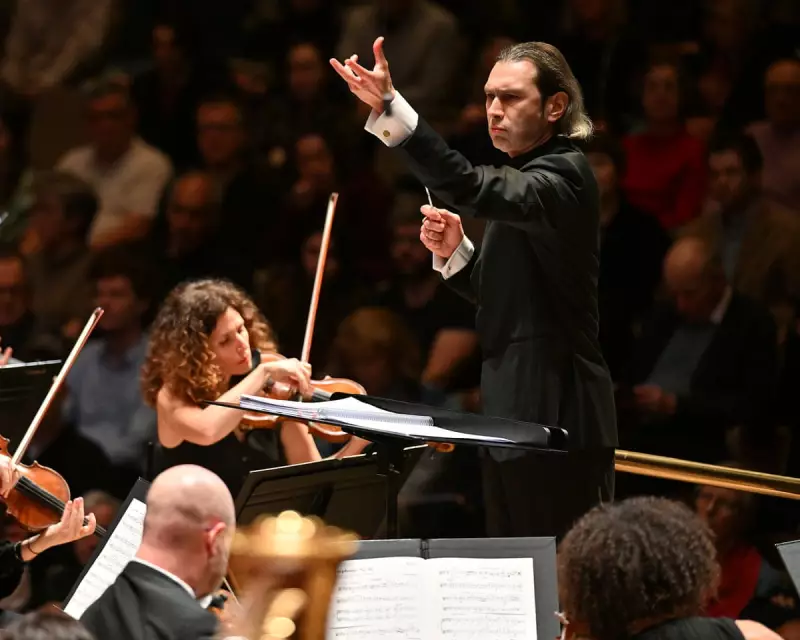
Vladimir Jurowski masterfully conducted the London Philharmonic Orchestra in a compelling performance of Gustav Mahler's unfinished 10th Symphony at London's prestigious Royal Festival Hall. The concert featured Rudolf Barshai's bold and interventionist completion of the work, which presents a stark contrast to the more restrained versions familiar to many classical music enthusiasts.
Barshai's Audacious Completion of Mahler's Final Symphony
For decades after Mahler's premature death at age 50, the fragments of his 10th Symphony were considered too skeletal to be properly realised. British musicologist Deryck Cooke first demonstrated that crucial melodic lines survived throughout the entire work, creating a "performing version" that has been widely embraced. However, Russian conductor Rudolf Barshai took a radically different approach, which Jurowski presented in this London performance.
As Jurowski acknowledges, Barshai's orchestrations bring Mahler's music closer to the sound worlds of Shostakovich and Benjamin Britten, both of whom were enormous admirers of the Austrian composer. While Cooke employed restraint and a scrupulously Mahlerian palette, particularly in the movements Mahler left most incomplete, Barshai enthusiastically applies colour throughout.

A Rich Tapestry of Orchestral Colour
Barshai's version incorporates an expanded instrumentation that includes:
- A clattering xylophone
- An audible guitar within the orchestral texture
- A Wagner tuba
- A cornet
- Additional tuba to intensify the most terrifying passages
- Second harp
- Celesta
- Woodblocks
- Tubular bells
- A trio of tiny gongs
The fact that these diverse timbral details emerged with such clarity during the performance stands as testament to both Jurowski's exceptional textural lucidity and the outstanding playing of the London Philharmonic Orchestra.
Jurowski's Interpretation of Mahler's Personal Turmoil
Mahler was grappling with the devastating discovery of his wife's affair with a young architect while composing this symphony, etching his anguished thoughts directly onto the manuscript pages. This inner turmoil may have even influenced the order of movements within the work.
Jurowski brought much of this emotional pain to the surface, leaning into the gut-wrenching dissonances that violently interrupt the serene Adagio. While the fourth movement lost some of its surgical precision, the enhanced Scherzo sparkled brilliantly, and the central Purgatorio movement provided an oasis of ambiguous calm.
A Powerful Finale and Reconciliation
The funereal finale, featuring the dramatic thwack of an offstage drum and a desolate flute solo, demonstrated Jurowski's deft handling of the transition from darkness to light. Whether through Jurowski's interpretation or Barshai's completion, Mahler's ultimate glimmer of reconciliation and forgiveness has rarely felt so certain and emotionally resonant.
This performance at London's Royal Festival Hall showcased how different approaches to completing unfinished masterworks can yield dramatically different results, with Barshai's version offering a colourful, interventionist alternative to Cooke's more conservative realisation.