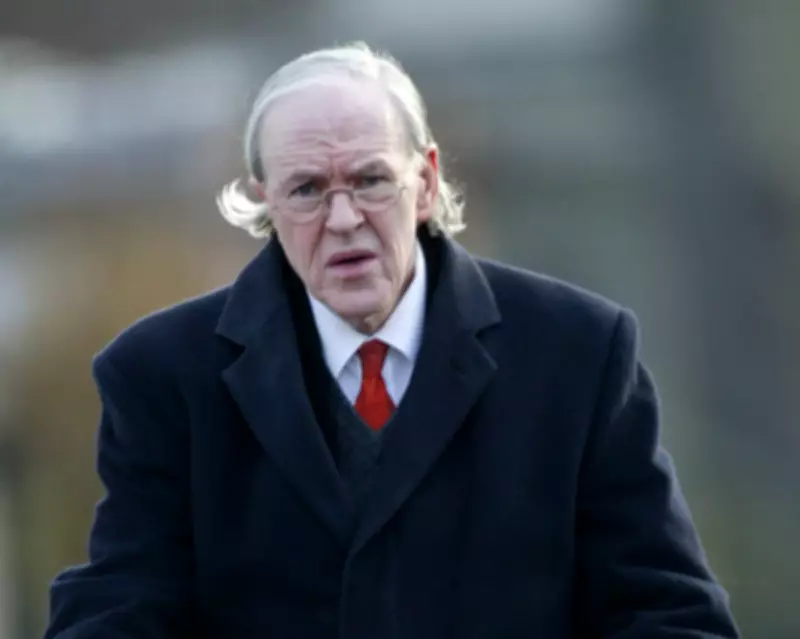
Jeremy Halvard Prynne, the maverick British poet and scholar known for his avant-garde work and reclusive nature, has died at the age of 89. He passed away on 22 April, leaving behind a legacy as one of the most original and challenging voices in modern poetry.
A Life in Poetry and Academia
Born in Bromley, Kent, in June 1936, Prynne served in the British army before studying English at Cambridge University, graduating in 1960. After a fellowship at Harvard, he returned to Cambridge, becoming a fellow at Gonville and Caius College. He served as director of studies in English and, for 37 years, as the college librarian.
His first collection, Force of Circumstance and Other Poems, was published in 1962, followed by Kitchen Poems in 1968. Influenced by American poets like Charles Olson, Prynne bridged American postmodern and British poetry circles, acting as a liberating force on the latter. He was prolific, publishing dozens of collections with small presses, and became a cult figure despite his aversion to publicity, interviews, and readings.

The Genius of Obscurity
Prynne's work was often described as difficult to parse. In 2011, novelist Geoff Nicholson wrote, “Whether we ‘understood’ Prynne’s poetry or not, we were ardent admirers already. The obscurity was part of the appeal.” Journalist John Simpson, who worked with Prynne on Granta in the 1960s, admitted he “couldn’t understand” the poetry but called Prynne “a charming, witty, elegant figure.”
His collected works, Poems, were published in two volumes, the second in 2024. Critic David Wheatley noted that the arrival of over 700 pages of new work was “a remarkable turn of events” and “a book to keep us busy for a very long time.”
Legacy and Influence
Beyond Cambridge, Prynne taught at Surrey, Sussex, and Sun Yat-sen University in China. He published lectures and criticism on subjects from Willem de Kooning to Shakespeare. American poet Peter Gizzi, who introduced a reissue of Prynne’s 1969 collection The White Stones, said, “Jeremy was an extraordinary and original human, which is no surprise because he was an extraordinary and original poet. The word ‘genius’ gets tossed around, but if anyone was, he certainly was.”
Gizzi added, “For all his astounding brilliance he was down to earth and deeply kind. His passing is an enormous and incalculable loss to the world of UK letters.”