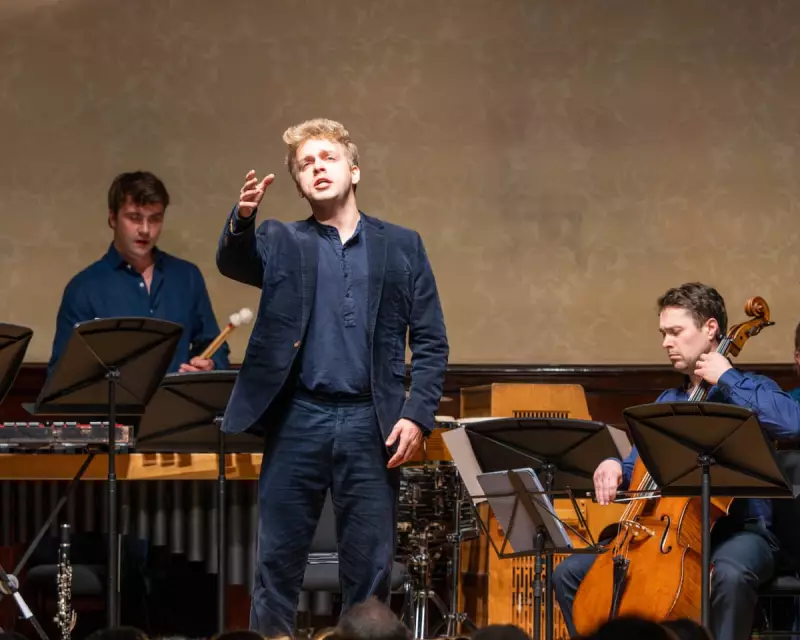
Countertenor Hugh Cutting, one of Britain's most celebrated young vocal stars, presented a compelling and intimate evening of 17th-century music with his newly formed Refound Ensemble at London's Wigmore Hall. The concert, which took place on a December evening, offered a masterclass in emotional storytelling through early Baroque repertoire.
A Fresh Take on Intimate Baroque
The programme was built around the concept of intimate, often melancholic music from England and Italy, composed during a period of significant cultural exchange. Cutting, whose star has risen rapidly in the opera world, stepped away from the grand opera stage to explore this more personal soundscape. He was joined by a superb ensemble of period-instrument specialists: violinist Rodolfo Richter, lutenist Eligio Luis Quinteiro, and theorbo player João Fernandes.
This configuration, deliberately small and nuanced, allowed for a remarkable clarity of texture and a directness of expression often lost in larger performances. The choice of repertoire was not merely a historical exercise but a deliberate attempt to refind—or refound—the raw emotional core of this music, hence the ensemble's evocative name.

Highlights from a Carefully Curated Programme
The evening's journey began with the sombre strains of Giovanni Battista Fontana's Sonata Seconda, setting a contemplative tone. The first half was dominated by Italian works, including poignant pieces by Dario Castello and Biagio Marini. A standout moment was Cutting's rendition of Sigismondo d'India's "Torna il sereno Zefiro", where his impeccably controlled voice traced the lines of longing with heartbreaking precision.
The second half shifted focus to English composers, featuring the profound melancholy of John Dowland's "In Darkness Let Me Dwell". Here, the collaboration between voice and instruments reached its peak. The lute and theorbo provided a whispering, resonant foundation over which Cutting's voice soared and sighed, perfectly capturing the song's essence of despair. The concert concluded with a lighter touch, Henry Purcell's "Sweeter Than Roses", allowing a glimpse of tender passion before the final curtain.
Ensemble Synergy and Critical Promise
What made the performance truly special was the palpable sense of communion between the musicians. This was not a star singer with accompaniment, but a genuine chamber dialogue. Rodolfo Richter's violin lines wove around and answered Cutting's phrases, while the plucked strings of Quinteiro and Fernandes created a shimmering, resonant world for the music to inhabit. The technical mastery on display was never an end in itself; every ornament and dynamic shift served the narrative and emotional weight of the pieces.
The Refound Ensemble's Wigmore Hall debut marks a significant new chapter for Hugh Cutting. It demonstrates a thoughtful artistic direction and a commitment to exploring the depths of early music beyond the opera house. Based on the rapturous reception from the capacity audience and the cohesive vision presented, this ensemble promises to become a vital and distinctive voice in the UK's early music scene. Their future projects will be eagerly anticipated by aficionados and newcomers alike.