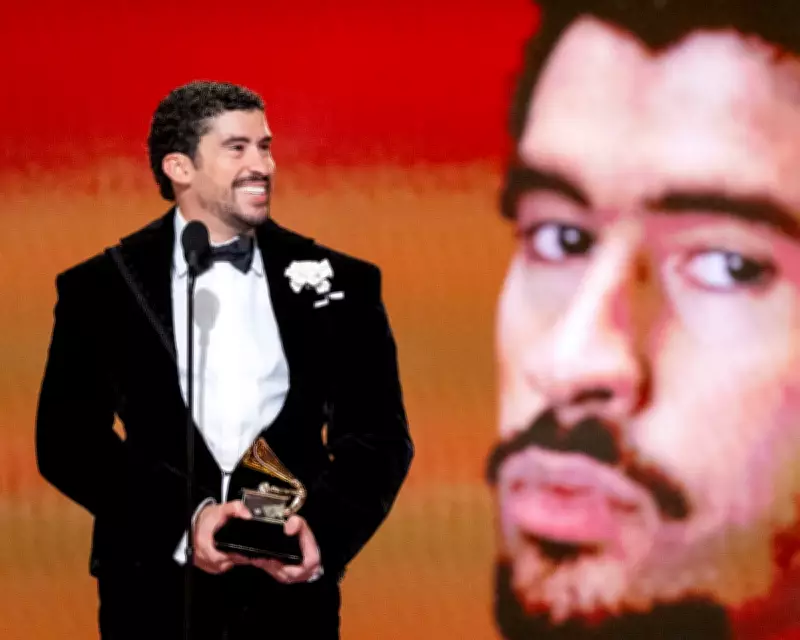
The 2026 Grammy Awards ceremony proved to be a night of historic victories and artistic celebration, though it certainly did not please everyone. Former President Donald Trump took to social media to lambast the event as "the worst" and "unwatchable garbage," even threatening legal action against host Trevor Noah. However, a closer look at the winners reveals that the Recording Academy's choices were firmly rooted in musical excellence and commercial success, rather than any overt political messaging.
Bad Bunny's Groundbreaking Album of the Year Victory
Puerto Rican superstar Bad Bunny made history by becoming the first Latin artist ever to win the prestigious album of the year award. His winning work, Debí Tirar Más Fotos, had already been crowned the best album of 2025 by both Billboard and Rolling Stone prior to the Grammys. The album's triumph is a testament to its critical and commercial prowess.
Debí Tirar Más Fotos represents a breathtakingly eclectic musical journey. Bad Bunny masterfully blends traditional salsa performed by live orchestras with contemporary house rhythms, bachata, reggaeton, the folk sounds of jibaro, and shimmering electro-pop. This unique fusion bridges Puerto Rico's rich musical heritage with modern global sounds, all while featuring pointed lyrical commentary on the island's relationship with the United States.

Commercially, the album was a phenomenon, debuting at number one on the US charts and selling over 300,000 copies within its first two weeks of release. While some observers noted the political symbolism of awarding a Puerto Rican artist amid reported deportations of Cubans from Florida, the album's undeniable quality and massive success made it a deserving winner on pure merit.
Kendrick Lamar's Rap Category Dominance
Kendrick Lamar emerged as the night's most decorated artist, taking home four awards including record of the year, best rap album, best rap song, and best melodic rap performance. This marked another disappointing Grammys for his rival Drake, whose collaborative album received only a single nomination.
Lamar's winning album, GNX, represents a significant artistic evolution. Moving away from the introspective self-doubt of his previous work, Mr. Morale & the Big Steppers, the new album bursts with spectacular swagger, sharp wit, and intricate wordplay—perhaps energised by his ongoing musical feud. While appearing less complex on the surface than his acclaimed masterpiece To Pimp a Butterfly, GNX showcases remarkable musical breadth.
The album's lead singles occupied the entire Top Five of the US charts upon release, demonstrating both its artistic quality and popular appeal. Lamar's collaboration with SZA, Luther, which won record of the year, perfectly encapsulates this blend of experimental ambition and accessible melody.
Other Notable Winners and Musical Shifts
The ceremony also highlighted some intriguing developments in the music industry. Hardcore punk band Turnstile made history by winning both best rock album and best metal performance—the first time a band from their genre has even been nominated in these categories, let alone triumphed. Their success signals a broadening of the Grammys' musical horizons, even as they incorporate unconventional elements like flute solos and Auto-Tune into their hardcore sound.
In the song of the year category, tradition prevailed as Billie Eilish's acoustic guitar-driven Wildflower beat more electronic competitors. Meanwhile, the Buena Vista Social Club's win for best musical theatre album followed the show's five Tony Award victories, reinforcing its artistic credentials.
The Clipse's comeback was validated with a best rap performance award for Chains and Whips, highlighting their storytelling prowess and technical brilliance. Their ceremony performance of So Far Ahead provided a stark, gritty contrast to the night's generally celebratory atmosphere.

The Swift Question and Industry Implications
One intriguing question lingered after the awards: how might the results have differed had Taylor Swift's The Life of a Showgirl been eligible? The album broke sales records and spawned a massive hit single, but received mixed critical reviews. Its absence left unanswered whether the Recording Academy would prioritise overwhelming commercial success over perceived artistic merit—a question that will likely be addressed in next year's ceremony.
The Grammys also seemed cautious about embracing the potential future represented by animated K-pop groups, awarding the KPop Demon Hunters soundtrack only in the best song for visual media category despite the film's phenomenal success.
Ultimately, the 2026 Grammys celebrated artists who have successfully pushed musical boundaries while achieving mainstream popularity. While political interpretations were inevitable given some winners' backgrounds, the awards themselves recognised genuine artistic achievement—proving that in the world of music, quality can still triumph over controversy.