The Melbourne Theatre Company's production of Tennessee Williams' The Glass Menagerie at Southbank Theatre is a curious case of a delicate classic being trampled underfoot. While Alison Whyte delivers a compelling performance as the matriarch Amanda, director Mark Wilson's approach emphasizes comedy over the play's inherent melancholic drift.
A Fragile Masterpiece
Most great plays are robust enough to withstand rough treatment from actors and directors. Tennessee Williams' The Glass Menagerie, however, is not one of them. Like the tiny glass figurines that give the play its title, it depends on a gossamer tonal quality so delicate that a single false note can shatter its effect. Williams himself wrote of the central metaphor: "how beautiful it is and how easily it can be broken."
Wilson's Subversive Direction
Director Mark Wilson is an unusual choice to helm this play. Known for his subversive, highly mannered style, his last MTC production was a riotous Much Ado About Nothing. He brings that same knockabout energy to Williams' achingly autobiographical "memory play." While challenging classics is admirable, here it often feels like stomping on something precious.

The Wingfield Household
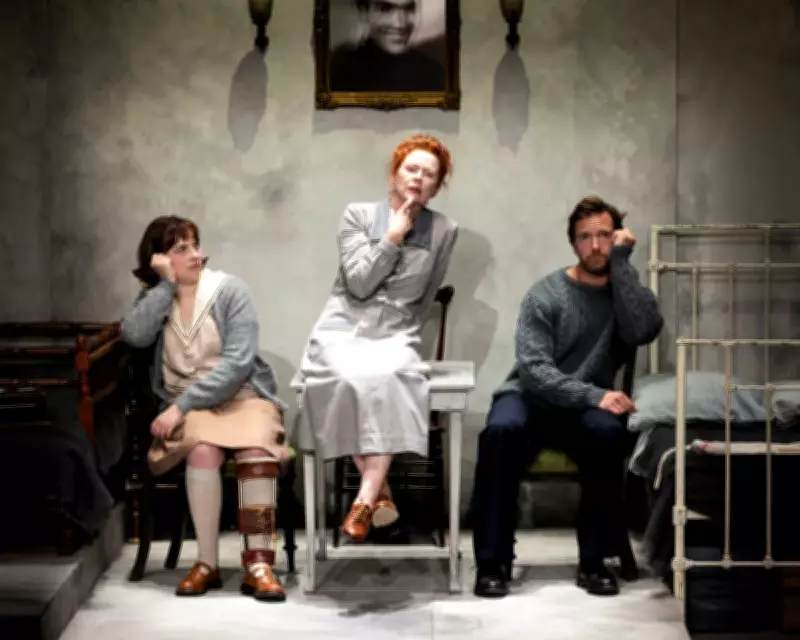
The play unfolds in the Wingfield's dingy three-room apartment, presided over by the indomitable, brittle, and deluded Amanda (Alison Whyte). She is a classic Williams type: the aging beauty desperately trying to outrun fate, abandoned by her husband, retreating into a fantasy past where she "received – 17! – gentleman callers."
Her daughter Laura (Millie Donaldson) is a painfully shy, physically disabled recluse fixated on glass figurines locked in a wooden box. Son Tom (Tim Draxl) serves as narrator and reluctant man of the house, a poet working in a deadening warehouse job to support the myopic family.
Plot and Performance
The plot kicks into gear when Amanda decides Tom must invite a colleague home for dinner – Laura's first gentleman caller, who will presumably marry her and free them all. Tom invites Jim (Harry McGee), "a nice, ordinary, young man" who brings despair and destruction, fulfilling the maxim that the devil comes in disguise. It's a tragedy in a minor key, where snapping a tiny piece of glass shatters the world.
This requires tonal control and directorial precision that Wilson gleefully disrupts. Emphasizing the comic in the tragicomic, he encourages buffoonery from the cast, fatal to the hushed, melancholic drift surging underneath. Whyte, who shone with steely rage in Death of a Salesman, here twitters like a sitcom mom, her desperation served as belittling farce. Amanda is pathetic, even bathetic, but she emerges from a world of defiant obsolescence defined by haughty self-composure; here she often seems clownish and small.
Problematic Portrayals
Draxl's Tom makes the mistake of overtly queering the character, which remains implied in Williams' text. The opening locates Tom in the world of Fassbinder's Querelle and Tom of Finland, all biceps and brawn, undercutting the seething repression and self-hatred in the part. Donaldson fares better as the quietly majestic Laura, even if her inner strength threatens to obscure her tenuousness. McGee makes much of the shining optimism in the gentleman caller, and their long, tremulous scene together is the best in the play.
Design Elements
Kat Chan's set nods to Williams' description of the Wingfield apartment as "one of those vast hive-like conglomerations of cellular living-units that flower as warty growths in overcrowded urban centres," but feels awfully concrete and banal. Paul Lim's lighting evokes the noir 40s films Tom is presumably obsessed with. Matilda Woodroofe's costumes are brash and daring. Marco Cher's sound compositions are intrusive, with bizarre Bernard Herrmann-like discordances suggesting a Mrs Bates-style stabbing spree. Effects should recede like memories, but here they're forced on the audience with the subtlety of a pantomime.

The True Tragedy
This production's true tragedy is the utter lack of nuance and suggestion. The claustrophobia of the set forces characters to move around the ludicrously cramped dining table with comic displays of awkwardness, but nowhere is the emotional claustrophobia that truly interested Williams. Under Wilson's direction, everything is signposted but nothing registers psychically.
The Glass Menagerie will survive. It's a terrific vehicle for a great actor, and while Whyte is never less than compelling, her performance is caged in a production that mocks the very aspects that ennoble her. In this way, she's as hopelessly confined as Laura, mourning the broken horn of a glass unicorn while the world crumbles around her.
The Glass Menagerie is on at Melbourne Theatre Company's Southbank Theatre until 5 June.