Folk Duo Stevens & Pound Reimagine Holst's Planets Without Reading Music
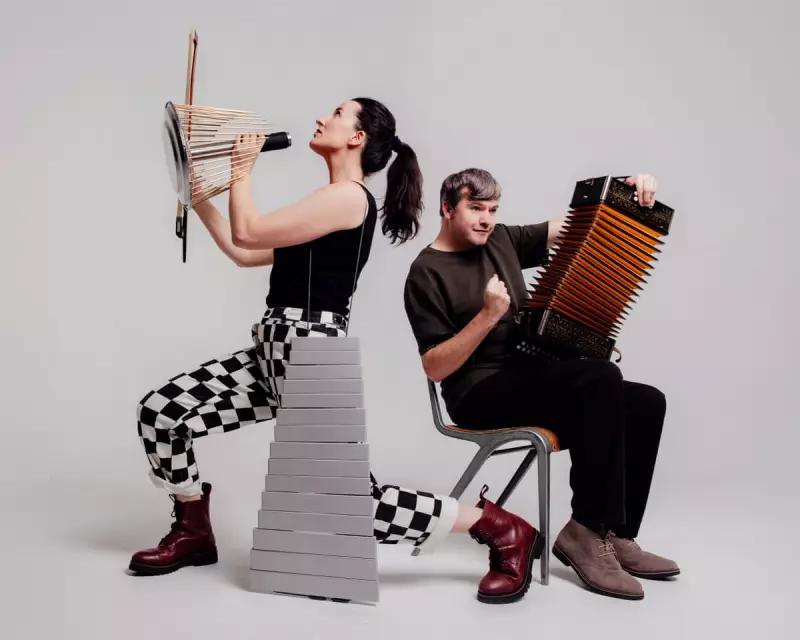
In a bold fusion of folk and classical traditions, the duo Stevens & Pound are set to tour a groundbreaking recomposition of Gustav Holst's iconic The Planets suite. Multi-instrumentalist Will Pound and classical percussionist Delia Stevens have collaborated with the Britten Sinfonia and writer Robert Macfarlane on this ambitious project, titled The Silent Planet, which includes an entirely new movement called Earth.
The Power of Playing by Ear
What makes this collaboration particularly remarkable is that Will Pound, who plays harmonica and accordion, does not read music. Rooted in the oral and aural traditions of folk music, where tunes are passed down through recordings and communal sessions, Pound views this not as a limitation but as a unique strength. "Learning by ear and resisting the explicit instructions of a score has become my greatest strength," he explains. "It forces me to approach the music laterally, bringing my own sound world and a unique, personal voice to the work."
He is in esteemed company, with legendary musicians like Paul McCartney, Eric Clapton, and Taylor Swift also known for relying on their aural skills rather than written notation. Pound emphasises that aural mastery can be just as potent as visual literacy, challenging the notion that classical musicians must be bound by the dots on a page.

Overcoming Challenges in Large-Scale Collaboration
The journey to this tour has not been without its hurdles. For Pound, who has dyslexia, the inability to read music once felt like a permanent barrier to engaging with complex classical scores. This was especially apparent in large-scale collaborations, such as earlier work with Sinfonia Cymru, where unfamiliar classical terminology like tuttis and legatos left him feeling adrift. However, open communication with ensembles has been key, with musicians often translating terms to bridge the gap.
Interestingly, the folk world has its own detailed lexicon, with tune types like jigs, hornpipes, and reels tied to specific rhythms and regional dances. Stevens & Pound see themselves as multilingual in spirit, navigating both traditions to create something fresh and dynamic.
A Transformative Musical Journey
Formed in late 2022, Stevens & Pound have made it their mission to rethink major classical works, moving beyond mere cover versions. Their process involves Delia Stevens creating voice-note recordings of scores, which Pound then learns by ear. This method was first tested with Ralph Vaughan Williams' The Lark Ascending, which toured across Wales last year, before they took on the monumental challenge of Holst's suite.
For The Silent Planet, the technical demands were immense. Pound had custom harmonicas built by companies like Seydel and Suzuki to achieve different timbres and sounds, and he developed new techniques on his accordion to handle unfamiliar scales and chord progressions. The 60-minute work, orchestrated by Ian Gardiner, spans 165 pages of score, yet Pound has co-written it entirely by ear.
Bridging Genres and Historical Connections
The duo's work highlights the deep interconnections between folk and classical music, a theme echoed in the first half of their tour programme, which features composers Percy Grainger and Benjamin Britten. Despite their mutual admiration, the pair only met once at Cecil Sharp House in London, underscoring the historical divide that Stevens & Pound are now helping to bridge.
Their performances aim to give audiences an immediate point of connection with familiar works before taking them on a transformative journey. As Pound puts it, "We intentionally reimagine familiar works because it gives the audience an immediate point of connection before we take them on a completely fresh, transformative musical journey."

Tour Details and Legacy
The tour, Earth and Other Planets, features performances with the Britten Sinfonia and Robert Macfarlane at venues including Milton Court in London on 28 January, the Norfolk Events Centre in Norwich on 29 January, and West Road Concert Hall in Cambridge on 30 January. This project represents the culmination of 18 months of rehearsals and revisions, showcasing how folk traditions can breathe new life into classical masterpieces.
In an era where musical genres are increasingly blurred, Stevens & Pound stand as a testament to the creativity that emerges when artists defy conventions. Their work not only reimagines Holst's planets but also challenges perceptions of what it means to be a musician in the classical world, proving that innovation often lies beyond the written score.