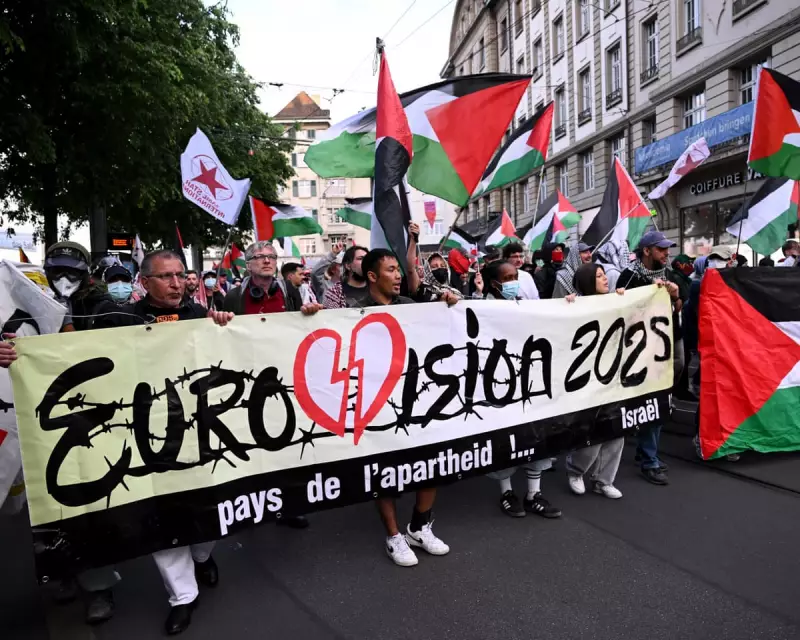
The Eurovision Song Contest faces a significant political crisis as four European nations have confirmed they will boycott the 2025 event in Basel over Israel's participation. This coordinated withdrawal by Spain, Ireland, the Netherlands, and Slovenia marks a watershed moment for the 70-year-old competition.
A Historic Boycott for a Modern Contest
The decision is unprecedented in its scale and the stature of the countries involved. Spain is one of the contest's 'big five' major financial contributors. Ireland holds the record for the most wins alongside Sweden. The Netherlands was a founding member in 1956, and Slovenia symbolises the European Union's eastward expansion. Their absence will fundamentally alter the character of next year's final.
This action comes amidst the ongoing conflict in Gaza, with only a fragile ceasefire in place. Israel's national broadcaster, KAN, has shown no indication of voluntarily withdrawing. Consequently, this diplomatic standoff surrounding the world's largest live music event may persist for the foreseeable future.

Eurovision's Long History of Political Tensions
While organisers consistently promote Eurovision's apolitical ethos, boycotts are far from novel. Cultural historian Paul Jordan notes that Greece and Turkey boycotted in 1975 and 1976 respectively following Turkey's invasion of Cyprus. Armenia refused to participate when the contest was held in Baku, Azerbaijan, in 2012.
Ironically, Spain, whose broadcaster RTVE has been particularly vocal in the current boycott, was the target of the first major protest. In 1964, a Danish activist stormed the stage in Copenhagen with a 'Boycott Franco & Salazar' placard, protesting the inclusion of Spain and Portugal under military dictatorships.
Spain itself faced a boycott when it hosted in 1969, with Austria withdrawing in protest against the Franco regime. This historical context adds a layer of complexity to Spain's current stance, suggesting a nation deeply aware of how cultural platforms function as instruments of soft power.
An Existential Crisis or a New Chapter?
The boycott raises fundamental questions about Eurovision's identity and membership. Israel has competed since 1973 as a full member of the European Broadcasting Union (EBU). The EBU's membership extends beyond Europe's geographical borders, including North African and Middle Eastern nations like Morocco, Algeria, and Tunisia.
Morocco participated once in 1980, and Lebanon planned to debut in 2005 but withdrew when required to broadcast the Israeli entry. In many ways, these nations have maintained a de facto boycott over Israel's involvement for decades.
The withdrawal of four core European participants creates a profound challenge that may take years to resolve. However, Eurovision's strength has always been its adaptability. Its values are not fixed but are the sum of those brought by the participating nations. While this boycott is a historic rupture, it may not be an existential threat. When these countries eventually return, they could well reinvigorate the contest with a renewed sense of purpose.