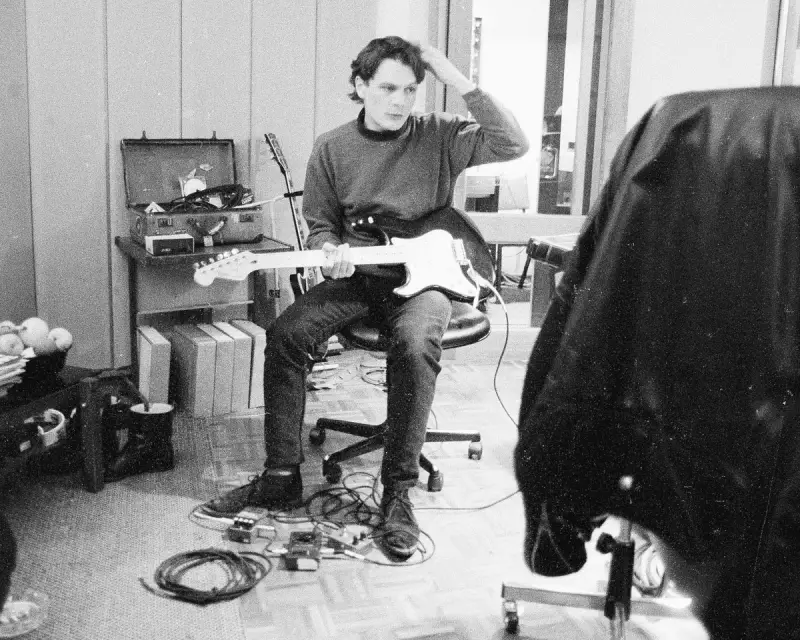
A poignant new documentary casts a light on the enduring, yet often tragic, legacy of the iconic Dunedin sound, the indie music movement that emerged from New Zealand in the 1980s. The film, titled 'Life in One Chord', draws directly from the acclaimed memoir of Straitjacket Fits frontman Shayne Carter, mapping the raw energy and subsequent struggles of the scene's key figures.
The Heavy Toll on a Legendary Scene
The passage of time has dealt a harsh blow to the pioneering musicians of Dunedin. The community has been rocked by a series of untimely deaths. Martin Phillipps of The Chills died last year, while Hamish Kilgour of The Clean took his own life in November 2022. Earlier losses include Straitjacket Fits guitarist Andrew Brough, who died in non-suspicious circumstances in 2020, and the band's bassist David Wood, who lost his battle with cancer in 2010.
Against this backdrop of loss, Shayne Carter published his memoir, 'Dead People I Have Known', in 2019. Film-maker Margaret Gordon has used excerpts from this deeply personal book as the narrative backbone for her documentary, named after an early Straitjacket Fits song.

The Meteoric Rise and Fractured Fall of Straitjacket Fits
In New Zealand, Carter and his band are revered. Songs like 'She Speeds' and Brough's 'Down in Splendour' are considered national treasures. For a brief period around 1990-1991, before Nirvana's global explosion, they were touted as potentially the world's greatest guitar band. The film explores why that global breakthrough never fully materialised.
The classic lineup was a potent, volatile mix. Carter, the handsome and spiky songwriter, contrasted with Andrew Brough, whose jangly, Byrds-inspired pop sensibilities provided a sweet counterpoint. This 'sweet and sour' combination was electrifying, but tensions arose from Brough's limited songwriting contributions. His eventual departure stripped the band of its crucial creative duality.
Gordon's film wisely avoids dwelling on familiar tales of industry mismanagement and clashing egos. Instead, it focuses on Carter's singular journey, framing him as a maverick talent equally capable of brilliance and self-sabotage.
A Life Forged on the Edge
The documentary begins with a powerful symbolic homecoming: an aerial shot of Carter walking a narrow Dunedin isthmus, backed by the abrasive sound of 'Crystalator' by his post-Fits project, Dimmer. It sets the tone for a story of a perennial outsider.
Carter's difficult upbringing, with an alcoholic mother and a violent stepfather, and his identity as someone born part-Māori but raised white, cemented his status on the margins. His early punk persona, 'Peter Putrid' in the band Bored Games, gave way to the DoubleHappys, formed with his gifted childhood friend Wayne Elsey. The pair used a drum machine nicknamed 'Herbie Fuckface' until it was destroyed.
Tragedy struck when Elsey died in a horrific accident, with Carter and future Straitjacket Fits drummer John Collie as traumatised witnesses. Carter never fully recovered from this loss. The film suggests his entire career has been an attempt to reconcile himself with a life lived on the periphery.
Colleagues in the film pull no punches. Francisca Griffin of Look Blue Go Purple calls him "a bit of a brat", while John Collie states bluntly, "I think everyone went through a phase of hating Shayne." Carter's own memoir is praised for its unsparing self-criticism regarding his struggles with alcohol and anger, topics the documentary could have explored in greater depth.
The film's most electrifying moment is archival footage of the Straitjacket Fits' penultimate performance in 1994. Playing 'Dialling a Prayer' in a torrential downpour at a Palmerston North festival, risking electrocution, they channel a ferocious, arena-sized energy that hints at the scale they might have achieved.
'Life in One Chord' offers a compelling, bittersweet portrait of a seminal artist and the fragile scene that shaped him. It is a testament to music that burned brightly against the odds, and the heavy price often paid for a life in one chord. The documentary will screen in select cinemas in Sydney and Melbourne from 4 December.

If you are affected by the issues raised in this article, support is available. In the UK and Ireland, Samaritans can be contacted on freephone 116 123, or via email. In the US, the National Suicide Prevention Lifeline is 988. In Australia, Lifeline is 13 11 14.