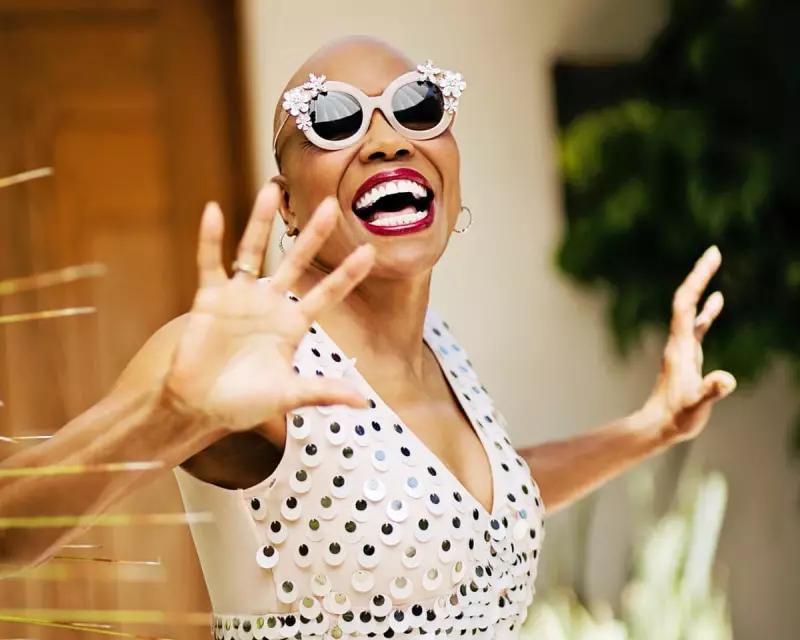
At 75, when many artists might choose to rest on their laurels, jazz legend Dee Dee Bridgewater is raising her voice louder than ever. The two-time Grammy winner, whose career spans six decades working with icons like Dizzy Gillespie and Sonny Rollins, is channelling her anger about contemporary politics into powerful protest performances.
A Voice That Won't Be Silenced
When I spoke with Bridgewater, she was preparing for a concert in Des Moines, Iowa, but her mind wasn't on the Great American Songbook material she was scheduled to perform. "I just don't feel like it's the time to be doing love songs and whimsical songs from the 1920s and 30s," she confessed. "There's some kind of spirit and energy pushing me to sing songs saying: people, we have to protect our democracy."
Bridgewater's political awakening began in the 1960s when she supported the Black Panther party and their community projects. That fire still burns brightly. "I'm too old and I've been through too much," she says. "Even now I deal with racism daily – every day there is something that somebody does which is racist. I cannot just sit back and be silent. I have to raise my voice."

Confronting Machismo and MAGA Politics
This week, London jazz festival audiences will hear that voice amplified by We Exist!, an all-female band Bridgewater founded to challenge jazz's gender inequalities. "I got tired of hearing jazz musicians saying the same old chauvinistic crap and keeping women out," she explains. "I decided to put together an all-female band as a statement that the jazz world is still very macho."
Her commitment to supporting women in jazz extends to the Woodshed Network, an initiative now overseen by her daughter and manager Tulani, which provides female jazz musicians with career development resources. The programme operates within Washington DC's Kennedy Center, but Bridgewater worries about its future under the Trump administration's influence.
"Considering what he's doing to the Kennedy Center, I'm unsure if [the Woodshed Network] will continue for too much longer," she says, her distaste for the former president evident as she refers to him only as "he".
Protest Songs for Modern Times
Bridgewater's current repertoire reflects her political concerns, featuring civil rights anthems and protest songs that feel painfully relevant today. She performs Billy Taylor's I Wish I Knew How It Would Feel to Be Free, Gene McDaniels' Compared to What, Donny Hathaway's Tryin' Times and Bob Dylan's barbed Gotta Serve Somebody.
The programme originated from her response to the war in Gaza. "I watched the news and thought: I am witnessing the beginning of a genocide," she recalls. "I was sitting in my living room watching the news and crying and this voice said to me: put it in music, let the music speak for you."
Nina Simone's Mississippi Goddam remains particularly potent in her set. "It's still relevant today as they are trying to make protesting more difficult," she notes. Percy Mayfield's Danger Zone also features because "we are in a danger zone! We have to raise our voices and vote, here and in Europe."
Yet speaking out carries risks that Bridgewater acknowledges. "I fear this government is going to start cracking down on free speech and coming after those of us who speak out," she says, expressing concern that many young people remain "oblivious to what's going on."
A Life in Music: From Memphis to Mali
Born Denise Garrett in Memphis, Tennessee in 1950, Bridgewater grew up in Flint, Michigan where her jazz musician father introduced her to African American music. Her professional career began in her early twenties when she married jazz trumpeter Cecil Bridgewater and found herself unexpectedly launched into the jazz world.

Her early experiences with jazz legends were sometimes brutal – Horace Silver once cut her off stage, shouting "Get off my stage!" while Max Roach became verbally abusive during performances. Yet she speaks of both men with compassion, recognising that Roach was likely bipolar and crediting Silver's rejection with giving her "the impetus to prove I could do his music" – which she eventually did on their 1995 album Love and Peace: A Tribute to Horace Silver.
Dizzy Gillespie and Sonny Rollins provided warmer mentorship. "Dizzy was the sweetest – I learned how to entertain audiences, how to make them laugh, from him," while Sonny "gave me the biggest hug and said how much he liked my singing."
Her career has taken remarkable turns: from her well-received but commercially unsuccessful 1974 debut Afro Blue to winning a Tony award for playing Glinda the Good Witch in Broadway's The Wiz, from disco recordings to an Olivier award-nominated performance as Billie Holiday in the West End musical Lady Day.
After marrying French concert promoter Jean-Marie Durand, she settled in Paris for almost 25 years, developing into a superb interpreter of jazz standards with Grammy-winning albums dedicated to Ella Fitzgerald and Holiday.
Her musical curiosity led her to Mali in the mid-2000s, where she collaborated with artists like Oumou Sangaré and created the rich west African jazz fusion of 2007's Red Earth: A Malian Journey.
No Signs of Slowing Down
At 75, Bridgewater shows no intention of retiring. "This is how I make my money, baby, I live out of hotels!" she laughs. A recent appearance at the UK's We Out Here festival inspired her to reconnect with club audiences, and she's now working on an album with Gilles Peterson and house music legend Louie Vega.
She cites Miles Davis as an inspiration for her constant evolution: "I always wanted to be like Miles Davis – not staying in one groove but constantly changing, not staying still." Another influence was jazz singer Betty Carter, whose independent approach to her career showed Bridgewater the importance of maintaining control.
"I produce my albums and I own my albums. I take control of my career so no one tries to tell me what to do," she says, before adding with a laugh: "Well, my daughter sometimes tries."
Dee Dee Bridgewater performs in the EFG London Jazz Festival opening gala, Jazz Voice, at Royal Festival Hall on 14 November, and with We Exist! at the Barbican on 15 November. Her album Elemental is out now on Mack Avenue.