As the World Cup kicks off, the bond between classical music and football is more evident than ever. From the terraces to television themes, the two worlds have intertwined for over a century.
Scotland's musical World Cup history
In 1998, Scotland faced Morocco in a crucial World Cup match, losing 3-0. The team's song that year was Del Amitri's melancholic 'Don't Come Home Too Soon,' a starkly honest World Cup anthem. Meanwhile, the BBC used Fauré's Pavane as its title music, setting a tone of apathy rather than excitement. England fared no better, despite the anthems 'Vindaloo' and 'Three Lions,' exiting in the round of 16 after David Beckham's red card.
Classical composers' football passion
Edward Elgar, a devoted Wolverhampton Wanderers fan, composed 'He Banged the Leather for Goal!' in 1898, based on a match report. This harmonically dense tune may be the first football chant by a major composer. Dmitri Shostakovich's love for Zenit St Petersburg was honored in 2016 with a pre-match show featuring his music. His ballet 'The Golden Age' includes a 'Football March' that captures the chaotic energy of a match.

The 1990 World Cup and Pavarotti
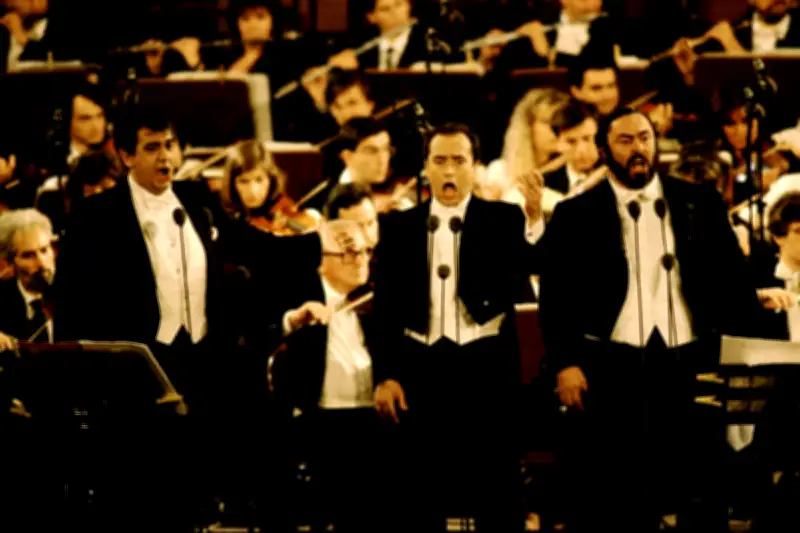
The iconic link between football and classical music was cemented in 1990 when the BBC used Luciano Pavarotti's 'Nessun Dorma' as its theme. Puccini's aria from 'Turandot' became a worldwide sensation, with Pavarotti's extended high notes defying the original score. The Three Tenors performed it on the eve of the final, where Germany beat Argentina 1-0.
Modern connections
Today, the White Stripes' 'Seven Nation Army' is a global football anthem, starting with Club Brugge KV in 2003. While the riff is often attributed to Bruckner's Fifth Symphony, Jack White actually created it during a sound check. Despite broadcasters dropping classical themes for the current World Cup, Bruckner's influence lives on in the stands.
This week's listening: {oh!}Orkiestra's recording of Mozart's 29th Symphony and Janiewicz's Fifth Violin Concerto, featuring Martyna Pastuszka's daring improvisational style.