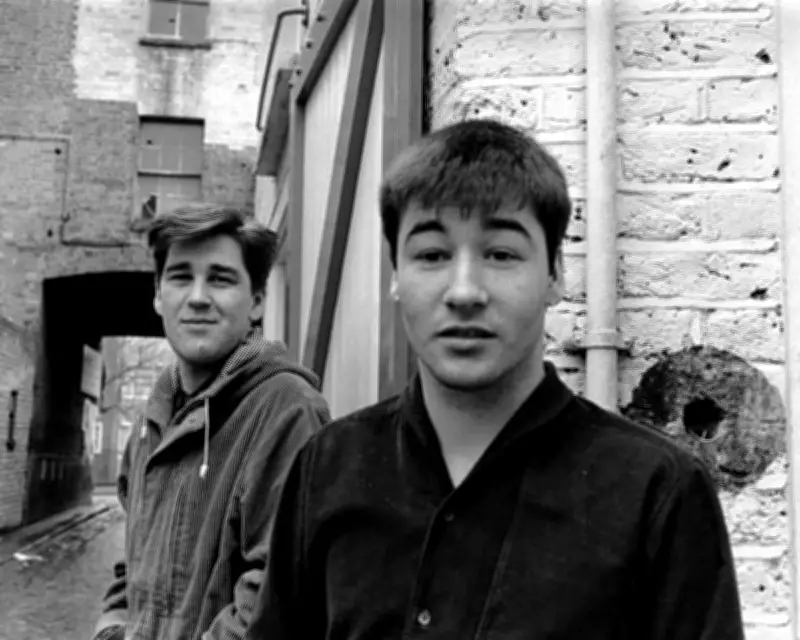
In a nostalgic reflection on the 1980s music scene, Gary Daly and Eddie Lundon of the band China Crisis have revealed the unconventional origins of their hit song 'Black Man Ray'. The track, known for its synth-driven sound and enigmatic lyrics, was crafted during a period of creative exploration following extensive touring.
The Genesis of a Classic
After supporting Simple Minds on a lengthy tour across Europe and North America, Daly and Lundon sought a respite from the road. Daly immersed himself in music production, drawing inspiration from Brian Eno's experimental approach. 'I was very inspired by Brian Eno,' Daly recalls. 'The notion that any sound could be included in a recording struck me as magical.' This led to the initial ambient version of 'Black Man Ray', which featured a boy singing in the street, captured by Daly holding a microphone out of his bedroom window.
Recording in Unusual Surroundings
The song took shape at Parkgate Studio in Sussex, but in an unexpected setting: the kitchen. Daly vividly remembers producer Walter Becker toasting sesame seeds in a pan during the session. 'Coming from a very working-class family, I'd never seen such a thing,' he notes. Becker, a perfectionist known for his work with Steely Dan, played a crucial role in refining the track, helping to transform it into the polished hit that appears on the album 'Flaunt the Imperfection'.

Musical Influences and Collaboration
Daly describes the intro as having a distinctly 1980s feel, yet emphasises the band's focus on melody. 'There's always been an awful lot of melody in our compositions,' he says, pointing to keyboard elements in songs like 'Wishful Thinking' and 'Red Sails'. The title 'Black Man Ray' was inspired by surrealist artist Man Ray, blending autobiographical themes with enigmatic lyrics in an Eno-esque style.
Lundon first heard a rough version of the song in Daly's mother's garden on a summer day, immediately recognising its pop potential. 'It was so melodic and catchy,' he says. The collaboration between the two songwriters is key to the China Crisis sound, with Lundon's harmonies on the chorus—'Ye-e-s ye-e-s, I could be wrong'—becoming an anthemic highlight in live performances.
Producer's Impact and Beatles Comparison
Becker's involvement came after the band expressed interest in working with producers associated with Steely Dan. 'He flew over from the States to meet us and we hit it off immediately,' Lundon explains. Becker's meticulous approach included multiple takes and precise instructions. At one point, he compared 'Black Man Ray' to the Beatles, particularly in its structure of intro, verse, chorus, and middle eight. 'For two young lads from Liverpool to hear him say that, well, you can imagine how that would have felt,' Lundon adds.
Legacy and Reissue
'Black Man Ray' remains a beloved track from the 1980s, celebrated for its innovative production and lyrical depth. The story behind its creation highlights the band's creative process and the influence of producers like Walter Becker. In related news, a 10th Anniversary edition of China Crisis's 'Autumn in the Neighbourhood' album is now available on vinyl and CD from Last Night from Glasgow, offering fans a chance to revisit the band's enduring work.